Dog Scentwork: What Changes When Your Dog Knows More Than You
Editor's note: This guide is written by a certified fear-free dog trainer and built on Wild Pack's approach: nervous-system-first, instinct-led, and fear-free.
Think about how much of your dog's day comes with instructions.
Come. Wait. Leave it. Drop it.
Even when we're thoughtful about giving our dogs choices, we still control most of their world. We know where we're going on the walk. We know what's inside the treat pouch. We know why the doorbell just rang.
Then there's scentwork.
You hide something. Your dog starts searching. And suddenly, the balance shifts. Your dog has information you don't, and your job becomes less about giving directions and more about paying attention.
That might be one of the most interesting things scentwork has to teach us.
Table of Contents
Key Takeaways
What Is Dog Scentwork, Really?
Your Dog Knows Something You Don't
Why Helping Can Get in the Way
What Does a Dog Look Like When They Catch a Scent?
Does Dog Scentwork Need a Target Odor?
How to Try Scentwork at Home
When a Search Becomes Too Difficult
The Wild Pack Approach
Frequently Asked Questions (FAQs)
Key Takeaways
Dog scentwork is an enrichment activity that gives dogs opportunities to use their natural scenting abilities, make choices, and solve problems.
Simple scent games can provide mental stimulation without requiring specialized equipment or complicated training sessions.
One of the most valuable skills humans learn during scent work is how to observe without constantly directing the dog toward the answer.
What Is Dog Scentwork, Really?
At its simplest, scentwork gives your dog something to find using their nose. That might be food, a favorite toy, or—once you move into more formal scent work—a particular target odor.
Drug dogs and other detection dogs are trained to find specific odors in different environments. By contrast, recreational dog scentwork lets companion dogs use similar natural scenting abilities simply for enrichment.
But there's another way to understand it. Dog scentwork is one of the rare activities where your dog has access to information you don't.
You can see the room. Your dog's canine nose can detect an invisible world of scent within it.
And that difference changes the conversation between you.
Your Dog Knows Something You Don't
Imagine someone hides a treat while you and your dog wait outside. When you return, neither of you knows where it is—but your dog has a tool you don't.
They might rush around, suddenly slow down, or follow a scent trail you can't detect. For once, you can't point them toward the answer.
That's what makes scentwork such an interesting enrichment activity: your job is to step back, trust your dog, and let their nose lead.
Why Helping Can Actually Get in the Way
Humans are excellent helpers. Sometimes we're a little too excellent.
We know where the treat is, so when our dog searches the wrong corner, our body starts giving away the answer. We look toward the hiding place. We step closer. We point.
Suddenly, the dog isn't solving a scent problem anymore. They're solving us.
Try occasionally having someone else set up the search so you don't know the answer either. During these training sessions, your job becomes watching instead of steering.
It sounds simple until you try it.
Learning to stay out of the way can be just as important as learning how to create the search.
What Does a Dog Look Like When They Catch a Scent?
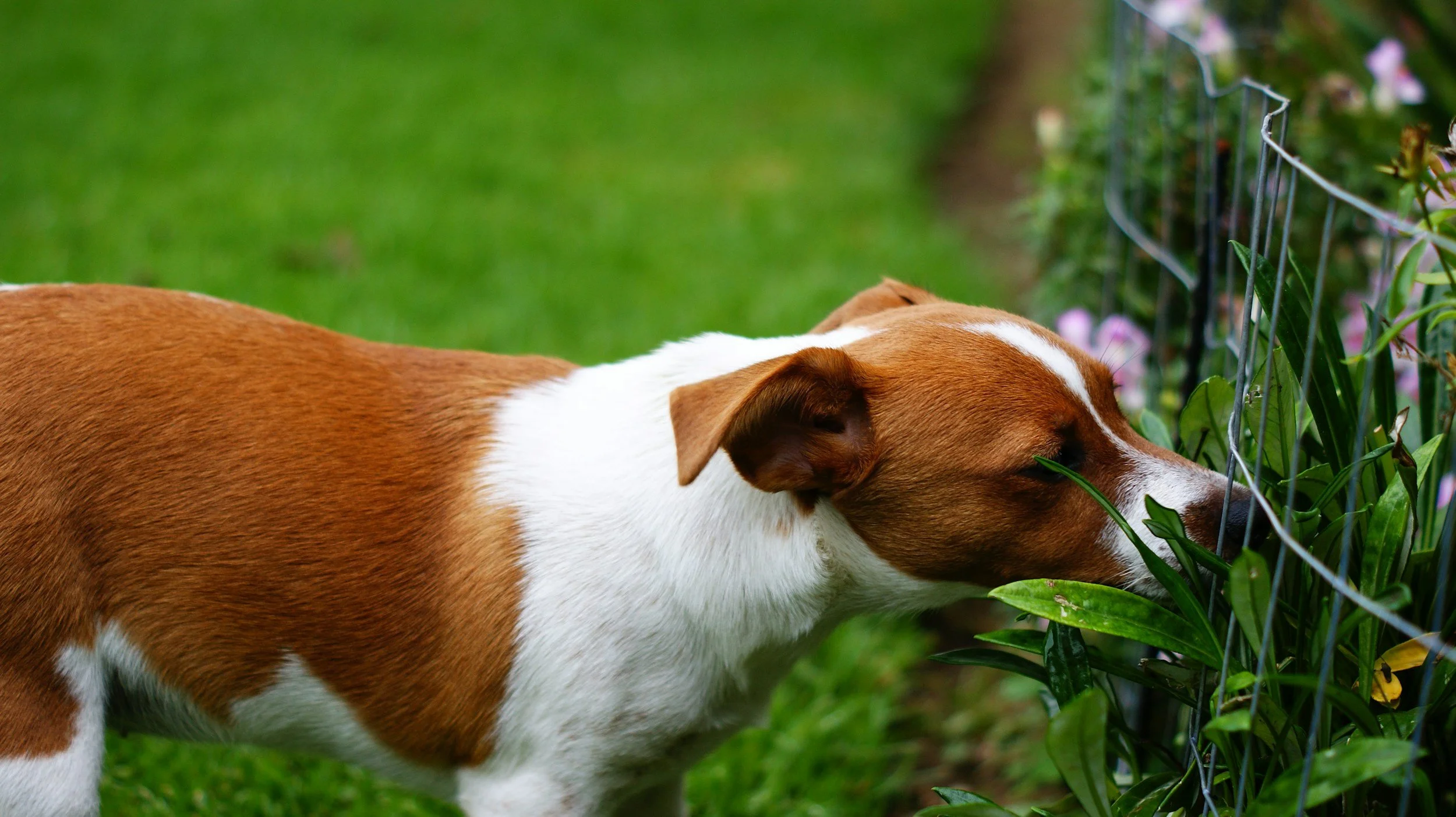
There isn't one universal "I found it" behavior. Your dog might slow down, change direction, freeze, or suddenly focus on one area as their canine nose follows the scent.
Because odor moves through the environment, a scent trail isn't always direct. Your dog may even leave an area before circling back.
That's what makes these training sessions so interesting: instead of looking for a textbook signal, you learn your dog's unique patterns and let their behavior do the talking.
Does Dog Scentwork Need a Target Odor?
Not at all. Recreational scent games can start with food or a favorite toy, while formal K9 nosework may introduce specific target odors through learning principles related to classical conditioning.
As you progress, training scents for detection work, scented swabs, or essential oils may be used depending on the activity. Proper storage and handling matter to prevent scent contamination, so follow the guidance for the specific scentwork program rather than improvising target odors.
How to Try Dog Scentwork at Home
Start almost ridiculously easy.
Let your dog investigate a treat, then place it somewhere simple to find. Once they understand the game, try several open boxes, tuck food beneath the edge of a towel, or create easy scent games around a familiar room.
Change one thing at a time rather than turning each search into a test.
You also don't need formal training classes before trying recreational searches at home. Even people using online dog training resources can introduce simple scentwork as long as they're creating safe, achievable searches and paying attention to how their dog responds.
Then notice what you do.
Are you pointing? Repeating cues? Walking toward the answer?
Give your dog a little space and see what happens. Check out the video here for a simple nosework exercise you can do at home with just your pup and a towel.
When a Search Becomes Too Difficult
It's tempting to think progress means continually making scentwork harder. But difficulty isn't the goal.
If your dog enthusiastically searched yesterday and seems lost today, consider what changed. The hiding place might be too difficult, the environment could contain new distractions, or your dog simply may not feel like searching right now.
Make the next search easier.
From a fear-free perspective, that isn't going backward. It's responding to the dog in front of you.
Good mental stimulation comes from engagement, not frustration. Confidence grows when dogs have opportunities to investigate manageable challenges and discover that their choices can lead somewhere rewarding.
Practice Not Knowing
We spend so much time teaching dogs how to live in our world. Dog scentwork gives us a chance to experience theirs—a world of scent and information we often miss.
Whether you're searching at home, attending training classes, or using an online dog training program, leave room for your dog to solve the problem instead of focusing on perfect performance.
For a few minutes, you don't have to give the answer, correct the route, or decide exactly how your dog should get there.
Your dog gets to know something you don't.
And you get to practice trusting them anyway.
Want to dive deeper? Download our Dog Nosework Guide.
Read more on what is nosework, mental enrichment games for dogs, and beginner nosework supplies.

Frequently Asked Questions (FAQS)
-
The terms overlap and are often used casually to describe scent-based searching activities. Dog nosework training can range from simple recreational searches at home to structured work involving specific target odors.
-
No. A dog nosework kit becomes more useful when working with specific odors, but beginner searches can use treats, toys, cardboard boxes, towels, and other safe household objects.
-
Dog nosework classes can be useful if you want an experienced instructor to help you create appropriate searches and understand your dog's search behavior. Look for reward-based instruction that allows dogs to progress individually.
-
Scentwork asks dogs to gather information, make choices, and solve problems using their sense of smell. That can make it a meaningful form of mental enrichment without requiring the activity to be physically intense.
Read more on simple dog training commands.
About the Author
Lindsay is the founder of Wild Pack and a Certified Fear-free Dog Trainer and Coach dedicated to helping dogs and their guardians thrive through reward-based training, nervous system regulation and instinct-led enrichment. After thousands of hours working hands-on with dogs of every breed, age, and temperament, she specializes in helping dogs build confidence, resilience, and lasting behavior change without fear or punishment. Wild Pack is a 5-star rated Seattle pet wellness brand trusted by dog parents globally and featured by KOMO News, Seattle Refined, and Dogington Post for its unique approach to canine wellbeing. Through boutique services, practical education, and innovative products, Wild Pack’s mission is to rewild pets—and the people who love them.