Beginner Dog Scentwork Supplies: Skip the Fancy Kit and Start Here
Editor's note: This guide is written by a certified fear-free dog trainer and built on Wild Pack's nervous-system-first, reward-based training philosophy, adapted specifically for the terrier's high-drive, independent temperament.
You don't need a fancy kit to get started with nosework. In fact, the best dog scentwork supplies for beginners are probably already in your home. A few everyday objects, some high-value treats, and a little creativity are enough to introduce your dog to nosework and build the foundation for scent training at home.
If you're interested in formal Scent Detection or eventually competing, the equipment list gets more specific. But for everyday enrichment? Start with your dog's nose, not your shopping cart.
In This Guide
What dog scentwork supplies do you actually need?
Beginner vs. formal Scent Work equipment
7 supplies to start with at home
What you can skip
Frequently Asked Questions (FAQs)
Key Takeaways
You can start nosework with ordinary household items — no specialized kit required.
Scent tubes, tins, and formal scent aids become more relevant when you're pursuing structured Scentwork or Dog Scent Detection Training.
Food, toys, boxes, and other familiar objects can all become useful training aids.
The goal isn't to buy more equipment. It's to give your dog meaningful opportunities to search, sniff, and problem-solve.
What Dog Scentwork Supplies Do You Actually Need?
For beginner nosework, the list is surprisingly short:
High-value treats
Small boxes or containers
A towel, blanket, or mat
A few household objects for hiding treats
Your dog's regular leash and harness, if you're working outside
Your first few training sessions should be about teaching your dog that searching is rewarding — not introducing a complicated training regimen or a pile of specialized equipment.
This is one of the things that makes nosework such an accessible form of enrichment for dogs. You can create a simple search game in your living room, hallway, backyard, or on a walk.
Beginner vs. Formal Scentwork Equipment
There's an important distinction between recreational nosework and formal Scent Work.
If you're simply looking for mental stimulation and enrichment at home, you don't need formal scent aids or specialized dog training scents. A treat hidden inside a cardboard box can be enough to get your dog's nose working.
Formal scentwork is different. Organizations such as the AKC use specific target odors and equipment, including cotton swabs, scent vessels, and other supplies designed for consistent scent presentation.
That's where you'll start seeing equipment such as scent tubes, tins, tweezers, and dedicated scent storage.
So if your goal is casual nosework at home, don't confuse "more official" with "more enriching."
7 Dog Scentwork Supplies to Start With at Home
1. High-Value Treats
Food is one of the simplest ways to introduce scent-based searching.
Start with something your dog genuinely wants to find. Small, soft treats work well because you can use several during a session without giving your dog a huge quantity of food. Think bacon, cheese, chicken, jerky - whatever your dog fancies!
The goal is to build the association: sniffing and searching pays.
2. Cardboard Boxes
Don't underestimate the humble cardboard box.
Place a treat inside an open box and let your dog investigate. Once they understand the game, you can add several boxes and hide the reward in only one.
Boxes are inexpensive, easy to replace, and excellent beginner training aids. Ideally you want boxes large enough for your pup’s snout to fit inside!
3. Towels and Blankets
Roll treats loosely into a towel or hide them in the folds of a blanket.
This adds another layer of searching without requiring specialized equipment. You can gradually make the hides more challenging as your dog becomes more confident.
4. Small Containers
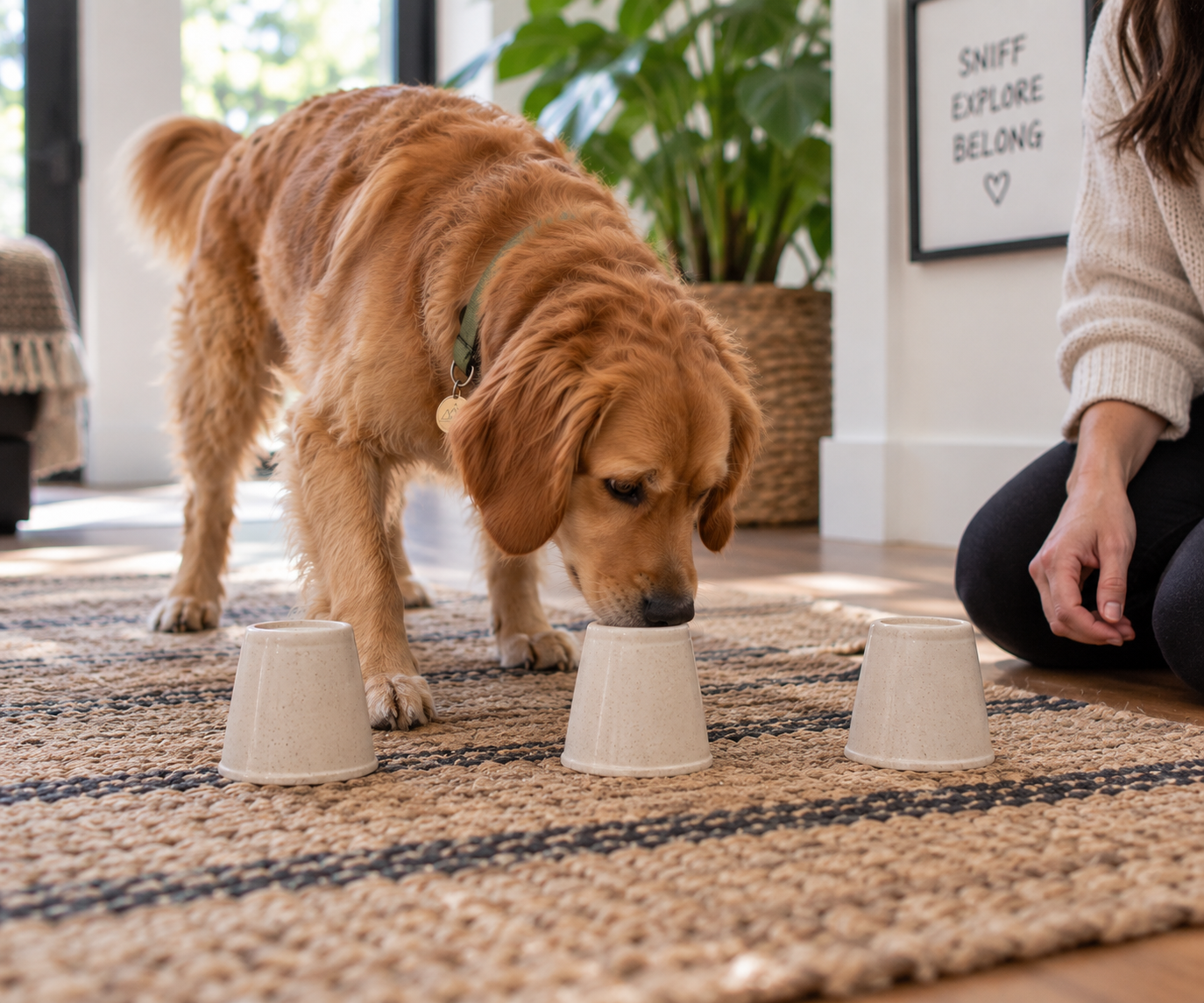
Plastic containers, paper cups, muffin tins, and other household vessels can all become search objects.
Just make sure anything your dog interacts with is safe, stable, and large enough that it can't be swallowed.
5. Scent Tubes and Containers
Scent tubes and other dedicated containers become more useful when you're moving toward structured scent training or formal Scent Detection.
For example, formal scentwork may involve presenting a target odor inside a specific scent vessel rather than simply hiding food.
You don't need these for your first nosework session. Think of them as equipment you might add later if your dog's interest develops into a more formal practice.
6. A Leash and Harness
For indoor searches, you may not need a leash at all.
For outdoor searching, however, a comfortable leash and harness can help you give your dog room to work while keeping the environment manageable.
Your job isn't to direct every sniff. In nosework, the dog is the detective.
7. A Notebook
This one isn't technically a scentwork supply — but it's useful.
Keep track of what your dog searches for, how quickly they find it, what environments they enjoy, and when you increase difficulty.
You don't need to turn enrichment into homework. A few notes can simply help you notice patterns and make future training sessions more intentional.
What Dog Scentwork Supplies Can You Skip?
You don't need an expensive scentwork kit, specialized scent aids, professional scent vessels, or a cabinet full of dog training scents to give your dog a great nosework experience.
You also don't need to turn every session into formal scent detection training.
And while activities such as lure coursing, formal scentwork trials, and other dog sports can be great outlets for dogs with the right temperament and interests, they serve a different purpose from a five-minute search game in your living room.
Start simple. See what your dog enjoys. Add equipment when it actually serves the activity — not because a kit tells you that you need it.
Bottom Line
The best dog scentwork supplies aren't necessarily the ones sold in a kit.
Start with what you already have. Give your dog something interesting to find, let their nose lead, and build from there.
The equipment can come later.
Ready to put your dog's nose to work? Download the Wild Scent Ritual Guide now - no experience required.
Read more on dog scentwork, what is nosework for dogs, and keeping your dog entertained while at work.
Frequently Asked Questions
-
For beginner scentwork, you can use everyday items you already have at home, including cardboard boxes, towels, containers, toys, and food. As you move into more structured Scent Work, equipment such as a Basic Nosework Kit, metal tins, small round tins, glass jars, and labeled jars can help create consistent scent-search setups.
-
For beginner scent training, you can start with treats, boxes, containers, towels, and other everyday objects. These simple items can serve as effective training aids without requiring specialized equipment.
-
Not for beginner nosework. Scent tubes and other scent aids become more relevant when you're moving into formal Scent Detection or Dog Scent Detection Training, where specific odors and equipment may be part of the training process.
-
Dog training scents are specific odors used to teach dogs to identify and locate a target scent. Formal Scent Work may use designated target odors, while recreational nosework can be much more flexible.
-
Start with short, successful training sessions and gradually increase the difficulty. You don't need a complicated regimen — consistency and letting your dog work independently matter more than having lots of equipment.
-
No. Recreational Nose Work can be done with everyday household items. Specialized equipment becomes more useful if you're preparing for formal competition or looking for specific trial and adventure essentials.
-
No. Lure coursing and scentwork are different dog sports. Lure coursing is primarily about chasing a moving lure, while scentwork asks dogs to use their noses to locate a scent. Both can provide enrichment, but they engage dogs in very different ways.
About the Author
Lindsay is the founder of Wild Pack and a Certified Fear-free Dog Trainer and Coach dedicated to helping dogs and their guardians thrive through reward-based training, nervous system regulation and instinct-led enrichment. After thousands of hours working hands-on with dogs of every breed, age, and temperament, she specializes in helping dogs build confidence, resilience, and lasting behavior change without fear or punishment. Wild Pack is a 5-star rated Seattle pet wellness brand trusted by dog parents globally and featured by KOMO News, Seattle Refined, and Dogington Post for its unique approach to canine wellbeing. Through boutique services, practical education, and innovative products, Wild Pack’s mission is to rewild pets—and the people who love them.