What is nosework for dogs? A Trainer's Perspective
Editor's note: This guide is written by a certified fear-free dog trainer and built on Wild Pack's nervous-system-first, reward-based training philosophy, adapted specifically for the terrier's high-drive, independent temperament.
Nosework for dogs is a scent-based enrichment and training activity that gives dogs a chance to do what they were born to do: use their nose. Instead of relying on sight or other sensory cues, dogs search, investigate, problem-solve, and follow their instincts to find a hidden scent or reward.
And no, your dog doesn't need to become the next canine detective. Nosework can be as simple as hiding a few treats around your living room.
In This Article
What Is Nosework for Dogs?
Nosework by the Numbers
Why Do Dogs Love Nosework?
Nosework vs. Sniffing on a Walk
Nosework vs. Scent Work
How to Start Nosework at Home
The Bottom Line
FAQs
Key Takeaways
Nosework gives dogs an outlet for instincts that modern life often suppresses. Searching, sniffing, investigating, and making choices are natural behaviors—not extra tricks dogs need to learn.
The real value of nosework is mental engagement, not simply “tiring your dog out.” A good scent game asks your dog to gather information, make decisions, and solve a problem independently.
You don't need more space, more gear, or more exercise to enrich your dog. A few treats, a cardboard box, and five to ten minutes can turn an ordinary room into a search environment.
Nosework puts your dog in the driver's seat. Instead of constantly directing or correcting your dog, you create the conditions for them to explore, think, and figure things out for themselves.
What Is Nosework for Dogs?
Let's start with the simplest definition:
Nosework is giving your dog something to find with their nose.
That's it.
You might hide a piece of chicken under a towel. Tuck treats into a few cardboard boxes. Scatter food around a room and let your dog hunt for it. As your dog gets more experienced, you can make the search more challenging.
The magic isn't in the fancy equipment. It's in what happens when you stop telling your dog exactly what to do and give them permission to figure something out for themselves.
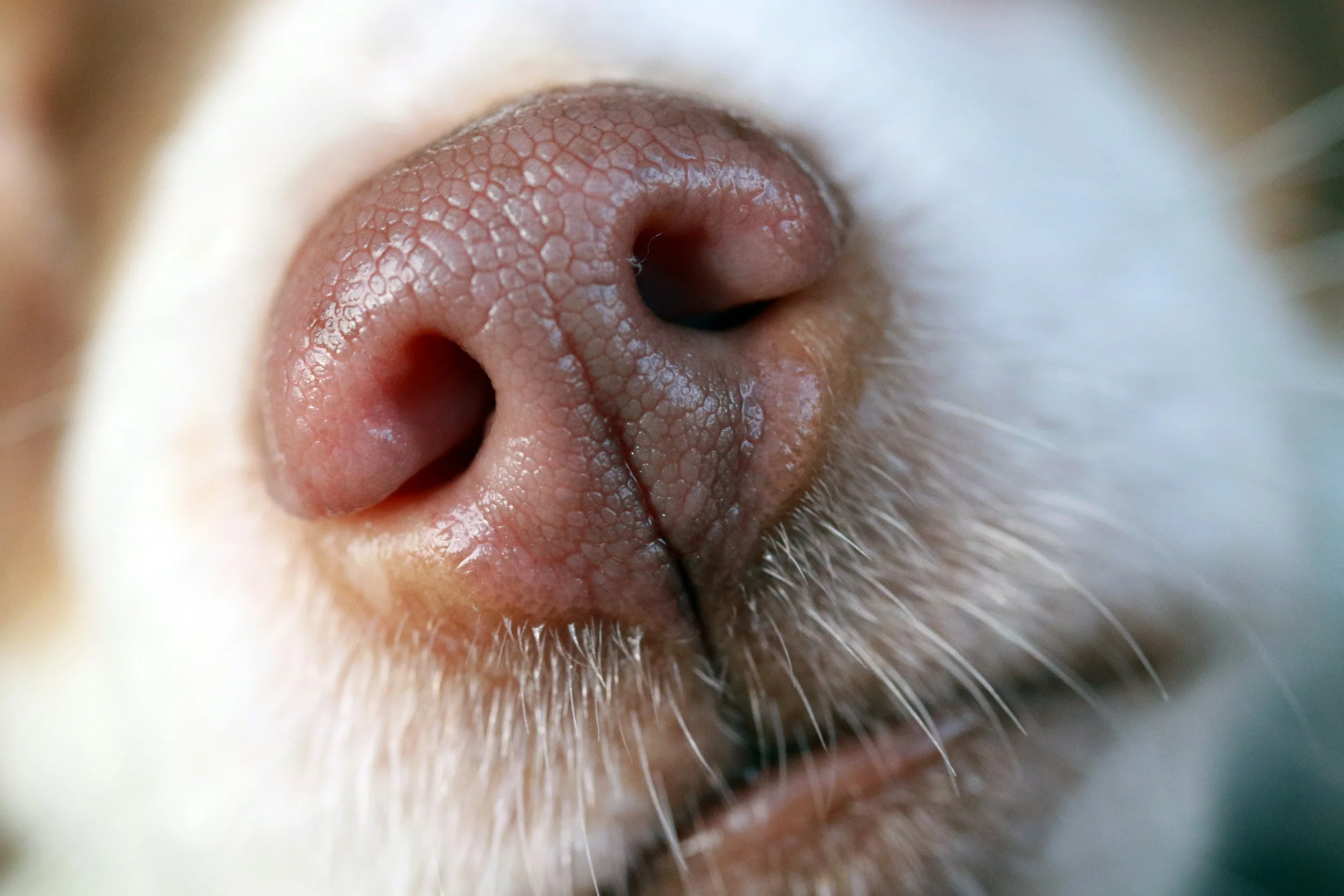
Dogs experience the world through scent in a way we humans can barely comprehend. Their noses are gathering information constantly—who's been here, what's changed, what's interesting, what's worth investigating.
Nosework gives that incredible sensory system a job.
And while nosework can absolutely become a competitive sport, it doesn't have to. At its heart, it's simply structured scent exploration.
Nosework by the Numbers
Dogs have some serious olfactory superpowers.
10,000–100,000x: That's the American Kennel Club's estimate for how much more acute a dog's sense of smell is compared with ours.
And people are increasingly giving those noses something to do.
According to data compiled from AKC trial results, the number of AKC Scent Work trials increased from 142 in 2017 to 2,040 in 2025—a roughly 1,337% increase. Classes increased from 1,086 to 28,916 over the same period.
The first AKC Scent Work competition, held in 2017, had 97 dogs from 20 states plus Canada.
Clearly, dogs aren't the only ones who have figured out that sniffing is pretty great.
Why Do Dogs Love Nosework?
Because sniffing is a deeply natural behavior.
Dogs don't need us to convince them that scent is interesting. Give a dog an intriguing smell and watch what happens: nose down, brain on, world temporarily forgotten.
Nosework taps into that instinct while adding a little structure and a reason to keep searching.
That makes it excellent mental enrichment. Your dog isn't simply burning off energy. They're gathering information, making choices, remembering where they've searched, and working out where the reward might be.
And there's something beautiful about giving a dog that kind of agency.
The AKC notes that scent work can help build confidence in shy dogs, and the activity can be adapted for dogs with very different breeds, sizes, ages, and abilities.
Your three-legged senior? Absolutely.
Your anxious rescue? Potentially.
Your tiny apartment dog who thinks the hallway is basically the Serengeti? Yep.
Your Labrador who has opinions about everything? Especially.
Is Nosework the Same as Sniffing on a Walk?
Not exactly—and one doesn't replace the other.
Sniffing on a walk is incredibly valuable. It's how your dog reads the neighborhood, gathers information, and experiences the world.
But nosework turns sniffing into a search mission.
Instead of wandering along and following whatever smells happen to cross their path, your dog is looking for something specific. There's a little puzzle to solve.
Think of it this way:
A sniffy walk says, “What's happening out here?”
Nosework says, “Can you find it?”
Both belong in a well-rounded enrichment routine.
Nosework vs. Scent Work: What's the Difference?
You'll see these terms used interchangeably, and honestly, the distinction can get a little fuzzy.
Generally, nosework is the broader term for scent-based activities you do with your dog for enrichment, training, or fun.
Scent Work can also refer specifically to organized sports such as AKC Scent Work, which has defined target odors, search areas, rules, and competition levels.
So if the thought of entering a competition makes you want to hide under a blanket, don't worry.
Your dog can enjoy nosework without ever earning a single title.
How to Start Nosework at Home
You don't need a special scent kit, a giant backyard, or a dog with a resume.
Start with what you already have.
1. Find the good stuff
Choose a small, high-value treat your dog absolutely loves - think bacon, cheese, chicken, jerky, etc.
2. Start ridiculously easy
Let your dog watch you place a treat somewhere obvious. Cue “find it” and let them go at it.
You're building the basic idea: follow your nose → find the thing → jackpot.
3. Hide it
Try placing treats inside an open cardboard box, underneath a towel, or just around a room.
Keep the first searches easy enough that your dog can succeed.
4. Make the hunt harder
Once your dog understands the game, add complexity: more boxes, more distance, or treats in harder-to-find areas.
Slow progression is the name of the game.
5. Get out of the way
This might be the hardest part for us humans.
Try not to point, hover, or tell your dog where the treat is. Let them sniff. Let them think. Let them solve it. Only assist if they’re having difficulty should you assist lightly.
Independence is part of the enrichment.
And remember: you don't need a 45-minute session. Five to ten minutes can be plenty. In fact, short sessions that end with your dog still wanting more are often the sweet spot. Science says that 10 minutes of nosework equals the same mental enrichment than a 30-minute walk!
What Do You Need for Nosework?
Not much.
A few treats, some cardboard boxes, a towel, a safe search area, and a handful of uninterrupted minutes can take you surprisingly far.
That's one of the things we love about nosework at Wild Pack: you don’t need a bunch of gear to get started.
Your dog just needs an opportunity to use the equipment they've had with them all along.
Their nose.
Why Nosework Is Especially Good for City Dogs
Modern dogs live remarkably human lives.
Elevators. Sidewalks. Cars. Apartments. Dog parks. Schedules. Leashes. Screens. Doorbells.
It's a pretty long way from sniffing out breakfast in the wild.
That doesn't mean city dogs need to live like wolves. But they still have instincts that deserve somewhere to go.
Nosework creates a tiny pocket of wildness in an otherwise very domesticated day.
It takes almost no space, can be done indoors, and gives your dog an opportunity to sniff, search, explore, and make choices without adding another mile to your already-full schedule.
For apartment dogs and busy urban pups, that's a pretty good trade.
The Bottom Line
So, what is nosework for dogs?
It's a way of letting your dog be a dog.
It's sniffing with purpose. Searching instead of simply following. Problem-solving instead of being constantly directed.
It can grow into a formal sport, but it can also be five quiet minutes in your living room with a handful of treats and a cardboard box.
And sometimes, the simplest enrichment is the stuff that makes the most sense to the animal standing right in front of you.
Their nose knows.
Ready to Try Nosework?
The Wild Scent Ritual Guide gives you four simple scent-based exercises you can do at home using everyday items—no experience required. It's a gentle introduction to instinct-led enrichment designed to help you create more opportunities for your dog to sniff, search, focus, and connect with you.
Read more on nosework training for dogs, dog scentwork classes, and how to stimulate your golden retriever.

Frequently Asked Questions (FAQs)
-
Yes, but nosework at home can be much simpler than formal scent training. You can start with treats, toys, or simple searches before teaching a dog to identify specific target odors, as they would in structured Scent Work.
-
Searching requires dogs to gather information, follow scent, make decisions, and work out where a reward is hidden. That makes nosework a simple form of mental stimulation and enrichment for dogs.
-
Nosework can give a reactive dog an engaging, low-pressure activity to do at home, away from common triggers. It isn't a treatment for reactivity, but it can be a valuable part of an enrichment routine.
-
Not quite. Formal Scent Work is modeled on the work of detection dogs, which are trained to locate specific scents such as drugs, explosives, or human remains. Recreational nosework simply gives your dog an opportunity to use that same incredible sense of smell for searching and enrichment.
About the Author
Lindsay is the founder of Wild Pack and a Certified Fear-free Dog Trainer and Coach dedicated to helping dogs and their guardians thrive through reward-based training, nervous system regulation and instinct-led enrichment. After thousands of hours working hands-on with dogs of every breed, age, and temperament, she specializes in helping dogs build confidence, resilience, and lasting behavior change without fear or punishment. Wild Pack is a 5-star rated Seattle pet wellness brand trusted by dog parents globally and featured by KOMO News, Seattle Refined, and Dogington Post for its unique approach to canine wellbeing. Through boutique services, practical education, and innovative products, Wild Pack’s mission is to rewild pets—and the people who love them.