How to Keep Your Dog Entertained While at Work
In This Guide
Building A World Of Solo Enrichment For Your Dog
Crafting a Calm and Secure Den for Your Dog
Morning Rituals That Set Your Dog Up for a Peaceful Day
Unlocking Your Dog's Mind with Scent Work
Building Your Pack with Midday Support
Frequently Asked Questions
Key Takeaways
Enrichment over Entertainment: Shift your mindset from just preventing boredom to providing purposeful solo activities that tap into your dog's natural instincts, like foraging and problem-solving.
The Power of Scent: A dog's nose is their most powerful sense. Simple scent games are incredibly calming and mentally tiring, helping to reduce stress and build confidence.
Create a Safe Den: A dog's need for a secure space is primal. A cozy, dedicated den with your scent and calming sounds helps them feel safe and settle into deep rest.
Mindful Morning Rituals: A calm, connected morning routine, including a sniff-focused walk and a "work-to-eat" breakfast, sets a peaceful tone for the entire day.
Know When to Call the Pack: For social dogs, a midday walk with a trusted professional can be a vital part of their well-being, fulfilling their need for pack connection.
Leaving your dog alone can feel heavy. But what if we reframed that time? The goal isn't just to prevent boredom. It’s to create a world of purposeful solo enrichment that taps directly into their wild, natural instincts. This simple shift turns their day from one of waiting into one of fulfilling, independent exploration.
It's all about puzzle toys, scent games, and safe, satisfying chews.
Building A World Of Solo Enrichment For Your Dog
I get it. Leaving our dogs can stir up a mix of guilt and worry. We picture them staring at the door, lonely and bored. But what if we saw this time not as an absence, but as a chance for them to connect with their own inner world?
The goal isn't to just scatter a few toys and hope for the best. It's about mindfully curating a space that speaks to their deepest drives. This is where the simple yet powerful concept of "work-to-eat" completely changes the game.
The Power Of Working For Food
For our dogs' wild ancestors, eating was the result of a hunt or a long forage. It was a job. It engaged their body and, most importantly, their mind. Today, we plop a bowl down that’s empty in under a minute, leaving that powerful foraging instinct totally unfulfilled.
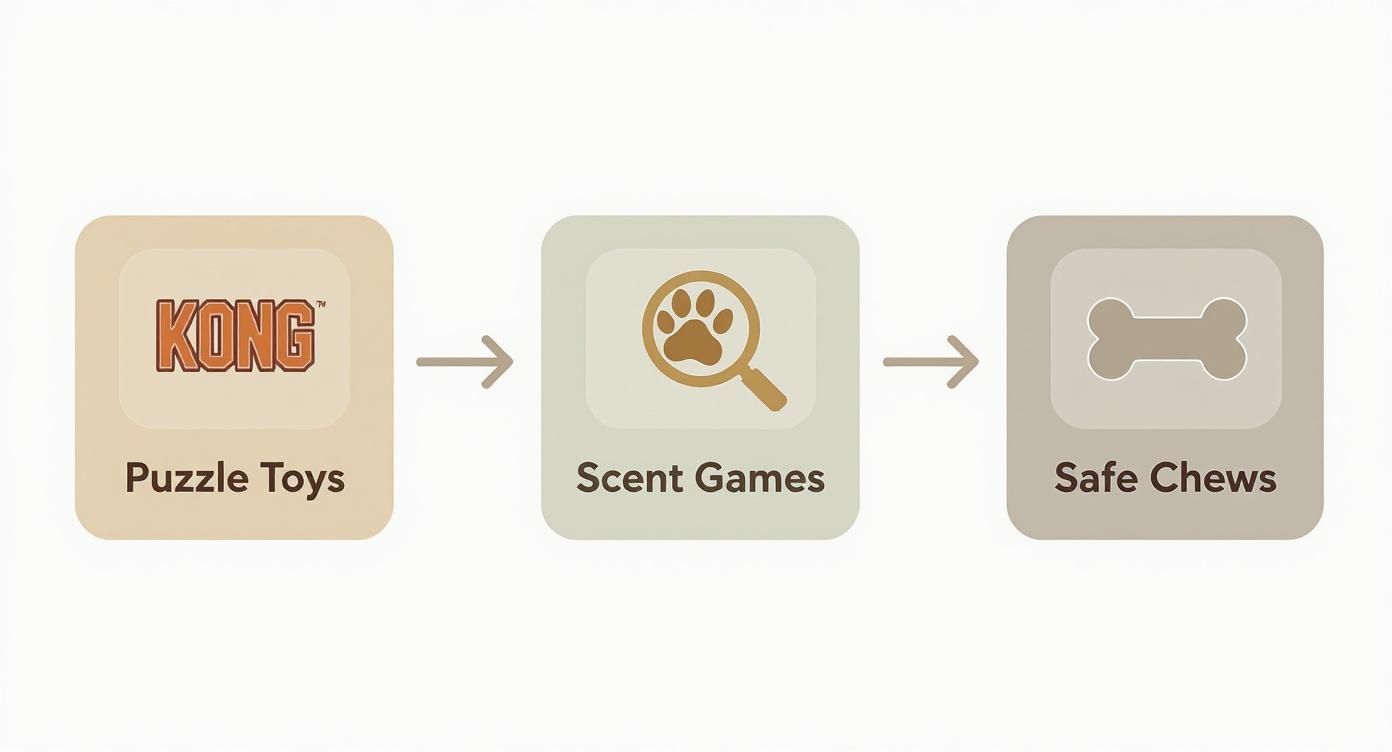
By using puzzle toys and slow feeders, we transform a two-minute gulp-fest into a satisfying mental challenge. This simple switch gives your dog a purpose while you're away, satisfying a deep-seated need to problem-solve. It’s one of the most effective ways I know to prevent boredom and the behaviors that come with it.
Start with easy, beginner-level puzzles to build up their confidence.
Slowly increase the difficulty as your dog gets the hang of it.
Use a portion of their daily kibble to avoid overfeeding.
Creating A "Library" Of Engaging Toys
Just like you wouldn't want to read the same book every single day, dogs get bored with the same old toys. The secret to keeping things fresh is rotation.
Create a "library" of different toys and only leave out a few each day. This strategy makes old toys feel new and exciting again.
Your library should include a mix of these enrichment types:
Puzzle Toys: These require your dog to lick, nudge, or paw to release food. Brands like KONG and West Paw make awesome, durable options.
Scent Games: A snuffle mat or even a simple rolled-up towel with treats inside encourages them to use their most powerful sense—their nose. Scent work is incredibly calming and mentally tiring for dogs.
Long-Lasting Chews: Chewing is a natural, stress-relieving behavior. Just be sure to choose safe, durable chews like nylon bones, coffee wood, or tough rubber toys that are appropriate for your dog’s size and chew style.
Simple, DIY Scent Games You Can Start Today
You don't need expensive gear to tap into your dog's sniffing superpower. Before you leave for the day, hide a few high-value treats around a dog-proofed room. Or, take an old cardboard box, fill it with crumpled paper, and sprinkle their kibble inside for a fun "treasure box."
These activities are incredibly rewarding and build independent confidence. For more ideas, check out our guide to dog mental stimulation games.
The importance of this enrichment has become even clearer as our work lives have changed. With 71% of U.S. households now owning pets, the connection between their well-being and ours is undeniable. Research even shows that just 10 minutes of pet interaction can drop our cortisol levels, and an incredible 91% of remote workers find that pets help reduce work-related stress.
To level up their solo playtime, you might explore innovative pet care solutions from Petkit that offer remote feeding or interactive play. By building a thoughtful world of solo enrichment, you're not just keeping your dog busy—you're honoring their nature and empowering them to truly thrive on their own.
Crafting a Calm and Secure Den for Your Dog
When you walk out the door, your home becomes your dog's entire world. Our goal isn't just to leave them in a house, but to create a true sanctuary for them—a space that feels instinctively safe and deeply restful. It’s less about how the space looks and more about how it feels to them, honoring their need for security so they can truly settle when you're gone.
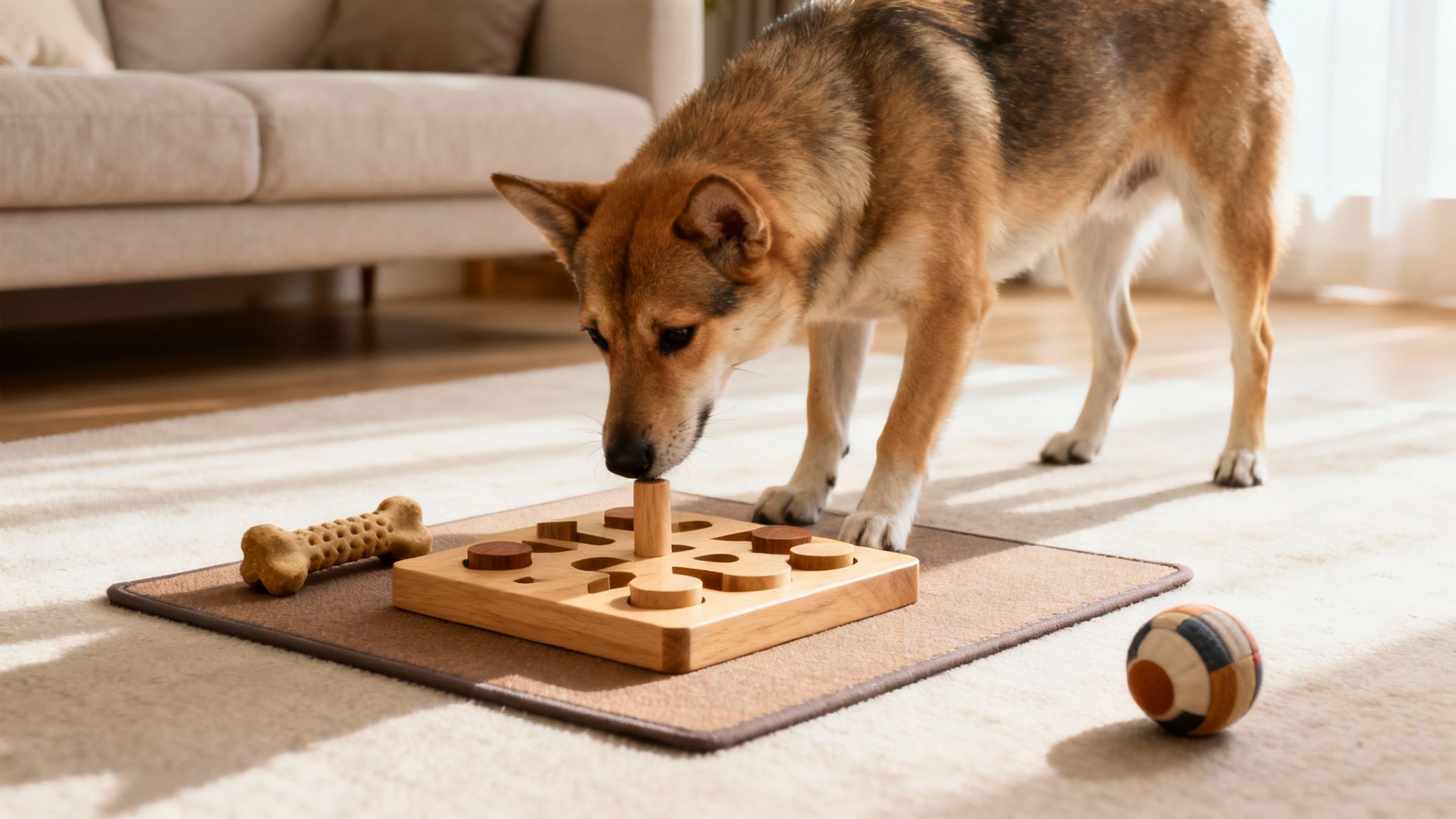
At the heart of this concept is the idea of a "den." For their ancestors, a den was a secure shelter, a place to retreat and relax. We can recreate this powerful feeling by dedicating a cozy corner just for them, a spot where they can feel completely at ease.
The Instinct of the Den
A dog's need for a den is wired right into their DNA. It’s a primal drive for a safe, enclosed space that provides comfort and a sense of security. Tapping into this instinct is one of the most powerful ways to ease separation anxiety and encourage them to rest independently.
A crate can be a fantastic modern den, but it's not the only way. A quiet corner of the living room, a nook under your desk, or even a walk-in closet with the door propped open can serve the exact same purpose. The most important thing is that it feels like their own personal retreat. If you're considering a crate, we have some advice on finding the best dog crate to fit your dog's size and temperament.
Make their special spot irresistible. Fill it with:
A soft, comfortable bed that supports their joints.
An old t-shirt or blanket that carries your familiar, reassuring scent.
One or two of their favorite (and safest) toys.
The Grounding Power of Sound
The world outside can be loud and startling. A delivery truck rumbling by, the neighbor's dog barking, or a sudden siren can jolt a resting dog into a state of high alert. You can soften these sharp edges by creating a consistent, calming audio backdrop.
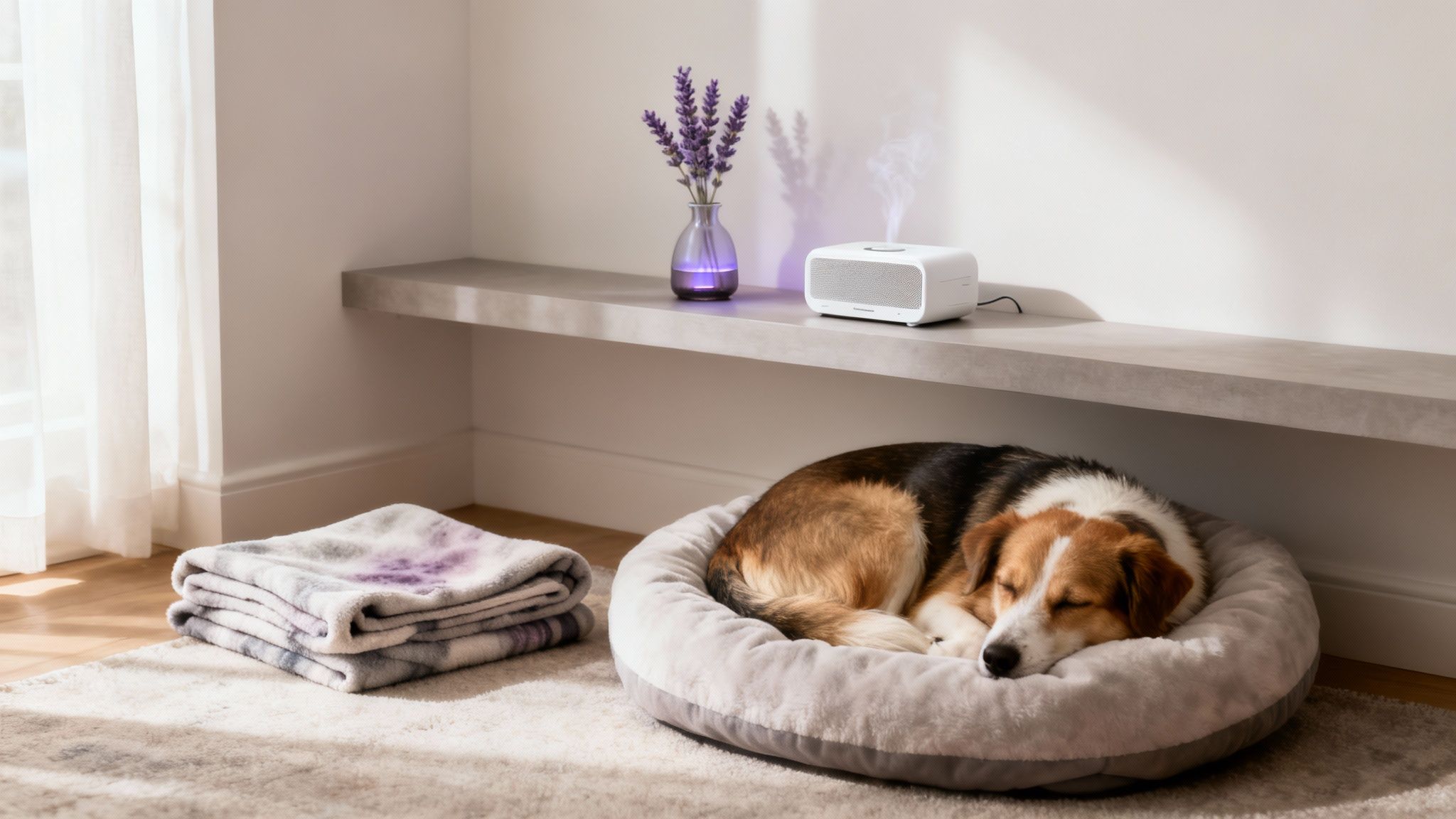
Sound can be a powerful tool for grounding. Just as we might listen to nature sounds to relax, a steady, gentle hum can mask jarring noises that might otherwise trigger stress in our dogs. Try playing a classical music playlist designed for dogs or using a white noise machine. These gentle sounds create an auditory blanket, helping your dog tune out disturbances and sink into a much deeper state of rest. It's a simple act that acknowledges their sensitive hearing and helps them feel more protected.
Scent and Serenity
A dog's world is a world of scent, and we can absolutely use this to our advantage. Introducing calming, dog-safe aromatherapy into the room their den is in can foster a serene atmosphere that encourages true relaxation.
Always, always make sure any scents you use are specifically made for dogs, diluted appropriately and are introduced gently. The goal is a subtle hint of calm, not an overwhelming fragrance. It’s a mindful detail that helps transform their space from just a corner into a true sanctuary.
Of course, safety is the foundation of any secure space. Make sure any puzzle toys are durable and hazard-free, and do a quick sweep of the area to ensure it's clear of anything they could chew or swallow. By thoughtfully crafting their den, you’re communicating to your dog that even when you’re not there, they are safe, secure, and cared for.
Morning Rituals That Set Your Dog Up for a Peaceful Day
How the first hour of the day unfolds can shape all the hours that follow—for both you and your dog. A frantic, rushed morning leaves a dog feeling unsettled and anxious. But a calm, connected start? That sets the tone for a peaceful day of rest.
It's all about mindfully fulfilling their core needs before you head out the door. Think of it as filling their cup so they can settle easily in your absence.
Instead of just trying to burn off physical energy, let’s reframe our mornings around rituals that engage their mind and honor their instincts. This approach gives them a much deeper sense of fulfillment that lasts long after you've left. It’s about quality connection, not just the quantity of exercise.
Embrace the Sniffari
The morning walk is so often just a quick potty break, a race against the clock. Instead, try reframing it as a "sniffari"—a sensory journey led entirely by your dog's most powerful tool: their nose. Every scent tells a story, and letting them follow these invisible trails is incredibly stimulating.
Here’s a little secret: a 15-minute sniff-focused walk can be more mentally tiring than a 30-minute jog. It taps directly into their natural foraging instincts, which actually calms their nervous system and gives them vital information about their world. So, let them linger. Let them investigate that fascinating patch of grass. Download our free scentwork guide here.
This simple shift forces us to slow down, breathe, and just be present with our dogs. It’s a beautiful, grounding practice for both ends of the leash. If you’re curious about finding the right balance for your dog's needs, our guide on how often dogs should be walked is a great place to start.
Transform Breakfast Into a Win
Just like we talked about with solo enrichment, mealtime is a golden opportunity. Ditch the boring old bowl. Instead, serve their breakfast in a puzzle feeder or a snuffle mat.
This simple change turns their first meal of the day into a satisfying challenge that starts them off with a confident win.
This "work-to-eat" ritual does a few key things:
It immediately engages their problem-solving skills.
It slows down fast eaters, which is much better for digestion.
It gives them a clear, purposeful activity to focus on.
You're essentially giving them a job to do, honoring their instinct to forage and work for their food.
Connect with Brief, Positive Training
You don't need a formal, hour-long session. Seriously. Just five minutes of positive, connection-based training can do wonders for your bond and their focus. It taps into their desire for clear communication and their instinct to work within a pack.
Try practicing simple cues they already know, like "sit" or "touch," and reward them with praise or a tiny treat. The goal isn't perfection; it’s that joyful, focused interaction. This little mental check-in reinforces your partnership and sends a clear signal of calm leadership before you part ways for the day.
By weaving these simple rituals into your morning, you're doing so much more than just finding ways to keep your dog entertained while at work. You are communicating love, security, and purpose, setting them up for a day of quiet contentment.
Unlocking Your Dog's Mind with Scent Work
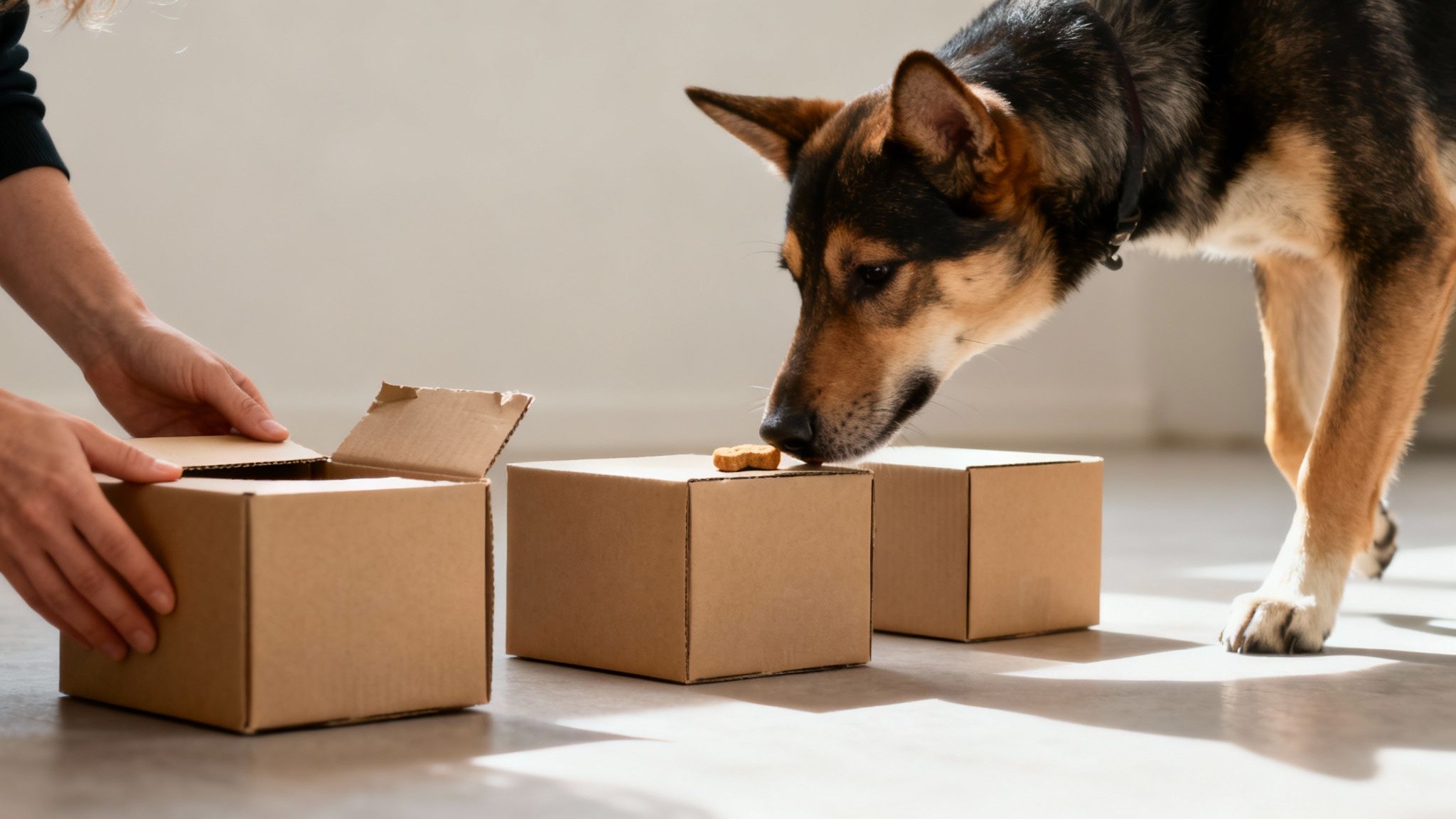
We experience the world mostly through sight, but our dogs read it with their noses. Scent is their native language, a constant stream of stories and information we can’t even begin to perceive. Tapping into this incredible sensory ability is one of the most powerful ways to keep your dog happy and engaged while you're at work.
Scent work, or nosework, is so much more than a game—it's a direct line to your dog's primal instincts. It gives them a real, fulfilling job to do, channeling all their focus and energy into something that feels deeply satisfying. You'll be amazed at how just a few minutes of dedicated sniffing can be more calming and tiring for a dog than a long run.
That's because using their nose engages their brain on a profound level. It builds confidence, eases anxiety, and provides a healthy outlet for their natural drives. It’s a simple way to let them be exactly who they are: brilliant, instinctual creatures.
The Science of the Sniff
A dog’s nose is a marvel of natural engineering. It contains up to 300 million olfactory receptors, completely dwarfing our mere 6 million. The part of their brain dedicated to analyzing smells is about 40 times greater than ours.
This means that when your dog is sniffing, they are processing an incredibly complex world of information. Letting them engage this superpower isn't just fun; it's essential for their mental well-being. Think of it as a form of canine meditation, grounding them in the present moment and washing away stress.
Simple Scent Games for Beginners
You don’t need any special equipment to get started. The best nosework games are the ones you can set up in minutes before you leave for the day, turning their environment into an exciting landscape of discovery.
Download our free nosework guide here.
Why Scent Work Calms an Anxious Mind
For dogs who struggle with being alone, scent work offers a calming, welcome distraction. The intense focus required to find a hidden treat gives their brain a constructive task, pulling their attention away from the stress of watching you leave.
It also gives them a sense of control and purpose. By successfully solving the "puzzle," they get a little boost of dopamine, the feel-good chemical in their brain. This positive reinforcement loop builds their confidence and teaches them that being alone can actually be a rewarding experience. It's a gentle way to reframe their alone time from something to be endured into something to look forward to.
Building Your Pack with Midday Support
Puzzle toys, scent games, and calming dens are incredible tools. But let's be honest—sometimes, solo enrichment just doesn't cut it. Dogs are deeply social beings, and many of them genuinely crave the energy and connection of a pack, especially during those long, quiet hours in the middle of the day.
Thoughtfully bringing in midday support can be a total game-changer for your dog’s well-being. This isn’t about admitting defeat or feeling guilty; it’s about recognizing your dog’s innate needs and expanding their community. It’s about building a trusted pack that helps them thrive even when you can’t be there.
Reading the Signs Your Dog Needs More
So, how do you know if your dog might benefit from a midday visitor? They usually tell us through subtle shifts in their behavior. These aren't signs of a "bad dog," but clear communication about an unmet need.
Look for patterns like these:
An uptick in restlessness or pacing in the evenings.
New or more intense destructive chewing, especially around doors or windows.
A surge in demand for your attention the second you walk in the door.
Notes from neighbors about midday barking or howling.
These behaviors are often your dog's way of saying their social and physical cup is running low by midafternoon. A midday break can be the perfect way to refill it before that pent-up energy spills over into anxious or destructive habits.
Choosing the Right Pack Leader
Inviting someone into your home and your dog's life is a big deal. The person you choose should be more than just a key-holder; they should be a true partner in your dog's care, someone who shares your philosophy of instinct-driven wellness.
When you're vetting a dog walker or pack leader, ask thoughtful questions that go beyond just their rates and availability.
Inquire about their approach to things like:
Reading dog body language and managing different energy levels within a group.
Handling unexpected situations on walks, like off-leash dogs or sudden loud noises.
Structuring a walk to include both physical exercise and sensory exploration (we love a good "sniffari").
You're looking for someone who sees a walk as a chance for true enrichment, not just a quick potty break. A great dog walker understands the subtle language of dogs and respects their fundamental need to explore the world through scent. Trust is everything. Find a professional whose energy feels calm and confident, someone who listens to your dog's needs and communicates clearly with you. This person is an extension of your pack.
If you're in the Seattle area, inquire about our pack walks here.
The Power of a Well-Managed Pack Walk
For many dogs, a small, structured pack walk is incredibly fulfilling. Moving together with other dogs taps into a deep, ancestral instinct for coordinated group movement. It’s a powerful social experience that provides a sense of belonging and purpose.
A well-managed pack walk isn't a chaotic free-for-all at the dog park. It’s a structured journey where dogs walk in loose harmony, guided by a skilled leader. This experience can build confidence in shy dogs and provide a healthy social outlet for more outgoing pups. It’s a beautiful way to meet their social needs in a safe, enriching environment.
This focus on our pets' well-being is increasingly mirrored in our work lives. A comprehensive study found that employees who could bring pets to work scored much higher on job satisfaction scales. In fact, 82% of HR professionals believe pet-friendly policies are key to attracting and keeping the best talent. These findings highlight a growing understanding of how deeply our animals' happiness is tied to our own. You can find out more about the connections between pets and workplace satisfaction here.
Ultimately, building this support system is another profound way to show your dog you care. It acknowledges their social nature and ensures that even when your worlds are separate for a few hours, their needs are fully and lovingly met.
Keep Exploring...
Exploring your dog's inner world is a continuous, beautiful journey. To keep the adventure going and deepen your connection, dive into some of our other guides. They're packed with ways to honor your dog’s natural instincts and strengthen your shared bond.
Lastly, remember to download our free scentwork guide here on how to enrich you dog's mind in less than 9 minutes per day.
Read more about...
Frequently Asked Questions
How Long Can My Dog Really Be Left Alone?
This is a question that goes way beyond just bladder control. Sure, most adult dogs can physically hold it for 6-8 hours, but their mental and emotional comfort is a whole other ball game. Our goal isn't just for them to endure the time we're gone, but to feel safe and rest peacefully.
A dog’s comfort level is a unique mix of their age, breed, and personality, all influenced by the environment you create. A young, high-energy puppy is going to have a much harder time than a sleepy senior. The real win is crafting a space so enriching and calming that the hours just melt away for them.
What Are the Safest Toys to Leave Out?
When you're not home, safety is everything. The best solo-time toys are tough, sized just right for your dog, and designed to prevent any choking or swallowing hazards. You want to focus on things that can stand up to your dog's specific chew style without splintering or breaking into dangerous little bits.
Look for materials that tap into their natural instincts:
Hard Rubber Toys: Think brands like KONG or West Paw. These things are practically indestructible and perfect for stuffing with treats, which satisfies both the need to chew and the instinct to forage.
Durable Nylon Chews: These are built to last and designed to fray safely instead of breaking apart, making them a fantastic option for those power-chewer pups.
Natural Wood Chews: Options like coffee wood are super dense and don't splinter easily, offering a really satisfying chew session.
A non-negotiable rule: always supervise your dog with a new toy several times before ever leaving them alone with it. This is how you learn their "chew-sonality" and make sure it's a safe choice for unsupervised fun.
My Dog Just Sleeps All Day. Is That a Sign They're Bored?
It’s easy to look at a sleeping dog and wonder if they're bored out of their mind. But honestly, it's usually the opposite! Adult dogs naturally sleep between 12-14 hours a day. This deep, restorative rest is crucial for their physical and mental health.
A dog who feels safe, secure, and content in their environment will happily settle in for long snoozes. The real tell is in their overall behavior. If they sleep soundly while you're gone but are bright, engaged, and ready to play when you get home, they're likely just getting good quality rest. But if their "sleep" feels more like lethargy and they seem disconnected even when you are around, it might be a sign of something more, like boredom or resignation.
How Can I Tell If My Dog Is Anxious or Just Bored?
This is a great question, because boredom and anxiety can look surprisingly similar at first glance. The key difference is the emotion behind the behavior. Boredom is a lack of stimulation; anxiety is rooted in fear and stress, usually about you being gone. Paying close attention to their actions will give you all the clues you need.
A bored dog might:
Get into some light, opportunistic mischief, like shredding a tissue box left within reach.
Pace around a bit or seem restless before finally settling down.
Act over-the-top excited and demanding the second you walk in the door.
An anxious dog, on the other hand, often shows more intense behaviors:
Destructive chewing and scratching, especially focused on exits like doors and windows.
Persistent howling, barking, or whining that goes on long after you've left.
Having accidents inside, even if they're completely potty trained.
Figuring out which one it is helps you tackle the root of the problem—whether that means adding more brain games and enrichment or focusing on building their confidence when they're on their own.