How to Bell Train a Dog: A Gentle Potty Guide

Table of Contents
A Ritual of Connection
The Science Behind the Sound
Choosing Your Tools and Setting the Scene
Guiding Your Dog Through the Bell Training Journey
Working Through Common Bell Training Hiccups
Weaving Bell Training Into Your Daily Rhythm
Frequently Asked Questions
Key Takeaways
Bell training gives your dog a clear way to communicate their need to go outside, tapping into their natural instinct to communicate with their pack.
The process is built on positive reinforcement, associating the sound of the bell with the reward of a trip outdoors.
Choosing the right bell (hanging, push, or electronic) based on your dog's personality and size is crucial for success.
Consistency is key: every person in the house must follow the same bell-ringing routine for every potty break to solidify the connection.
Common issues like fear of the bell or overuse can be managed with patience, gentle adjustments, and clear boundaries.
Ever wish your dog could just tell you what they need? Bell training is the next best thing. Forget the guessing games and deciphering subtle cues—this is about giving your dog a clear, consistent voice. It’s far more than a simple potty solution; it’s a shared language that bridges the gap between our world and their canine one.
This whole process taps directly into your dog's innate intelligence and their instinct to communicate within their pack—which absolutely includes you. By giving them a specific tool for a specific need, you’re honoring their ability to learn and connect on a much deeper level.
A Ritual of Connection
Think of bell training less as a training chore and more as a mindful ritual. Each little jingle becomes a quiet signal to pause, listen, and respond. That simple exchange transforms a daily necessity into a powerful moment of mutual trust and understanding.
It’s a beautiful way to reinforce that you're in tune with their needs, strengthening the invisible threads that tie your pack together. Instead of you dictating potty time, you're creating a system where they can confidently express themselves. This small shift empowers your dog and deepens your bond, turning a routine into a rhythm.
The Science Behind the Sound
Using a sound as a cue isn't some new fad. The whole idea of conditioning animals to respond to sounds was famously demonstrated by Ivan Pavlov’s experiments with dogs way back in the early 1900s. He showed that dogs could learn to associate the sound of a bell with food, a principle that helped shape the positive reinforcement methods we still swear by today.
Bell training applies that same concept in a gentle, practical way:
The sound of the bell becomes a reliable signal for a positive outcome—getting to go outside.
Your dog learns that their action (ringing the bell) directly causes the result they want.
This positive feedback loop encourages them to repeat the behavior over and over.
Understanding your dog’s natural rhythms is the foundation of it all, starting with their basic potty needs.
Ultimately, we're not just housebreaking; we're building a conversation. It's a foundation that not only reduces accidents but, more importantly, fosters a relationship built on listening.
Choosing Your Tools and Setting the Scene
Before we can even think about the first jingle, we need to set the stage. Getting the right environment and tools in place is the first real step in this journey, and it’s about more than just hanging a bell on the door. It’s about creating a calm, intuitive space where your dog can naturally learn this new way of communicating with you.
The right bell can honestly make or break this process. You're looking for something with a clear, pleasant tone—loud enough for you to hear from another room but not so jarring it spooks a more sensitive pup. Every dog is different, so let their size and personality be your guide.
Finding the Right Bell
There are a few go-to styles out there, and each has its perks.
Hanging Bells: These are typically sleigh-style bells strung on a ribbon. They’re perfect for dogs who are natural nudgers and love to investigate things with their noses.
Push Bells: Think of the classic service bell you see at a front desk. These sit on the floor and need a gentle paw press to ring. They're a fantastic choice for dogs who are more paw-oriented.
Electronic Buttons: A more modern option, these can be placed on the floor or mounted on the wall. They only need a light touch, which makes them ideal for smaller breeds or dogs with a very gentle nature.
Really think about your dog's instincts here. A big, boisterous Lab will probably have a blast with some sturdy hanging bells, while a delicate Italian Greyhound might feel more comfortable with a light-touch electronic button.
Ideal Placement and Treat Preparation
Got your bell? Great. Now, placement is everything. You’ll want to put the bell right next to the door you use most often for potty breaks. This forges a super strong, undeniable connection between the sound, that specific door, and the act of going outside.
Make sure it's at a comfortable height for your dog to easily use it. For hanging bells, that means they should dangle right around nose or paw level. For a wall-mounted button, place it low enough for an easy nudge. The goal is to make it effortless, not an acrobatic challenge.
Next up: rewards. We are building a powerful, positive association from the very first ring, so you need to bring out the high-value treats. This is not the time for their regular kibble. We're talking small pieces of cooked chicken, tiny cubes of cheese, or those single-ingredient freeze-dried morsels that make their eyes go wide. The scent and flavor need to be exciting enough to make touching that bell an event worth repeating.
Creating a Supportive Environment
Your home is a huge piece of the training puzzle. A calm space helps your dog focus and reduces any training-related anxiety. For potty training in general, having a designated spot in your yard creates incredible consistency. While you're at it, you might even look into options for pee-resistant grass to keep your lawn looking good despite all the frequent trips.
If you use a crate, it should always be a safe den—a place of comfort, not confinement. A peaceful den contributes to successful house training and gives your dog a secure spot to chill out between training sessions. If you want to turn it into a true sanctuary, check out our guide on choosing the best dog crate that honors your dog's instinctual need for security. By thoughtfully prepping your tools and your space, you’re building a foundation of trust and clarity that will make bell training a genuinely joyful and bonding experience.
Guiding Your Dog Through the Bell Training Journey
This is where the real connection begins. The journey of teaching your dog to use the bell isn't about rigid steps, but more of a flowing conversation. We'll move through a few organic phases that honor your dog's unique learning rhythm. Patience, observation, and celebrating the small wins are key here. This whole process taps into your dog's natural desire to communicate, turning a simple jingle into a shared language.
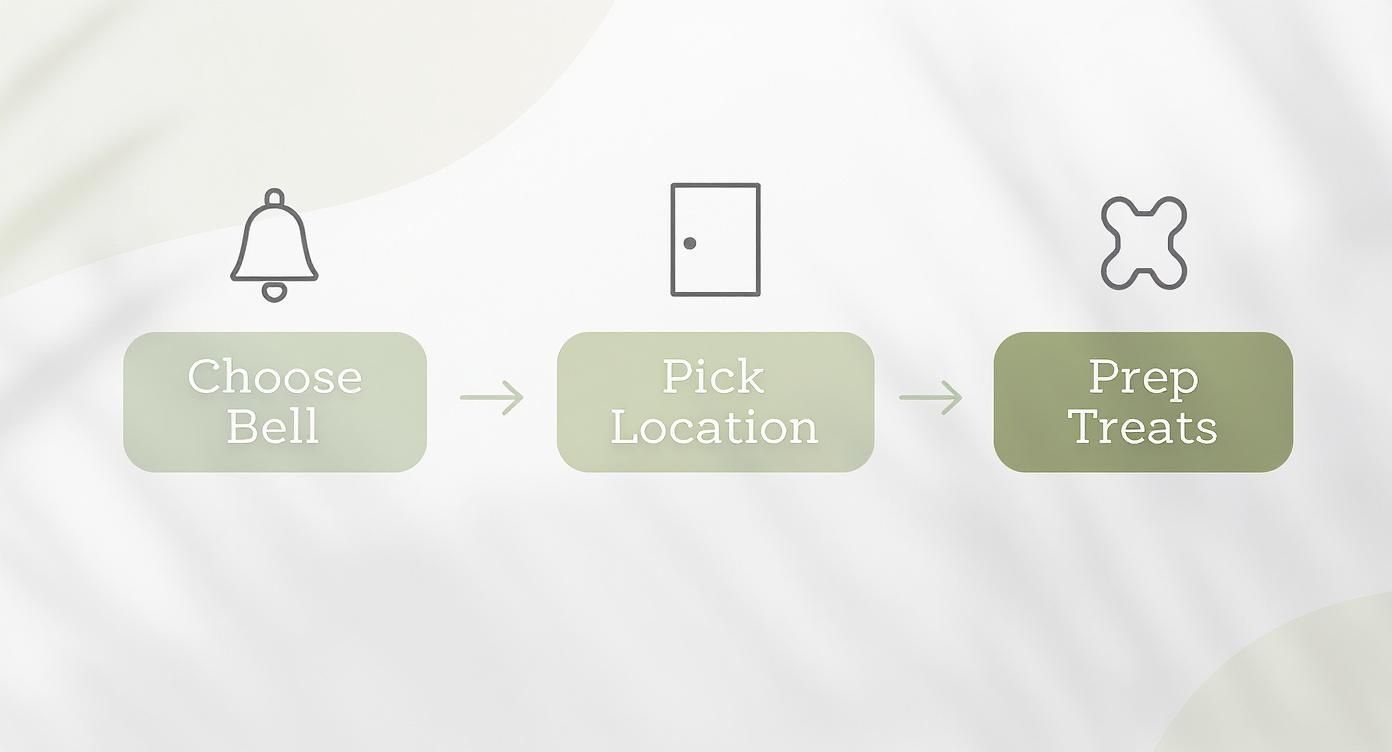
This visual guide highlights that successful training starts with thoughtful preparation, long before the first lesson even begins.
Befriending the Bell
The very first phase is all about creating a positive friendship between your dog and this new object. The goal? Make the bell so appealing that your dog can’t wait to interact with it. We want its sound to signal joy, not startle them.
Start by just holding the bell in your hand and letting your dog investigate. Any sniff or glance in its direction earns them a high-value treat and some quiet praise. Let their natural curiosity lead the way; you're simply rewarding their interest.
Now, let’s encourage a gentle touch. Try holding a tasty treat right next to the bell, so their nose has to brush against it to get the reward. The moment their nose makes contact, mark the behavior with a calm "yes" and give them the treat. Repeat this in short, happy sessions over a day or two.
On average, dogs need about 10 to 15 repetitions of this bell-ringing sequence before they really make the connection. Once your dog is confidently booping the bell with their nose, it's time to transfer this skill to the bell's permanent home by the door. Hold it in place and repeat the same exercise. The goal is simple: bell = good things happen.
For those with puppies, this stage is a wonderful opportunity to build foundational training skills. Consistency during these early days is crucial, and you can explore more strategies in our guide on how to train a puppy at home.
Connecting the Bell to the Outdoors
Now that the bell is a friend, it’s time to give it a job. This next part is all about forging an unbreakable link between the sound of the bell and the immediate reward of an outdoor adventure. Timing and consistency are everything.
Every single time you plan to take your dog out for a potty break, lead them to the bell first. Gently prompt them to touch it with their nose or paw. The very instant the bell jingles, praise them enthusiastically, open the door, and lead them outside.
This sequence must be exact:
Ring the bell: They initiate this, even with your guidance.
Immediate praise: A happy, encouraging word.
Door opens instantly: No delays for grabbing keys or putting on a coat.
Go outside: Directly to their potty spot.
This isn't about asking if they want to go out; it's about teaching them that ringing the bell is what makes the door open for potty time. Don't ring it for them. Guide their nose or paw to do it themselves, so they learn they are the ones causing the magic to happen.
Handling Scheduled and Spontaneous Breaks
Your training will involve both planned potty breaks and those moments you just know your dog needs to go.
For scheduled breaks (like first thing in the morning or after a nap), always stop at the door and guide them through the bell-ringing ritual before going out. This builds a strong, predictable routine.
For spontaneous requests, if you see your dog sniffing or circling, calmly lead them to the bell and have them ring it before you open the door. This reinforces that the bell is the proper way to ask.
The key is that the bell must ring every single time that door opens for a potty trip. Repetition builds the association, solidifying this new form of communication in your dog's mind.
Fading the Prompts
The final phase is a beautiful, gradual dance of stepping back and letting your dog take the lead. Our goal is to fade our physical and verbal prompts until your dog is choosing to ring the bell all on their own. This is where you empower them to find their voice.
Once your dog reliably touches the bell with your guidance, start reducing your help. Instead of guiding their nose all the way, just point to the bell. When they touch it, reward them with praise and open the door.
After a few days of successful pointing, try standing near the door and simply looking at the bell expectantly when it's time to go out. Give them a moment to process. That little pause is where the learning clicks into place. The first time they ring it without any physical prompt is a huge milestone worth celebrating!
As they become more confident, you can add a soft verbal cue like "Outside?" while looking at the bell. Eventually, you can stop prompting altogether. You’ll start to hear the bell jingle from another room, and you'll know your dog has mastered this new language. It's a testament to their intelligence and the strong communicative bond you've built.
Remember, every dog learns at a different pace. If your dog seems stuck, simply take a small step back to the previous phase where they were successful and practice a bit more before moving forward. This journey is about progress, not perfection.
Working Through Common Bell Training Hiccups
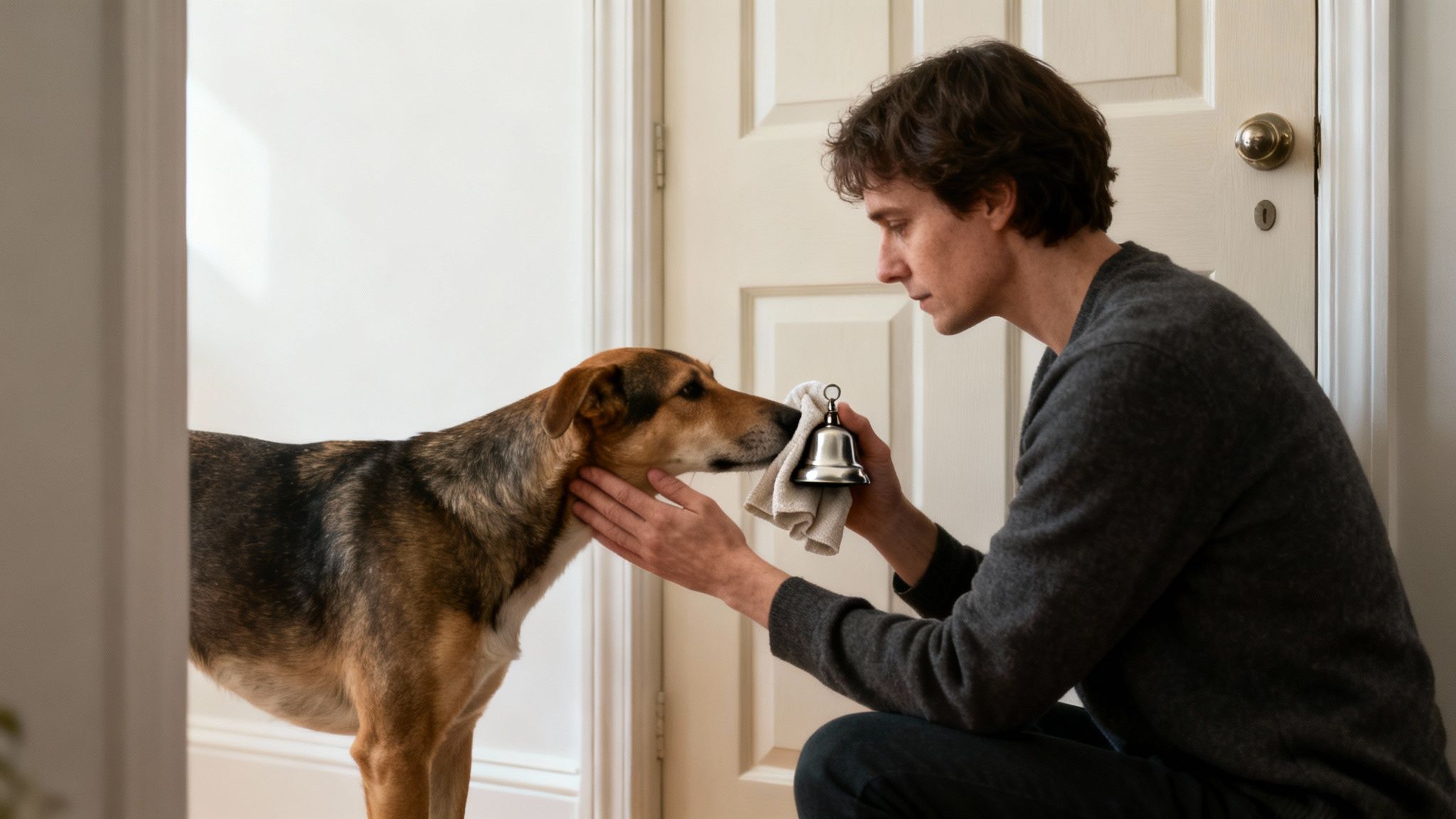
Hitting a few bumps in the road is a totally normal part of teaching your dog a new skill. Think of it as building a new language together—every dog learns at a different pace, and their unique personality is going to shape how they pick this up. These challenges aren't failures. They're just opportunities for us to listen a little closer and tweak our approach with patience.
This whole process is about honoring your dog's speed, not sticking to a rigid timeline. With a bit of empathy and a few small adjustments, you can keep the training fun, positive, and connected to how your dog naturally learns.
When Your Dog Is Wary of the Bell
Some dogs, especially the more sensitive souls, might be a little startled or even scared by the bell's sound at first. This isn't them being stubborn; it’s a perfectly natural reaction to a strange new noise in their space. Our job is to help them see that sound not as an alarm, but as a quiet promise of good things.
Start by muffling the bell. You can wrap a small piece of cloth or even some tape around the clapper on hanging bells to soften the jingle. If you’re using a push-style bell, just placing it on a small rug can do the trick. It's a simple fix that can make a world of difference.
From there, we rebuild the positive association from a distance they're comfortable with.
Put the muffled bell on the floor and reward your dog just for looking at it.
Slowly encourage them to move closer, rewarding every tiny step forward.
Break out the really good stuff—those extra high-value treats—to make these sessions overwhelmingly positive.
This gentle approach respects their boundaries and teaches them that the bell is a safe, friendly object. This approach focuses on building confidence from the ground up.
The Overly Enthusiastic Ringer
So what happens when your clever pup figures out the bell is a magic button to the great outdoors? You might suddenly have a dog who rings it to chase squirrels, to ask for playtime, or just because the sun is out. You have to admire their smarts, but now it's time to gently clarify the bell's true purpose.
The key here is to create a clear difference between potty trips and play trips. When they ring the bell, always take them out on a leash for a calm, boring potty break. Lead them straight to their designated spot without any excitement or fanfare.
If they go, offer a little quiet praise and head right back inside. If they don't, you just calmly go back indoors. No fuss, no drama. The message starts to sink in: the bell is for business, not for parties. You can initiate all the fun outdoor adventures yourself, completely separate from the bell-ringing routine.
When Training Seems to Stall
It can be frustrating when a dog who was making great progress suddenly seems to forget everything. This is almost never a true step backward. More often, it’s a sign that the connection just isn't quite solid yet. The number one culprit? A lack of consistency from all the humans in the house.
If one person lets the dog out without ringing the bell, it dilutes the whole association. A little "back-to-basics" reset can work wonders here. Just spend a day or two going back to the very first step: gently guiding their nose or paw to the bell for every single potty trip, followed by an immediate reward.
You're not starting over; you're just reinforcing the connection. Research shows it takes most dogs between 2 to 6 weeks to reliably use the bell, with success rates hitting over 75% when the training is consistent. You can find more insights about these training timelines here. Meeting these moments with patience only strengthens your bond and reminds you both that learning is a journey you're on together.
Weaving Bell Training Into Your Daily Rhythm
Successfully teaching your dog to use a potty bell is one thing, but truly weaving it into your daily life is where the magic happens. It's more than just a tool to prevent accidents; that little chime becomes a quiet ritual that grounds your day and deepens your connection.
Think of it as a shared language. The bell transforms a mundane task into a moment of intentional connection. Each trip outside is no longer just a chore but a direct response to a clear request from your dog. This builds an incredible amount of trust and mutual understanding.
That gentle sound is also a powerful call to the present moment. It’s a signal to step away from your computer, put down your phone, and join your dog for a minute in nature. I like to think of this small act as a form of rewilding—a conscious choice to reconnect with the earth's natural rhythms, all prompted by your dog's simple, instinctual need.
From Tool to Ritual
When the bell shifts from a simple tool to a cherished ritual, you'll notice the benefits ripple through your entire life together.
Fewer accidents and much less guesswork for you.
A clear, consistent way for your dog to communicate their needs.
A stronger bond built on the simple acts of listening and respecting.
A daily reminder to pause, breathe, and connect with the natural world.
This newfound clarity is a beautiful gift. It’s proof that with a little patience and the right approach, we can create a powerful dialogue with our animal companions.
And as you successfully weave bell training into your dog's daily routine, you might become more aware of other ways to keep your home healthy. This can include things like managing pet dander and allergies to ensure your shared space is fresh and comfortable for everyone.
Cultivating a Deeper Connection
This whole training journey is really about awakening your dog’s natural drive to communicate. If you've enjoyed tapping into their instincts with the bell, you’ll absolutely love exploring other forms of sensory play. Nosework, for example, is a fantastic way to honor their incredible sense of smell.
We created a guide to help you get started with some simple, fun games that will enrich your dog’s mind and strengthen your bond even further.
👉 Download Our Free Dog Nosework Guide
By embracing these small rituals, you're not just training a dog—you're nurturing a relationship. You're celebrating the wild, intelligent spirit that makes your dog who they are and building a life of shared joy and understanding, one chime at a time.
Read more about...
Frequently Asked Questions
Can I bell train an older dog?
Absolutely. While puppies might learn quickly, adult and senior dogs are perfectly capable of learning to use a bell. The process relies on positive reinforcement, which works at any age. You might need a little extra patience as they unlearn old habits, but their ability to focus can be a great advantage. Keep sessions fun, consistent, and rewarding.
What if my dog rings the bell just to play outside?
This is a common and clever problem. To clarify the bell's purpose, make a clear distinction between potty breaks and playtime. When they ring the bell, take them out on a leash for a brief, calm potty trip. If they go, offer quiet praise and return inside. If not, you simply go back indoors without any fanfare. Initiate fun play sessions yourself, separate from the bell routine, so they learn the bell is strictly for business.
How do I help a timid dog overcome fear of the bell?
For a sensitive dog, the introduction must be gentle. Start with a bell that has a softer sound, or even muffle it with a cloth or tape. Instead of asking for a direct touch, reward them for just looking at or sniffing the bell. Use very high-value treats to build a strong positive association. Let them approach it at their own pace, turning the scary object into a signal for wonderful things.