Can Dogs Eat Tofu Safely? A Guide

Table of Contents
Is Tofu a Good Choice for Your Dog?
What Exactly Is Tofu and What’s Inside It?
Potential Risks of Adding Tofu to Your Dog’s Diet
How to Safely Prepare and Serve Tofu
Tuning Into Your Dog for Signs of Intolerance
Wholesome and Natural Treat Alternatives
Frequently Asked Questions About Tofu for Dogs
Key Takeaways
Yes, dogs can eat tofu in small, occasional amounts, but it must be served plain and cooked.
Tofu should be viewed as a treat, not a substitute for the animal-based proteins that align with a dog’s natural dietary needs.
Always serve firm or extra-firm tofu that is baked, steamed, or boiled, with no oils, seasonings, or sauces. Fried tofu is unsafe.
Soy is a common allergen, so watch for signs like itchy skin, ear infections, or digestive upset after introducing tofu.
A safe serving size is about one 1-inch cube per 20 pounds of your dog's body weight.
The short answer? Yep, dogs can eat tofu. But—and this is a big but—it should only be an occasional treat, served plain and cooked. It's never a substitute for the balanced, species-appropriate protein that fuels their inner wolf. Think of it as a small, mindful addition, not a dietary staple.
Is Tofu a Good Choice for Your Dog?
When you're exploring new foods for your companion, it’s a beautiful practice in mindful care. You’re connecting with their needs and enriching their world, one small bite at a time. Tofu, a simple food made from soybeans, can fit into this picture if we approach it with awareness.
While it offers a plant-based source of protein, it doesn't quite align with a dog's natural dietary blueprint, which is built around animal-based nutrients. For this reason, it's best viewed as a supplemental treat rather than a core part of their meals. Exploring your options is part of a holistic approach to your companion's well-being.
As a rule of thumb, experts suggest a safe serving size is about a 1-inch cube of plain, cooked tofu per 20 pounds of your dog's body weight, offered only occasionally. This careful approach helps you add variety without disrupting the natural balance their bodies thrive on, steering clear of potential issues like gas or bloating.
What Exactly Is Tofu and What’s Inside It?
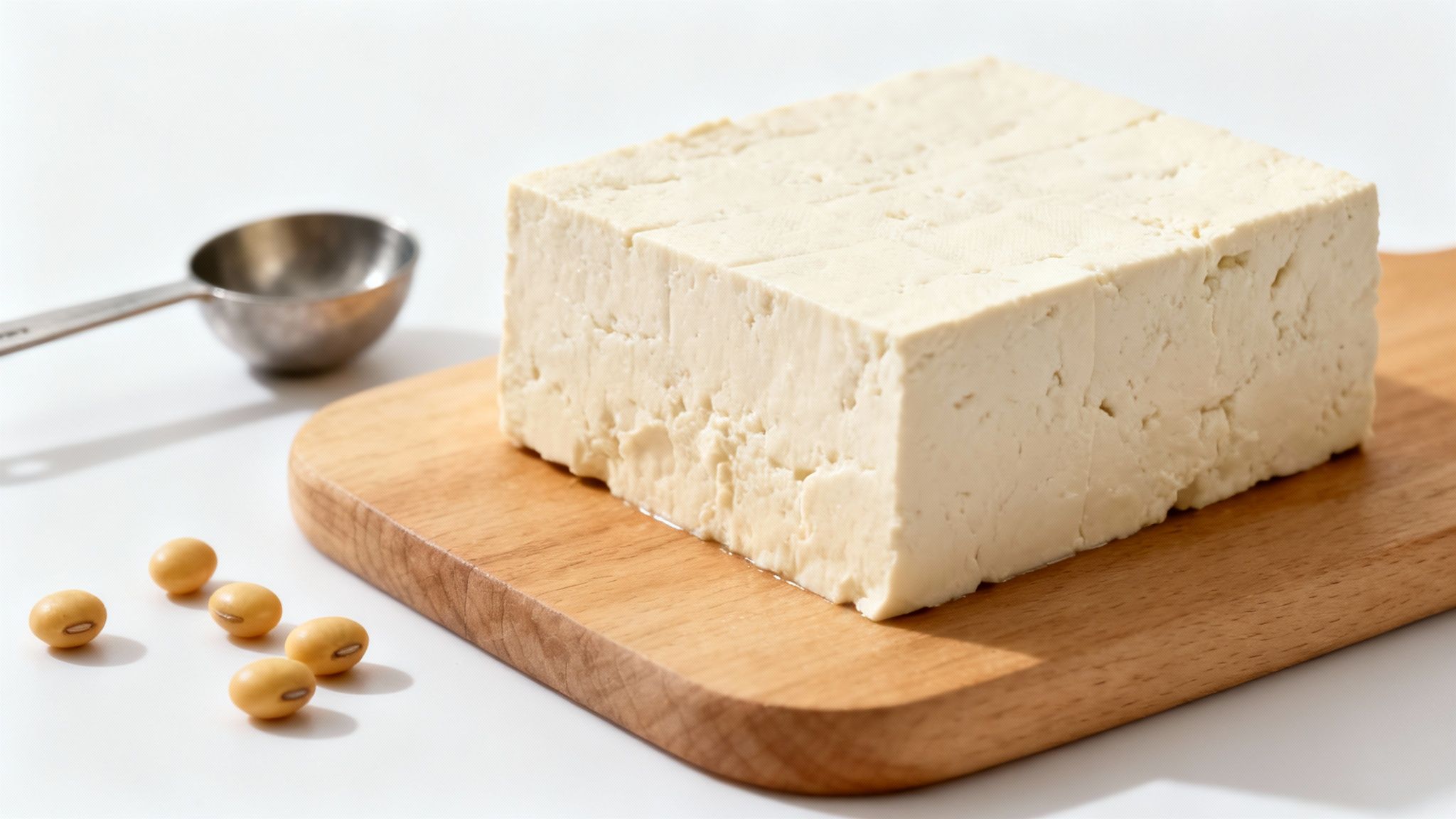
Before we can decide if tofu is a good fit for our dogs, it helps to get back to basics. What is it, really? Tofu is one of the simplest whole foods out there—it’s just condensed soy milk that has been pressed into a solid white block. The process is remarkably similar to making cheese from milk.
This simplicity is what makes it so appealing. There are no bells and whistles, no heavily processed mystery ingredients. It’s a gentle, unassuming food that comes straight from the earth, and that alone makes it an interesting option to explore in our mindful approach to pet wellness.
A Peek at Tofu's Nutritional Profile
When we look closer at a block of plain tofu, we find a nutritional profile that has some genuine perks for our canine companions. It’s more than just a blank slate; it’s quietly packed with goodness.
Plant-Based Protein: Tofu is famous for its protein content, which is essential for building and maintaining healthy muscles, skin, and a shiny coat. It’s also a complete protein, meaning it contains all nine essential amino acids.
Low in Fat and Calories: For pups who might be carrying a little extra weight, plain tofu is a wonderfully light option. It’s naturally low in both fat and calories, making it a much leaner choice than many traditional, higher-fat dog treats.
A Source of Minerals: Tofu also brings some important minerals to the table, like calcium and manganese. While they play smaller roles, these minerals are still important for supporting bone health and healthy metabolic function.
This solid nutritional base is a big reason why tofu and other soy products are becoming cornerstones of the growing vegan dog food industry. If you can believe it, the global vegan dog food market was valued at around USD 11.4 billion in 2023 and is projected to more than double by 2033. If you're curious about this trend, you can dig deeper into the market data here.
A Quick Word on Phytoestrogens in Soy
Now, let's talk about something you may have heard of: phytoestrogens. Soy-based foods like tofu naturally contain these plant compounds, specifically a type called isoflavones. Their structure is similar to the hormone estrogen, which allows them to interact with the body in very subtle ways.
The word "hormone" can definitely raise an eyebrow, but it's important to remember that these compounds are a natural, integral part of the soybean plant itself. For a healthy adult dog enjoying a small cube of tofu here and there, the amount of phytoestrogens is generally not enough to cause any trouble.
Still, their presence is a key reason why moderation is everything. We always want to respect our dogs' natural hormonal balance, and that means introducing any new food with a mindful, measured approach. By understanding what’s really inside a block of tofu, we can make a more grounded and intuitive choice about whether it belongs in our dog's holistic wellness plan.
Potential Risks of Adding Tofu to Your Dog’s Diet
Every dog is an individual, with their own unique body, sensitivities, and quirks. What works wonders for one pup might not sit right with another, and that’s perfectly okay. When we decide to introduce a new food like tofu, it’s not just about adding something to their bowl—it’s an act of deep listening and observation. We’re tuning into our dog's body and paying close attention to what it tells us.
While plain, unseasoned tofu can be a perfectly fine treat for many dogs, it's wise to be aware of a few potential bumps in the road. Knowing what to look for empowers you to make a conscious, compassionate choice that always puts your dog's well-being first. This isn't about creating rigid rules, but about strengthening your connection and understanding of your best friend.
Soy Allergies and Sensitivities
First up, soy is a fairly common food allergen for dogs. It’s similar to how some people can’t handle gluten or dairy; some dogs just have a natural intolerance to soy. An allergic reaction isn't always a dramatic, sudden event. Often, it shows up in much more subtle ways.
You might notice signs like:
Itchy, irritated skin that has them scratching or licking more than usual.
Pesky, recurring ear infections that don't seem to have another clear cause.
General digestive upset, like looser stools or more gas than normal.
If you’ve just started offering tofu and see any of these signs pop up, it’s a pretty clear signal from your dog’s body that soy might not be their thing.
Gastrointestinal Upset and Bloating
Even if your dog isn’t technically allergic to soy, tofu can still cause some tummy troubles. Since it's a plant-based food high in fiber, some dogs’ digestive systems just aren’t equipped to handle it efficiently. This can lead straight to gas, bloating, and general discomfort.
This is a really important point for breeds that are already prone to bloat, a serious and potentially life-threatening condition. For these dogs, even a small amount of a gas-producing food can be risky. If your dog seems uncomfortable, has a swollen belly, or starts dog is vomiting after eating tofu, it’s time to take it off the menu immediately.
Hidden Dangers in Prepared Tofu
This is probably the most critical risk to keep in mind. The plain tofu itself might be harmless, but the way we humans usually cook it involves ingredients that are flat-out toxic for our dogs. Tofu is like a sponge—it soaks up the flavors of whatever it’s cooked with.
So many of our favorite tofu recipes call for ingredients that are a big no-no for our pups, including:
Garlic and onions, which are toxic to dogs and can cause damage to their red blood cells.
Heavy sauces, which are often packed with salt, sugar, and preservatives.
Oils and fats used for frying, which can trigger a painful condition called pancreatitis.
This is why the golden rule is to only ever offer your dog tofu that is completely plain and cooked without any added ingredients. Sticking to this simple guideline helps you sidestep all these hidden dangers and keeps the treat safe and enjoyable.
How to Safely Prepare and Serve Tofu

So, you've decided to share a little tofu with your dog. That's great! The key now is preparing it with care and intention. We want to offer it in its purest, simplest form—this ensures it’s a gentle and safe addition to their diet, taking any guesswork out of the equation.
Think of the preparation as a small ritual. It's a moment to connect with the food you're offering and, by extension, your dog’s well-being. Keeping it simple is truly the most loving way to share this plant-based snack.
Choosing the Right Tofu
Your first step happens right at the grocery store. When you’re standing in front of that wall of tofu, always reach for the plainest, most basic option you can find.
Here's what to look for:
Plain and Unflavored: No marinades, no seasonings, no added flavors. Tofu is like a sponge, and pre-marinated kinds often soak up ingredients like garlic, onions, or excessive salt that are harmful to dogs.
Firm or Extra-Firm: These varieties hold their shape, making them a breeze to cut into perfect little treat-sized cubes. They also have less water content, which can sometimes be a bit easier on a dog’s digestive system. Steer clear of silken tofu; its soft texture is messy and much harder to portion correctly.
Simple and Pure Preparation
Once you have your plain block of tofu, the prep work is wonderfully straightforward. The guiding principle here is to keep it clean and unadulterated. Never serve tofu raw; a little cooking helps with digestibility.
Here’s a simple play-by-play:
Press the Tofu: Gently press the block between clean cloths or paper towels to squeeze out the excess water. This isn't just for texture; it helps concentrate its simple, nutty flavor.
Cook It Plain: The safest methods are the ones that don't add any fats or seasonings. You can bake, steam, or boil small pieces until they're warmed through and a bit firmer. Never, ever fry tofu or cook it with oils, butter, or sprays.
Cut into Cubes: After it's cooled down, cut the tofu into small, bite-sized cubes. Make sure the size is right for your dog to prevent any choking hazards.
As you're preparing treats, it can be a beautiful moment to reconnect with your dog’s wild side. Scent work games awaken their powerful instincts and are a profound way to bond. You can learn how to get started by tapping into their natural drive.
👉 Download our free nosework guide: https://www.withwildpack.com/dognoseworkguide.
Serving Size and Moderation
When introducing any new food, moderation is everything. Tofu should always be considered a special, high-value treat, not a staple in their meals. A good guideline is the 10% rule: treats should make up no more than 10% of your dog's daily calories.
For tofu specifically, a safe starting point is:
- One small, 1-inch cube per 20 pounds of your dog's body weight.
Serving a small, thoughtful amount lets you see how your dog’s system responds without overwhelming it. This mindful approach helps ensure that when you ask, "can dogs eat tofu?" the answer is a safe and happy "yes" for your companion.
Tuning Into Your Dog for Signs of Intolerance

The deepest connections we build with our dogs often happen in the quiet moments. When you introduce a new food like tofu, you're not just offering a snack; you're starting a conversation with your dog's body. The most important part? Listening to their reply.
This simple act turns feeding from a daily chore into a mindful check-in. It’s all about tuning into their unique rhythm and respecting the subtle (and not-so-subtle) signals they send. This kind of empathetic attention is the very heart of holistic care, strengthening your bond and helping you understand exactly what they need.
Common Signs of Digestive Discomfort
The quickest feedback you’ll get will almost always come from their digestive system. Since tofu is a plant-based food, it can sometimes be a bit tricky for a dog's gut to process.
Keep a gentle eye out for these tell-tale signs:
Excessive Gas: A little toot is normal, but a sudden increase can mean their tummy isn't a happy camper.
Loose Stools or Diarrhea: This one’s a pretty clear indicator that tofu isn’t agreeing with them.
Vomiting or Regurgitation: Any vomiting after trying a new food is a hard stop. Time to take it off the menu.
Stomach Gurgling: Loud, rumbly tummy noises can definitely point to digestive upset.
These symptoms typically show up within a few hours to a day after your dog tries tofu. If you spot any of them, it's best to press pause on the tofu treats.
Subtle Cues and Allergic Reactions
Sometimes, a dog's intolerance doesn't shout; it whispers. It might show up as a much quieter, more subtle shift in their overall well-being. Soy is a common allergen for some dogs, and the symptoms can be easy to overlook if you aren't looking closely.
More subtle signs of an intolerance or allergy can include:
Itchy Skin: You might notice more scratching than usual, maybe some paw licking, or rubbing against the furniture.
Ear Infections: A recurring, yeasty smell from the ears or frequent head shaking can often be linked back to food sensitivities.
Changes in Energy: A sudden dip in their normal playful vibe is a big clue. Understanding what it means when your dog is lethargic can offer some valuable insight here.
These slower-to-appear signs are just as critical as the immediate digestive ones. Think of them as quiet messages from your dog’s body, asking you to pay attention.
If you observe any of these signs, big or small, it's a clear signal that tofu probably isn't the right fit for your companion. The best response is always to listen with compassion, remove the food, and check in with your vet if the symptoms are severe or don't go away. This mindful observation is the truest way to honor their well-being.
Wholesome and Natural Treat Alternatives
If you've tuned in and decided tofu isn't the right energetic match for your dog, that’s a beautiful insight. Listening to their unique needs often guides us back to the simple, wholesome gifts nature provides. There are so many wonderful alternatives that align perfectly with their instinctual diet, offering nourishment straight from the earth.
Connecting your dog with these natural foods is a small act of rewilding. It’s a gentle reminder for both of you that the best treats are often the simplest ones, helping to ground their diet in what feels most intuitive and supportive for their bodies.
Earth-Sourced Options
Think about weaving some of these single-ingredient treasures into your treat rotation:
Small pieces of plain, cooked chicken can offer a high-value protein boost.
A few blueberries provide a burst of antioxidants and natural sweetness.
Steamed green beans are a fantastic, low-calorie source of fiber and satisfying crunch.
A spoonful of plain pumpkin puree supports healthy digestion and gut balance.
Each of these options reinforces a diet that is minimally processed and full of life. You can also turn these simple treats into a fun puzzle by hiding them in enrichment toys, which is one of the best dog mental stimulation games to engage their clever minds. Choosing treats from nature is a simple way to support your dog’s holistic well-being from the inside out.
Download our free nosework guide here and read more about your dog's health and wellness:
Frequently Asked Questions About Tofu for Dogs
Can puppies eat tofu?
It's best to steer clear of giving tofu to puppies. Their digestive systems are still developing and are quite sensitive, and their nutritional needs are incredibly specific for healthy growth. Stick with high-quality, puppy-formulated food and treats that honor their foundational needs.
Is fried tofu safe for dogs?
Nope, you should never give your dog fried tofu. Frying adds a ton of fat and oils that can lead to an upset stomach, pancreatitis (a serious condition), and unwanted weight gain. Always serve tofu plain—baked, steamed, or boiled is the way to go.
Can tofu help a dog with an upset stomach?
Tofu isn't the best choice for a dog with an upset stomach. Its fiber and plant-based nature can sometimes cause more gas and bloating, potentially making digestive issues worse. Instead, opt for bland, easily digestible foods like plain boiled chicken and rice to gently soothe their system.
Are there any dog breeds that should not eat tofu?
While no specific breed is universally banned from eating tofu, any dog with a known soy allergy or sensitivity should avoid it completely. Also, breeds prone to bloat, like Great Danes, Weimaraners, or Standard Poodles, should be given tofu with extreme caution, as it can be gas-producing. Always listen to your individual dog's body.