Table of Contents
A Glimpse into Your Dog's Dream World
The Science Behind Canine Dreaming
What Do Dogs Dream About Anyway?
How to Tell When Your Dog Is Dreaming
When to Be Concerned About Your Dog's Sleep
Nurturing Sweet Dreams Through Mindful Rituals
Frequently Asked Questions About Dog Dreams
Key Takeaways
Just like us, dogs have sleep cycles that include REM sleep—the stage where dreaming happens.
Their dreams are likely replays of their day: the smells, the sights, the feelings.
Enriching your dog's day with activities that engage their natural instincts, like nosework, can lead to more positive, fulfilling dreams.
Watching your dog dream is a special way to connect with their instinctual, wild inner world.
A Glimpse into Your Dog's Dream World
Ever watched your dog’s paws twitch during a nap and wondered what’s going on in that furry head? It's a question every person who loves a dog has asked. The simple, heartwarming answer is yes, dogs absolutely have dreams. And the science behind it is a beautiful glimpse into their inner world.
When you see those little whimpers, twitching whiskers, and running paws, you're getting a private screening of your dog’s daily adventures. Their dreams are woven from the very fabric of their waking life—the exciting new smells on your morning walk, the thrill of chasing a ball, or just the simple, deep comfort of your presence.
Understanding that your dog dreams is more than a fun fact. It’s a profound way to connect with their instinctual self and appreciate the rich, soulful life they lead even when they’re fast asleep. Every walk, every game, every shared moment provides the material for their nightly narratives.
The Bond in Their Dreams
What makes this even more special is the role you play in their dreamland. Because dogs are so deeply bonded to their humans, research suggests we feature prominently in their dreams. Your face, your scent, your comforting energy—they're likely frequent guest stars. It’s a beautiful thought, isn’t it? This reinforces the incredible bond you share, showing that your connection transcends even the waking world.
Nurturing this bond starts with understanding their innate needs. Engaging their powerful sense of smell is one of the most direct ways to speak their language and enrich their lives, which in turn enriches their dreams.
The Science Behind Canine Dreaming
To really get what's happening when your dog is dreaming, we have to pull back the curtain on how they sleep. It's not so different from us, really. Just like people, dogs go through a couple of main sleep stages, each with its own job to do. It’s this natural cycle that bridges the gap between their busy days and their rich, inner world.
First up is Non-REM sleep. Picture this as a quiet, slow-moving river. This is where the heavy lifting of physical restoration happens—the body rests, repairs tissue, and recharges its batteries for the next day's adventures.
But then, that gentle river flows into the much more active waters of REM sleep. This is where the real show begins. During REM sleep, their brain activity flares up, often looking surprisingly similar to the brain patterns they have when they're wide awake and chasing a ball. It's the brain's own movie theater.
The Brain’s Role in Dreaming
So, why don't our dogs leap up and sprint across the room while dreaming of chasing squirrels? You can thank a little part of the brainstem called the pons. Think of it as a biological safety switch. The pons works to keep your dog's body mostly still during REM sleep, preventing them from physically acting out whatever epic adventure is playing out in their head.
Those little twitches, muffled barks, and running paws you see are just the echoes of the dream breaking through. It’s a sign of a vivid, active mind hard at work.
Your Dog’s Day Becomes Their Dream
Landmark studies on mammals have confirmed what we've long suspected: the brain often replays the day’s events during sleep. Every new trail sniffed, every joyful game of fetch, every interaction with a new person—all of this becomes the script for their nightly dreams.
This is a crucial way for them to process their world, sort through experiences, and solidify memories. It's not just cute; it's a fundamental part of their mental and emotional wellbeing. We explore these kinds of connections all the time in our guides on canine behavior.
When you see those paws twitching, you're getting a front-row seat to their mind making sense of the day. Science supports this, noting that dogs spend roughly 50% of their day sleeping—with puppies and larger breeds needing even more snoozetime. Research has clearly shown that as mammals go about their day, specific neural patterns fire. Later, during REM sleep, those exact same neural fireworks light up again. They aren't just sleeping; they're reliving.
What Do Dogs Dream About Anyway?
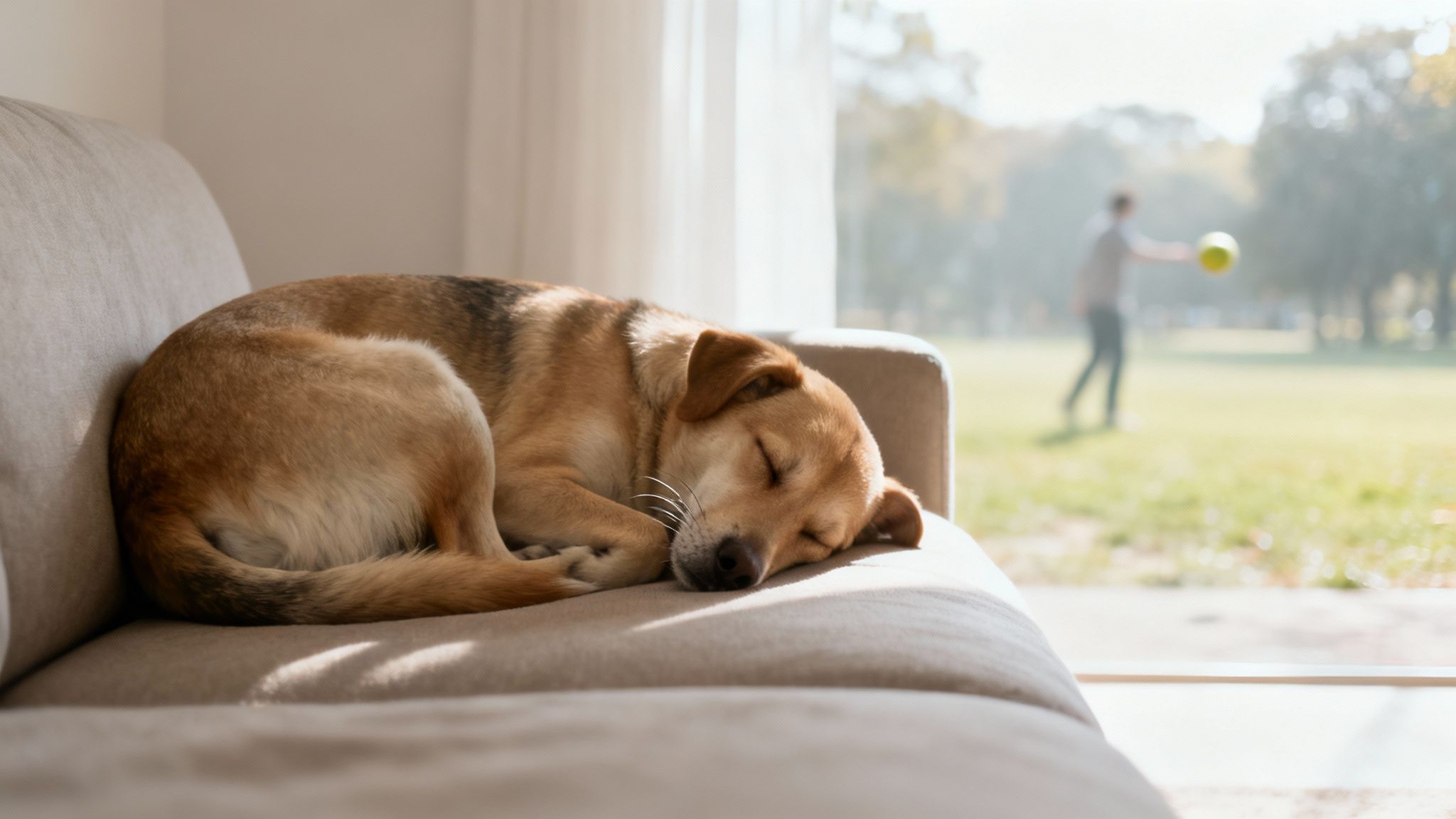
So, what’s really going on behind those twitching eyelids? While we can't just ask them for a recap, science and careful observation actually give us a pretty clear window into their inner world. When you boil it down, it’s beautifully simple: dogs dream about their day.
Their dreams are a rich collage pieced together from all their sensory experiences. They’re mentally replaying the thrilling scent of a squirrel on the trail, the satisfying squeak of their favorite toy, or the simple joy of chasing a ball you threw. Every sight, sound, and smell they encounter provides the raw material for their nightly adventures.
This is exactly why enriching your dog’s daily life is so deeply connected to their mental peace. When we give them chances to tap into their natural instincts, we’re essentially handing them positive, fulfilling stories to process while they sleep. This is especially true for activities that engage their most powerful tool—their incredible nose.
The Heart of the Dream
Most importantly, research backs up what we all feel in our hearts: dogs dream vividly about us. Harvard psychologist Dr. Deirdre Barrett explains that because our dogs are so profoundly attached to their people, it’s only natural that their dreams are filled with our faces, our smells, and the comforting feeling of our presence.
This makes perfect sense. We know their brain activity during REM sleep often mirrors their waking life. A landmark study with rats, for example, showed the exact same brain patterns used to navigate a maze during the day were replayed—note for note—during sleep. It suggests that dogs mentally rerun up to 80-90% of what they did that day. Think about how much of their day revolves around you. It becomes pretty clear we’re the lead actors in their nightly films.
Every walk you take together, every quiet moment shared on the couch—it all becomes positive fuel for their dream world, reinforcing that sacred bond between you.
Crafting a Dream-Worthy Day
Knowing that your dog’s daily life directly fuels their dreams gives you a beautiful opportunity to shape their inner world for the better. The more positive and engaging you make their day, the sweeter their dreams are likely to be.
Incorporate sensory play that awakens their wild side.
Focus on activities that build confidence and security.
Prioritize connection and shared rituals.
One of the most powerful ways to do this is through scent exploration. Our guide to dog scentwork can show you how to start this enriching practice, helping you create a day full of adventures worth dreaming about. By nurturing their instinctual selves, you’re nurturing their mind, spirit, and sleep.
How to Tell When Your Dog Is Dreaming
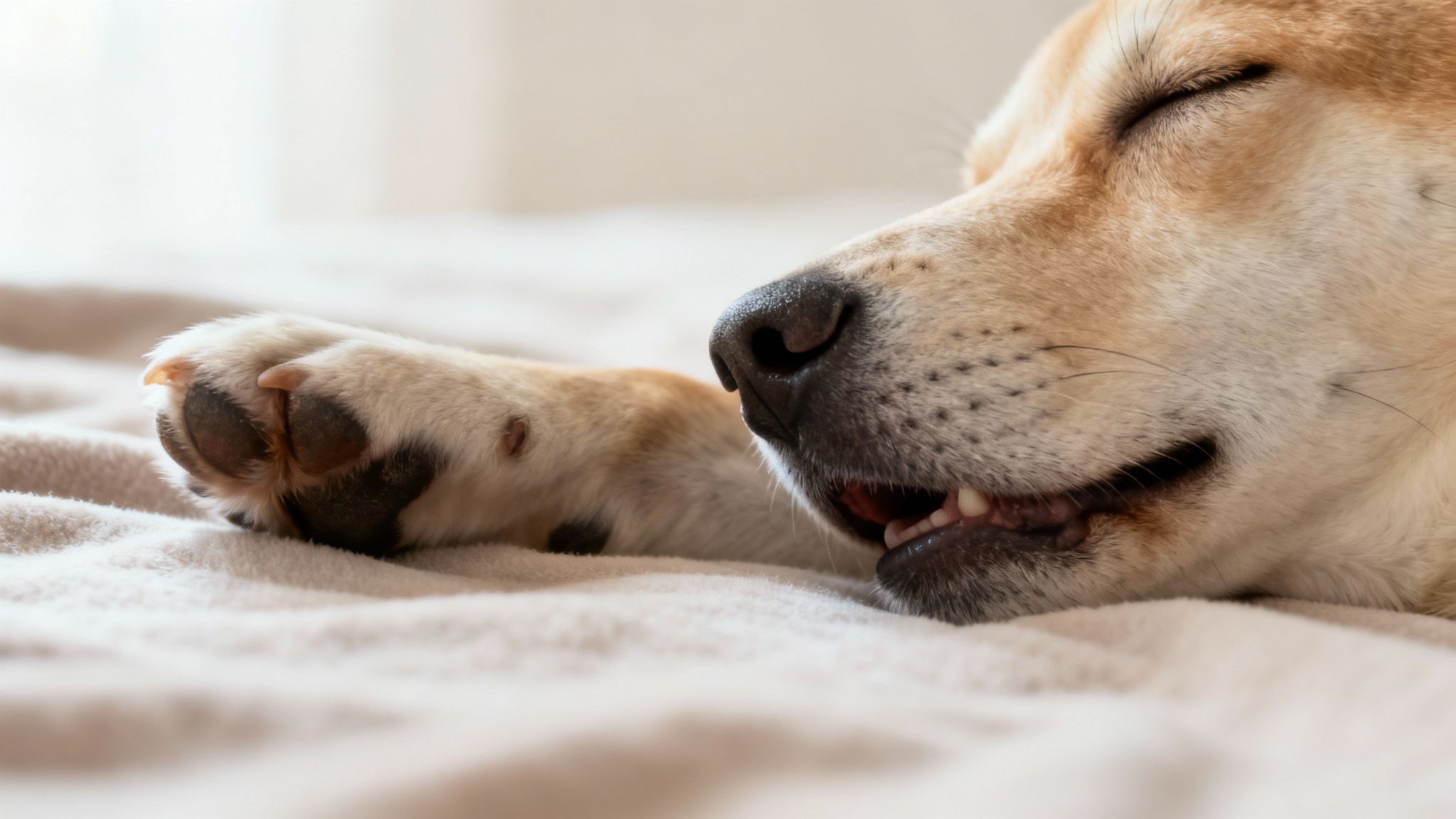
Learning to spot the signs that your dog is dreaming is a quiet joy, isn't it? It’s a moment of connection that asks nothing of us but gentle observation. It’s almost like getting a secret window into the wild, untamed world that unfolds inside them while they rest.
These moments are a beautiful reminder of their vibrant inner life, which keeps going long after their eyes have closed. When you see those subtle cues, you’re witnessing their brain actively processing the day's events—every scent, sound, and feeling they collected. Suddenly, what might look like just a twitch becomes a moment of pure wonder.
Common Signs of a Dreaming Dog
The signals are often subtle, a soft language of sleep. You might notice their body is totally relaxed, but certain parts are very much active. Keep an eye out for these classic dream behaviors.
Fluttering or twitching eyelids, even when they’re closed.
Soft whimpers, whines, or even muffled barks.
Gentle, rhythmic twitching of the paws or legs, as if they're running in place.
Quivering whiskers or lips.
Changes in their breathing pattern, from slow and deep to short and shallow.
These are all perfectly normal signs that your dog has entered the REM stage of sleep, the primary theater for dreaming. It's a completely natural, healthy part of their sleep cycle.
How Breed Size Affects Dream Frequency
Here's where it gets really interesting: not all dogs dream in quite the same way. Their size and breed can actually influence how often and for how long their dream adventures last.
It turns out that smaller dogs tend to have more frequent but shorter dreams, while larger breeds experience longer, less frequent dream cycles. Research shows a tiny Chihuahua might dream every ten minutes for about sixty seconds, while a giant Mastiff may only dream once every hour—but for five to ten minutes at a time.
This insight comes from studies where scientists observed how different breeds behave during REM sleep. When they temporarily deactivated the part of the brain that keeps dogs still, Pointers would point at unseen birds and Labradors would chase imaginary balls, confirming their dreams are absolutely true to their nature. You can find more details in these fascinating breed-specific dream studies.
When to Be Concerned About Your Dog's Sleep
Watching your dog twitch, whimper, or even "run" in their sleep can be both adorable and a little unnerving. It’s completely natural to feel a flutter of worry. Most of the time, these little movements are just a healthy, normal sign of REM sleep, but knowing the difference between a vivid dream and something more serious is key.
Trusting your gut is a huge part of the deep bond you share with your dog. A dreaming pup, even if they’re kicking their legs like they’re chasing a squirrel, will generally seem relaxed overall. Their body is loose, and if you absolutely have to wake them, you can. That said, it’s always best to let sleeping dogs lie—waking them abruptly can be startling and stressful for them. Respecting their rest is a quiet act of trust and care.
Dreams Versus Seizures
It's a common concern for many dog parents, but thankfully, the signs of a seizure are quite distinct from dream-chasing twitches. Getting clear on the differences can bring a lot of peace of mind.
Here’s a simple breakdown:
Dreaming: A dreaming dog's movements are often soft and twitchy. Think muffled barks, fluttering eyelids, and gentle paw flicks. They look like they're acting out a scene in their head.
Seizure: A dog having a seizure often becomes very rigid and stiff. Their movements are more violent and uncontrolled—jerking or paddling limbs—and they may drool excessively, foam at the mouth, or lose control of their bladder or bowels.
Responsiveness: This is the most critical difference. A dog having a seizure will be completely unresponsive and cannot be woken up. Their eyes might be open but will look glazed over and unfocused.
If you ever suspect your dog is having a seizure, stay as calm as you can, keep them safe from bumping into furniture, and call your veterinarian immediately for guidance.
Signs of Poor Sleep Quality
Sometimes, the concern isn't a single, dramatic event but a subtle pattern of poor rest. Just like for us, restful sleep is the foundation of your dog's wellness, impacting everything from their mood and behavior to their physical health.
If you start noticing persistent changes like extreme restlessness at night, frequent waking, constant pacing, or other unusual behaviors, it might be their way of signaling that something is off. This is your cue to check in with your vet.
To learn more about identifying concerning shifts in your dog's energy and behavior, check out our guide on understanding when a dog is lethargic. Paying close attention to how they rest is a beautiful way to honor their needs and nurture their wild, peaceful spirit.
Nurturing Sweet Dreams Through Mindful Rituals
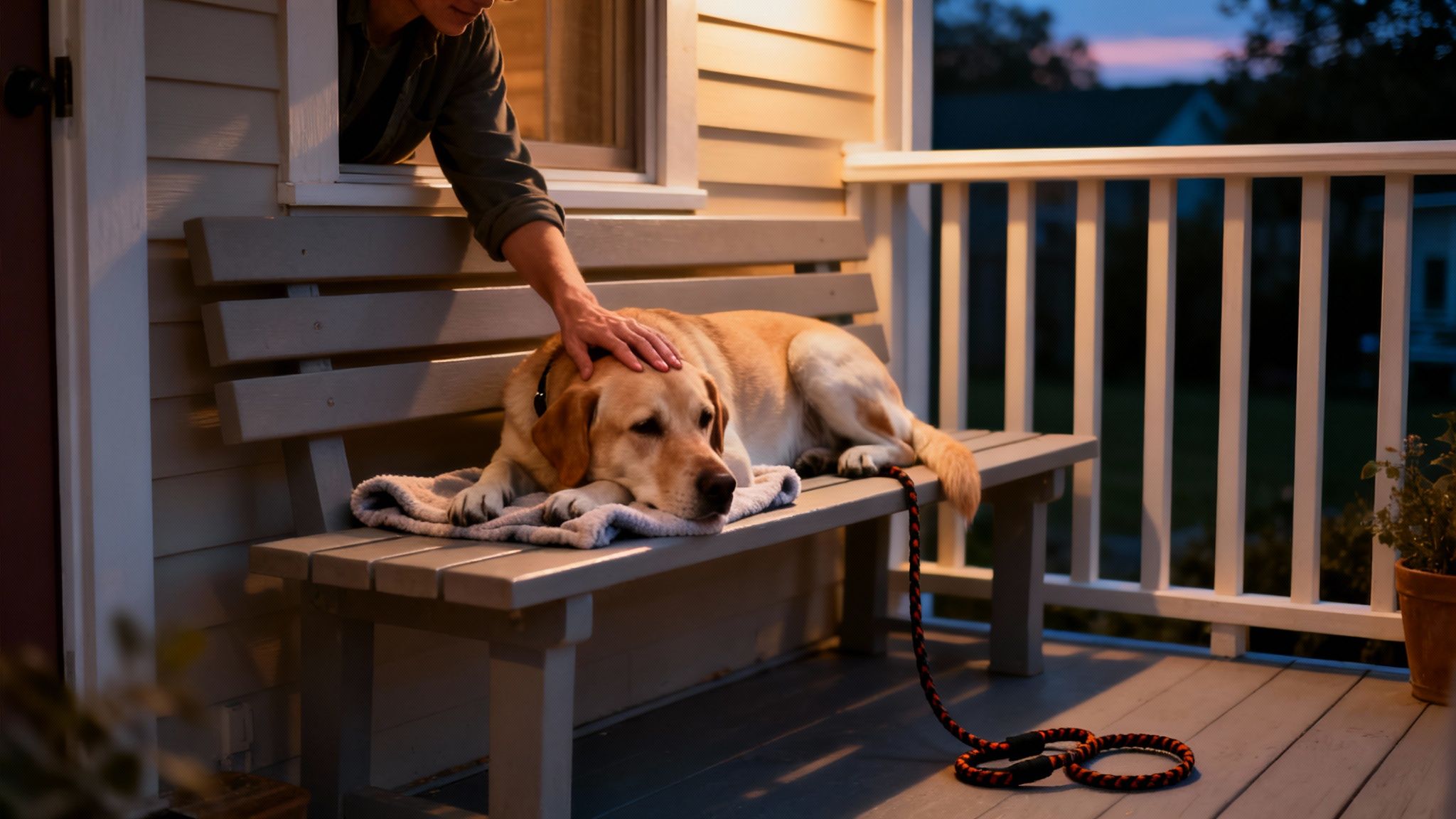
You can absolutely help shape a positive dream world for your dog. This is where we tie everything together—shifting from simply understanding their dreams to actively nurturing them through practical, soulful rituals. By creating a calm and predictable environment, we can help ensure their nightly adventures are sweet ones.
A gentle evening routine is a powerful signal to their body and mind that it's time to unwind. This doesn't have to be complicated. A quiet, leisurely walk around the block that allows for plenty of sniffing can work wonders. This grounding practice helps them release any lingering energy from the day and reconnects them to the steady rhythm of the evening.
Engaging Their Natural Instincts
Engaging your dog’s innate instincts during their waking hours is perhaps the most important gift you can give their dreaming mind. When a dog has a fulfilling day, their mind is filled with positive material to process during sleep.
Activities that tap into their core nature are incredibly effective for this. Nosework, for example, is a wonderfully potent practice. It allows your dog to use their most powerful sense to explore, problem-solve, and build confidence. This kind of sensory exploration is deeply satisfying for them. It reduces anxiety, provides incredible mental stimulation, and honors their wild drive to understand the world through scent.
For a simple way to start, you can tap into their most powerful natural instinct through scent exploration. Our free guide shows you exactly how to begin.
👉 Download our free nosework guide: https://www.withwildpack.com/dognoseworkguide.
Creating a Peaceful Sleep Sanctuary
The physical space where your dog sleeps also plays a vital role. A comfortable, safe, and quiet area encourages deep, restorative rest.
Calming sounds can also transform their environment. Exploring a sound bath for dogs can introduce gentle frequencies that soothe the nervous system and promote tranquility. By thoughtfully crafting their daily rituals and sleep space, you become a guardian of their peace—both awake and asleep.
Read more about nurturing your dog's inner world:
Frequently Asked Questions
Do dogs have nightmares?
Yes, just like us, dogs can absolutely have bad dreams. A nightmare often looks like a more intense version of a regular dream, with more frantic leg paddling, distressed crying, or whimpering. It's usually a sign their brain is processing something fearful or stressful from their day. When this happens, the best thing you can do is offer gentle reassurance. While it’s smart not to jolt them awake, speaking to them in a soft, soothing voice can work wonders. Your calm presence can often cut through the noise of their dream, helping guide them back to a more peaceful state.
Should I wake my dog up from a dream?
As tempting as it is to intervene, it's almost always best to let a sleeping dog lie. Waking a dog suddenly from that deep REM sleep can be incredibly disorienting and even scary for them. In that moment of confusion, they might unintentionally snap or bite before they even realize where they are or who you are. If you’re genuinely concerned that they’re in distress, try softly calling their name from a distance instead of touching them. This gives them a chance to wake up more gently and on their own terms, which keeps their sleeping space a place of trust and safety.
Do puppies dream more than adult dogs?
They sure do! Puppies spend a much bigger chunk of their sleep time in the REM stage compared to adult dogs. The reason is pretty simple: they have a massive amount of new information to sort through every single day. Think about it—from learning social cues from you and other dogs to just discovering the big, wide world through their senses, their little brains are working overtime. All that extra REM sleep and dreaming is absolutely essential for their minds to develop and to lock in all those crucial new lessons for life.