Why Do Dogs Dream and What Do They See?
Table of Contents
A Journey into the Canine Mind During Sleep
What Do Dogs Actually Dream About?
How to Decode Your Dog's Dream Behavior
How to Create a Dream-Nurturing Sanctuary
When to Be Concerned About Sleep Behavior
Key Takeaways
Dogs dream just like us, most likely as a way to process their day and lock in memories from their waking adventures.
You can spot dream-time by watching for twitching, little yips, or paddling paws during their REM sleep cycle.
Giving your dog an enriching day full of activities that tap into their natural instincts can lead to happier, more positive dreams.
Ever caught your dog twitching, making little whimpers, or paddling their paws while fast asleep? It's one of those moments that makes you smile, a tiny peek into their secret inner world.
Yep, just like us, our dogs are dreaming. This shared experience is more than just a cute quirk; it’s a chance to connect with our companions on a much deeper, more soulful level.
This guide is all about exploring the science and spirit behind your dog's dreams. We'll look at them not just as random brain firings, but as a wild, natural process for making sense of their day. We're going to dig into why they dream and what they're likely dreaming about—from chasing squirrels in the park to reliving the glorious scent of a half-eaten sandwich on the sidewalk.
By getting a better handle on their dream world, we can do a better job of nurturing their well-being and strengthening that incredible bond we share.
Honoring Their Inner Wilderness
At its core, dreaming is how the brain organizes information, practices important skills, and works through emotions. For our dogs, this process is a direct echo of their wild ancestry. A dream about a thrilling chase isn't just a fantasy; it's their brain rehearsing instinctual behaviors passed down for generations.
When we see them sleeping so soundly, it's a powerful reminder of the trust they put in us to keep their "den" safe. This connection goes way beyond just being companions. It taps into a primal bond, one built on the quiet rhythms of daily life and the shared vulnerability of rest.
Taking the time to understand their dreams is a way of honoring that wild spirit still living within them. If you're interested in exploring more topics about your dog's health and happiness, check out these general articles on canine well-being.
A Journey into the Canine Mind During Sleep
To really get why dogs dream, we have to first peek behind the curtain of how they sleep. You might be surprised to learn it’s a process remarkably similar to our own, a quiet rhythm that connects us across species. Just like you and me, dogs journey through different sleep stages every time they nod off.
Think of their brain as a diligent artist sorting through the day’s sketches. Some stages are for deep physical rest and restoration, while others are for getting creative—replaying moments, organizing memories, and solidifying lessons learned.
The most vivid dreaming, the real movie-making part of the night, happens during a phase called Rapid Eye Movement (REM) sleep. This is that magical window when you’ll see twitching paws, soft whimpers, and running legs, all signs that a vibrant inner world is unfolding.
The Two Worlds of Sleep
A dog's sleep isn't just one long, continuous nap. It’s a cycle between two main states, and understanding this pattern helps us appreciate what’s really happening when they're curled up and quiet. The journey from quiet rest to active dreaming is a beautiful, natural rhythm.
Dogs sleep a lot—adults typically get 12–14 hours a day, while puppies and seniors might need up to 20 hours. During that time, they're cycling through sleep stages just like us. First, they enter Non-REM sleep, where breathing slows and the body repairs itself. Then, they drift into REM sleep, where the brain becomes highly active, and the real dream adventures begin.
In fact, studies using brain-wave recordings show that as dogs enter REM sleep, their neural activity mirrors human dream patterns. It's a beautiful testament to our shared evolutionary roots. For a deeper dive, check out these great insights into canine sleep cycles on pumpkin.care.
Think of their sleep as an ebb and flow, a natural tide pulling them from deep stillness into active dreaming and back again. Simply observing this pattern is a mindful way to connect with their needs and their inner world.
What Do Dogs Actually Dream About?
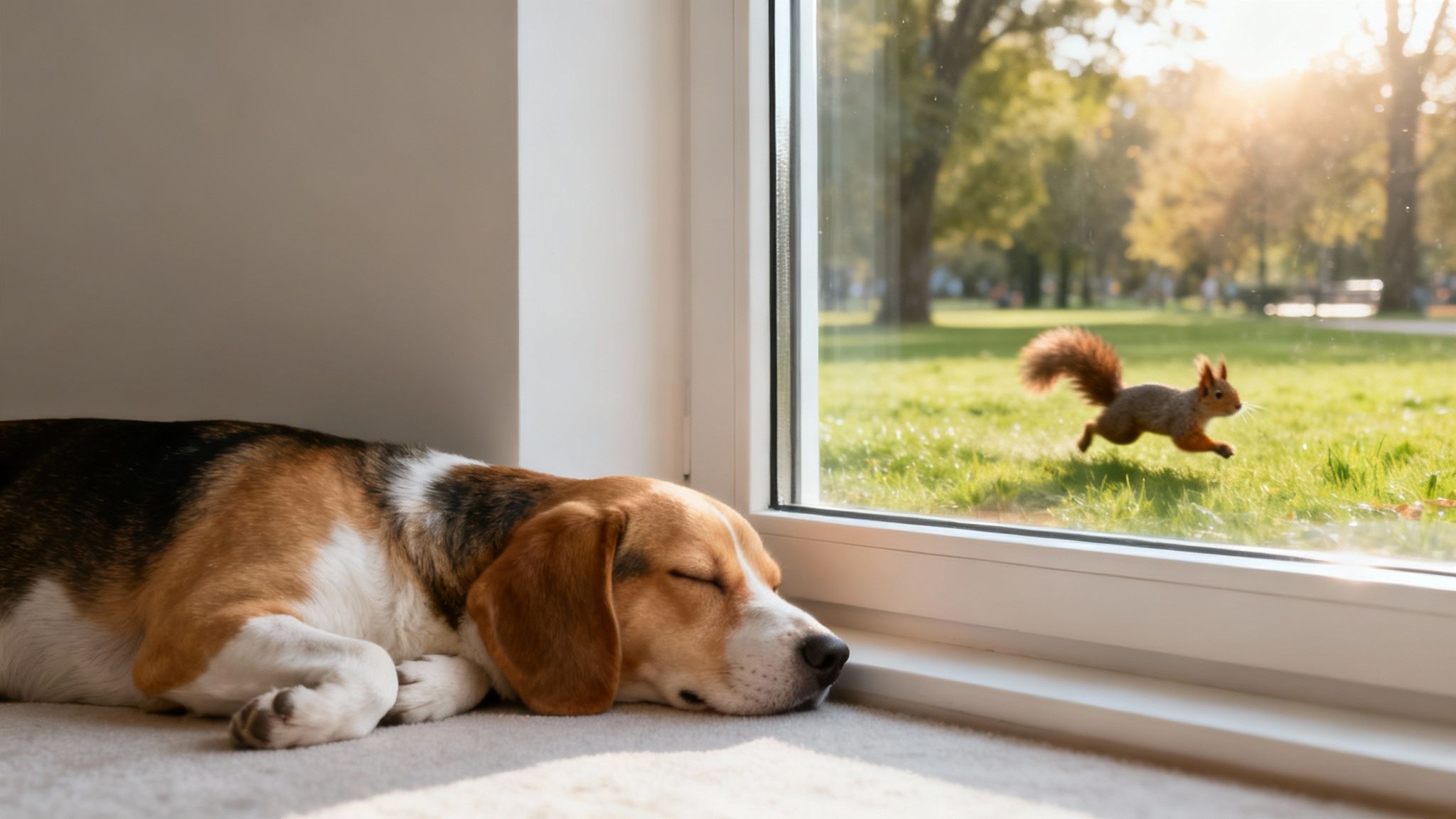
This is the big question every dog owner asks themselves while watching their best friend twitch and whimper in their sleep. While we can't exactly plug into their minds and watch their dreams on a tiny screen, science gives us some pretty powerful—and beautiful—clues about their inner world.
The general consensus is that dogs, much like us, dream about their day. Their brain uses sleep to sort through, process, and file away the day's events. So, what does that mean? It means they are almost certainly dreaming about their daily life, which, of course, revolves around their most important person: you.
Replaying the Day's Adventures
Think about what fills your dog’s day. A long walk down a familiar trail, the exciting scent of a neighborhood dog on their favorite fire hydrant, or the thrilling chase of a squirrel in the backyard. These are the very building blocks of their dreams.
During REM sleep, their brain replays these moments. But it's more than just a simple playback. This process, called memory consolidation, helps them make sense of their experiences and solidify everything they've learned. It’s their mind’s way of tucking away important information from their waking hours.
Some of the most compelling evidence for this comes from maze experiments with rats. Researchers recorded the animals' brain activity as they learned to navigate a complex maze. Later, while the rats were deep in REM sleep, their brains replayed the exact same firing patterns. Because dog brains are structurally similar and follow the same sleep patterns, it’s a tiny leap to conclude they do the same. You can read more about these foundational dream studies to see how the science backs this up.
Rehearsing Their Wild Instincts
A dream about chasing a squeaky ball isn't just a fun little replay. It's their brain rehearsing ancient, instinctual behaviors—stalking, chasing, and capturing prey. This is their wild nature finding a voice, even in sleep.
This is where your dog's waking life directly fuels their sleeping one. When you provide your dog with enriching, nature-based activities, you're giving them positive and exciting material for their dream world. A day packed with sensory exploration leads to a night of rich, fulfilling dreams.
For instance, a dream about a fun scentwork session helps them lock in new skills. The more they get to use their incredible noses, the more they connect with their innate drives. You can discover more about this powerful form of enrichment by exploring our guide to dog scentwork.
Ready to give your dog even better dreams? Tapping into their most powerful sense is the perfect place to start.
👉 Download our free nosework guide to help your dog reconnect with their wild instincts! https://www.withwildpack.com/dognoseworkguide
How to Decode Your Dog's Dream Behavior
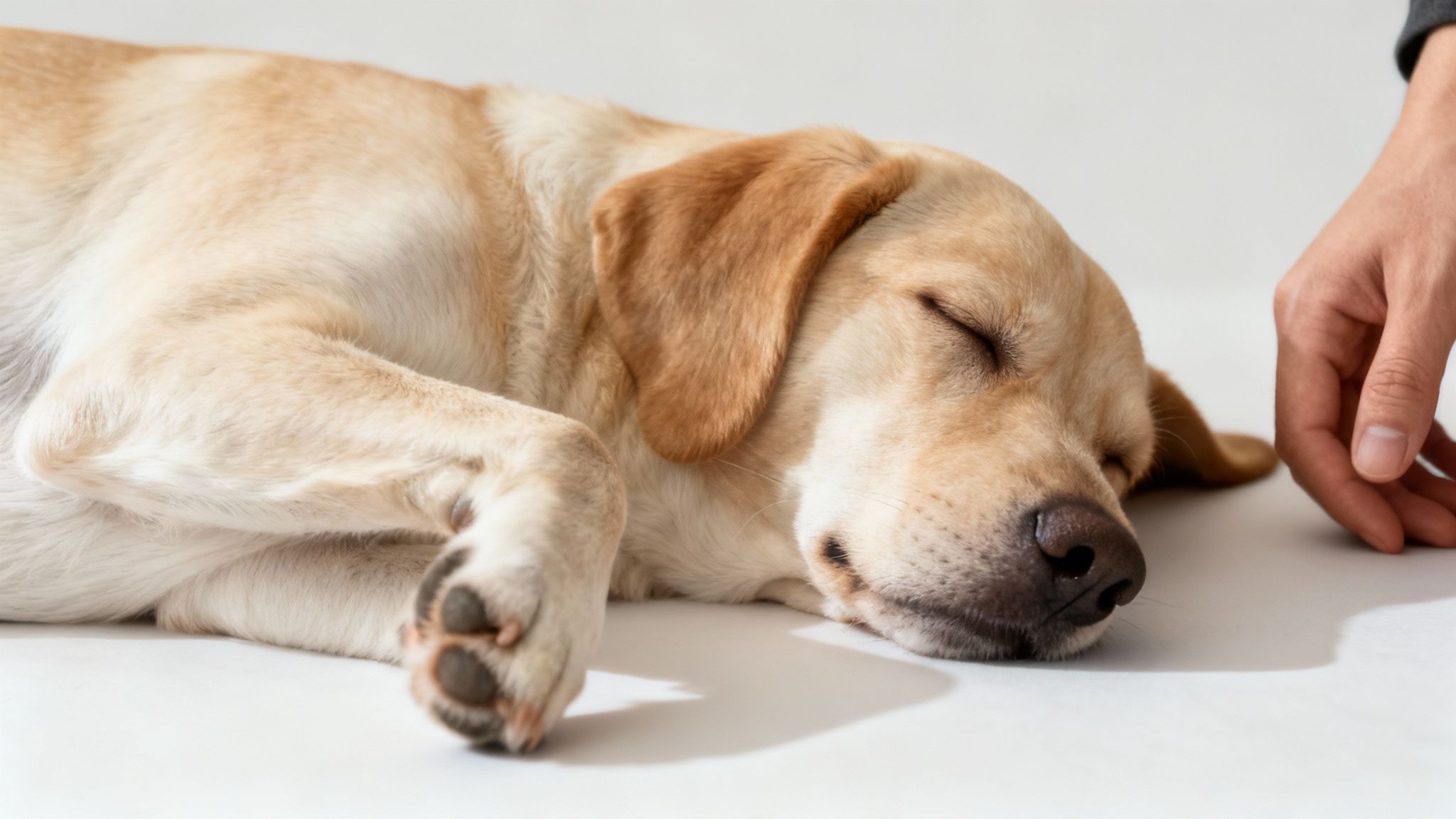
Those little twitches, muffled yips, and paddling paws are more than just cute nighttime quirks. They're the outward signs of a vibrant inner adventure, a secret language from your dog's dream world. Learning to observe these moments can deepen your intuitive connection and help you understand your companion on a whole new level.
When you see these subtle movements, you’re witnessing their dream life leak through into the physical world. It’s a perfectly normal and healthy part of their sleep cycle. But why don't they leap up and sprint across the room while dreaming of a chase?
The answer lies deep in their brain.
The Brain's Natural Safety Switch
During REM sleep, when dreaming is most active, a small but mighty part of the brainstem called the pons gets to work. Think of the pons as a natural safety switch. Its job is to temporarily paralyze the major muscle groups, preventing your dog from fully acting out the exciting scenarios playing in their mind.
This brilliant mechanism ensures they stay safely put while their brain rehearses chasing squirrels or greeting you at the door. Those little twitches and whimpers are simply the signals that manage to bypass this gentle paralysis—a beautiful glimpse into their active, processing mind.
What About Nightmares?
Just as dogs likely dream of happy moments, they probably also have dreams that are less pleasant. When you notice more intense whimpering or crying, you might be witnessing what we'd call a nightmare. But this isn't necessarily a cause for alarm.
Think of these moments as your dog’s natural way of processing anxieties, fears, or stressful events from their day. A startling run-in with a bigger dog or the loud rumble of a passing truck can easily become fodder for their subconscious to sort through at night. It's a healthy, essential part of their emotional regulation and a key piece of the puzzle in understanding their needs, which is foundational to any successful dog behavior modification techniques.
So, the big question is: should you wake them? In almost all cases, the answer is no. Waking a dog from a deep dream, even a scary one, can be incredibly disorienting and frightening for them. A startled dog might react defensively without meaning to.
It's best to let them journey through the dream on their own. The old wisdom of "let sleeping dogs lie" holds a deep truth here. By trusting the process and simply being a calm, grounding presence nearby, you offer them the security they need to navigate their inner world.
How to Create a Dream-Nurturing Sanctuary
Believe it or not, supporting your dog's rich dream life starts long before they even close their eyes. Their waking hours are the raw material for their nightly adventures, so we can be intentional about shaping those experiences to encourage healthy sleep and sweet dreams. This is really about turning routine care into a soulful ritual.
It all begins with creating a safe, comfortable sleeping space that speaks to their ancient, instinctual need for a secure den. A cozy bed tucked into a quiet corner of your home, away from all the foot traffic, gives them a personal sanctuary where they can truly let their guard down and feel protected. This simple act honors who they are at their core.
When we're thinking about creating a peaceful environment for them, it's all about understanding what truly makes them feel good.
Crafting Calming Bedtime Rituals
Just like us, dogs thrive on winding down at the end of the day. Creating a consistent and calming bedtime ritual helps signal to their body and mind that it's time to rest. It doesn’t have to be complicated—it just needs to feel intentional.
A few minutes of gentle massage or even just spending some quiet time together on the floor can work wonders. You could also try some soft, soothing music or a dedicated sound bath for dogs to help lower their energy and ease them into a state of tranquility. This quiet connection reinforces your bond and helps them drift off feeling secure and loved.
Fulfilling Their Natural Drives
Maybe the most powerful way to influence their dream world is by enriching their waking one. A dog whose natural instincts are fulfilled is a dog with a mind full of positive experiences to process at night. This is where we get to help them connect with that wild spirit inside.
Go on a 'Sniffari': Let your dog lead the way on walks, giving them plenty of time to explore the world through their nose. Every single scent tells a story, giving their brain fascinating material to sort through later.
Encourage Sensory Play: Activities like scent work engage their most powerful sense. It's an incredible way to build their confidence and provide deep mental stimulation.
Offer Grounding Time in Nature: Unstructured time just being in a natural setting allows them to decompress and connect with the earth's rhythm. No agenda, just being.
By filling their days with instinct-honoring activities, you’re doing so much more than just keeping them busy. You are giving them the gift of a vibrant inner life—one that continues to unfold long after they’ve drifted off to chase squirrels in their sleep. This is how we support the whole dog: mind, body, and wild soul.
When to Be Concerned About Sleep Behavior
Watching your dog dream is one of the quiet joys of having a canine companion, a sweet reminder of the deep trust they place in us. While most of those sleepy-time movements are perfectly normal signs of a healthy dream cycle, it’s also important to stay attuned to their body language. Your intuition is a powerful guide here.
Most dream behavior is soft and happens in short bursts. You might see gentle paw twitches, fluttering eyelids, or soft whimpers that come and go. A dreaming dog will usually seem relaxed overall and can be easily stirred if you gently say their name.
Distinguishing Dreams from Seizures
Sometimes, more dramatic movements during sleep can be a real worry. While rare, it’s incredibly helpful to know the difference between an active dream and something more serious, like a seizure.
When something feels off, it probably is. The key difference lies in the intensity and the dog’s responsiveness. A seizure often involves the entire body becoming rigid and stiff, followed by violent, uncontrolled shaking. A dreaming dog’s movements, even when active, are usually more fluid and sporadic.
A dreaming dog can be woken up by their name, while a dog having a seizure will be completely unresponsive. Seizure movements are also more violent and rigid, often involving a fixed, glazed-over stare, whereas a dreaming dog's movements are softer twitches with their eyes closed. After a seizure, a dog is often disoriented, while a dog waking from a dream will act normal. Seeing your dog have a seizure can be frightening, but staying calm and observant is the best thing you can do for them. If you ever suspect your dog has had a seizure, it's crucial to contact your vet right away.
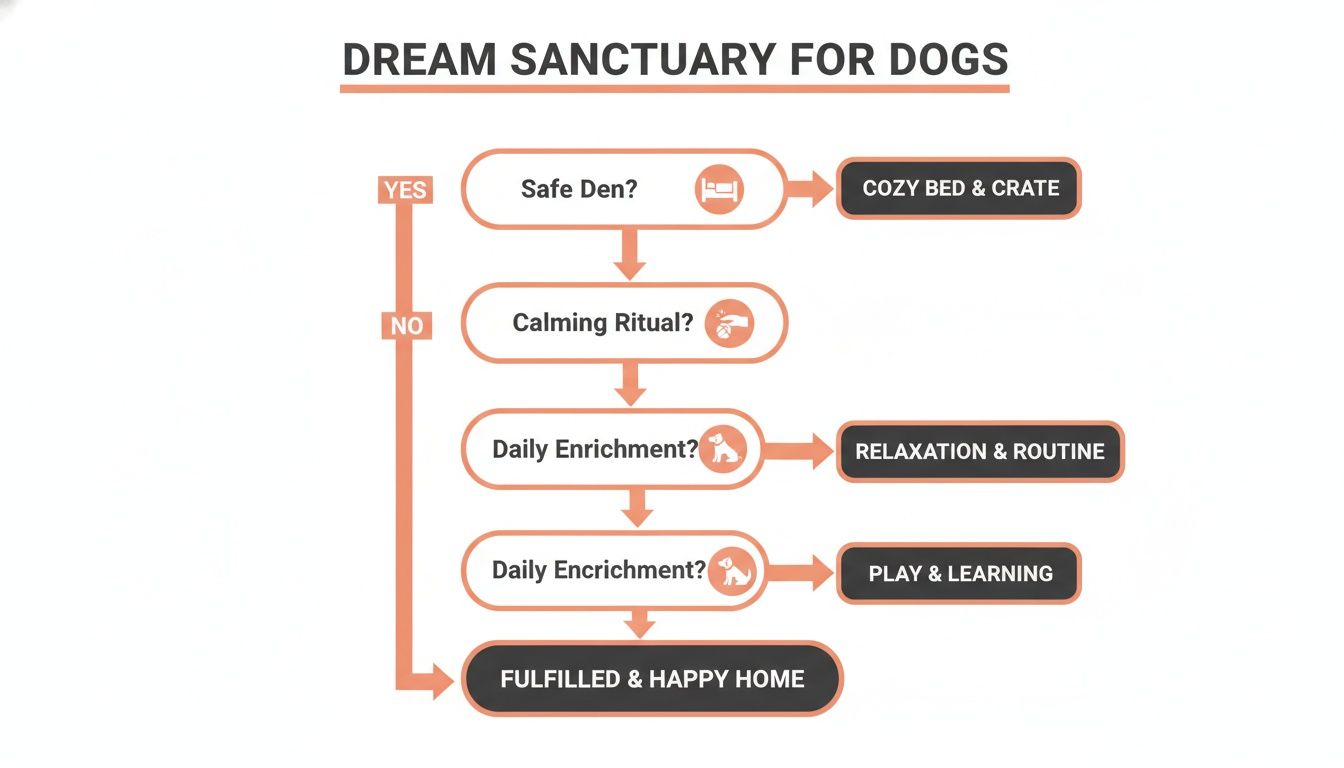
The image above outlines the core elements of a peaceful sleep environment—a safe den, calming rituals, and daily enrichment all work together to support your dog's well-being and promote the deep, restful sleep they need.
Ultimately, you know your dog better than anyone. If you notice any sudden or dramatic changes in their sleep patterns, or if any behavior seems truly distressing, it is always best to consult your veterinarian. Blending that intuitive connection you share with responsible, informed care is the best way to support them, body and soul.
Read more about...
Frequently Asked Questions
Can dogs have nightmares?
Yes, it’s almost certain they can. Just like our dogs dream to process the happy parts of their day, they also need to sort through the scarier moments. A nightmare is likely their brain’s way of working through fear, anxiety, or a startling event in the safety of sleep. If you notice distressed whimpers or frantic leg paddling, the best thing you can do is be a calm, quiet presence nearby.
Do all dogs dream?
It's widely believed that all dogs do dream. In fact, most mammals experience the REM sleep stage where dreaming happens. How much they dream can vary, though. Puppies seem to dream more often and more vividly than adult dogs, which makes sense—they have a whole new world of information to process and skills to master! Dreaming itself seems to be a universal canine experience.
Should I wake my dog from a bad dream?
As tempting as it is, it's almost always better not to wake a dog from a nightmare. Being suddenly jolted out of a deep REM sleep can be incredibly disorienting and even frightening for them. A startled dog, still caught somewhere between the dream world and reality, might snap or react defensively out of pure confusion. Unless you believe they're in genuine physical distress, the kindest and safest approach is to let them wake up on their own.