Nosework for dogs at home
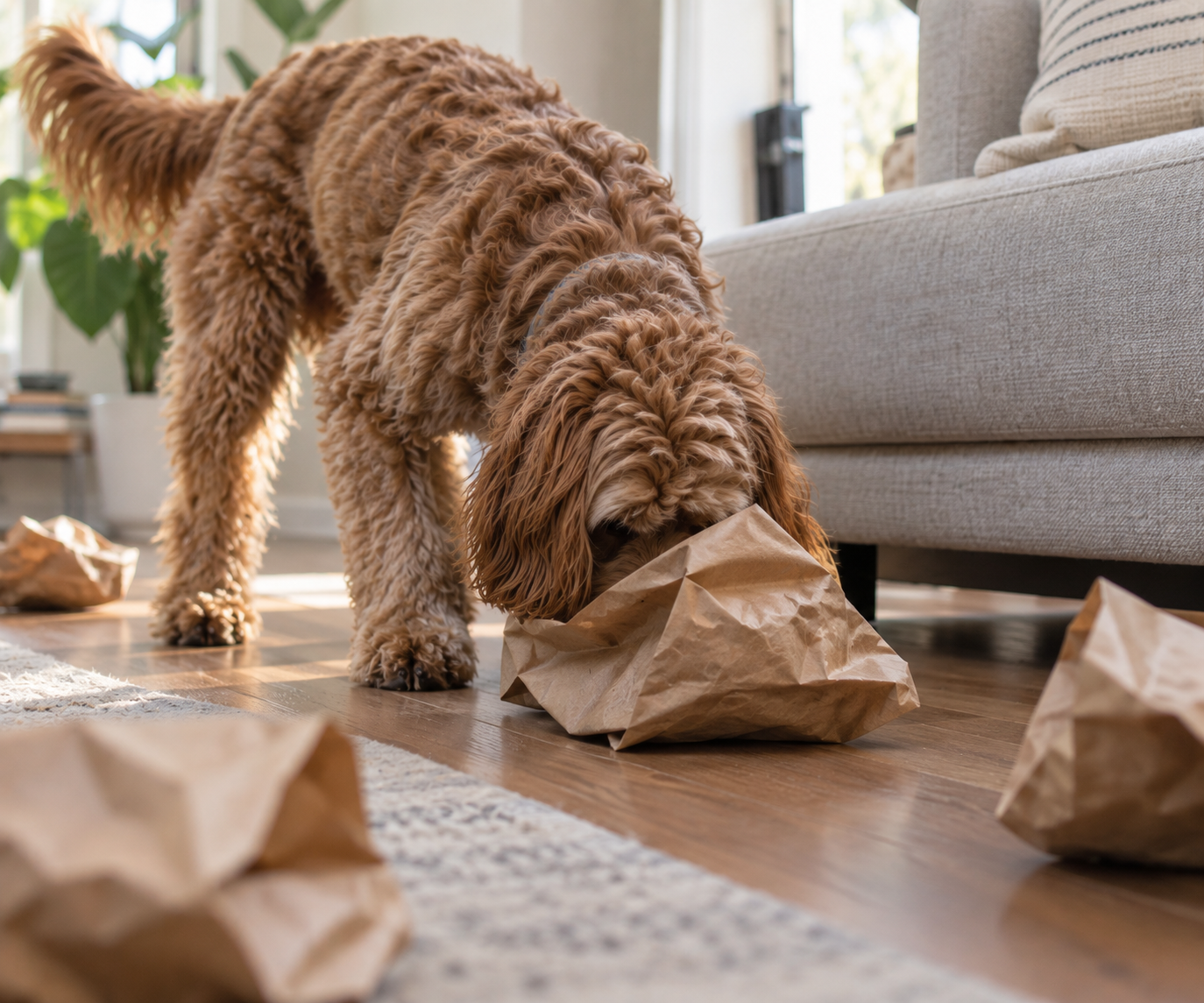
Editor's note: This guide is written by a certified fear-free dog trainer and built on Wild Pack's nervous-system-first, reward-based training philosophy, adapted specifically for the terrier's high-drive, independent temperament.
Nosework for dogs at home is one of the easiest ways to give your dog meaningful mental enrichment without adding another long walk, expensive toy, or complicated training session to your day. Using treats, everyday objects, and your dog’s natural sense of smell, you can turn your living room, hallway, or backyard into a tiny search-and-discovery zone.
And yes, your dog can absolutely do this in an apartment.
In This Guide
What Is Nosework for Dogs at Home?
Why Nosework Is So Good for Dogs
Nosework by the Numbers
What You Need to Get Started
4 Easy Nosework Games to Try at Home
How to Make Nosework More Challenging
Common Mistakes to Avoid
How Often Should You Do Nosework?
The Bottom Line
Key Takeaways
Nosework gives dogs an outlet for one of their most powerful natural behaviors: using their nose to investigate and search.
You don’t need a big house, special equipment, or a highly trained dog to get started.
The goal isn’t to make nosework harder as quickly as possible. It’s to give your dog opportunities to explore, problem-solve, and make choices independently.
Short, intentional scent games can turn ordinary household spaces into meaningful enrichment.
What Is Nosework for Dogs at Home?
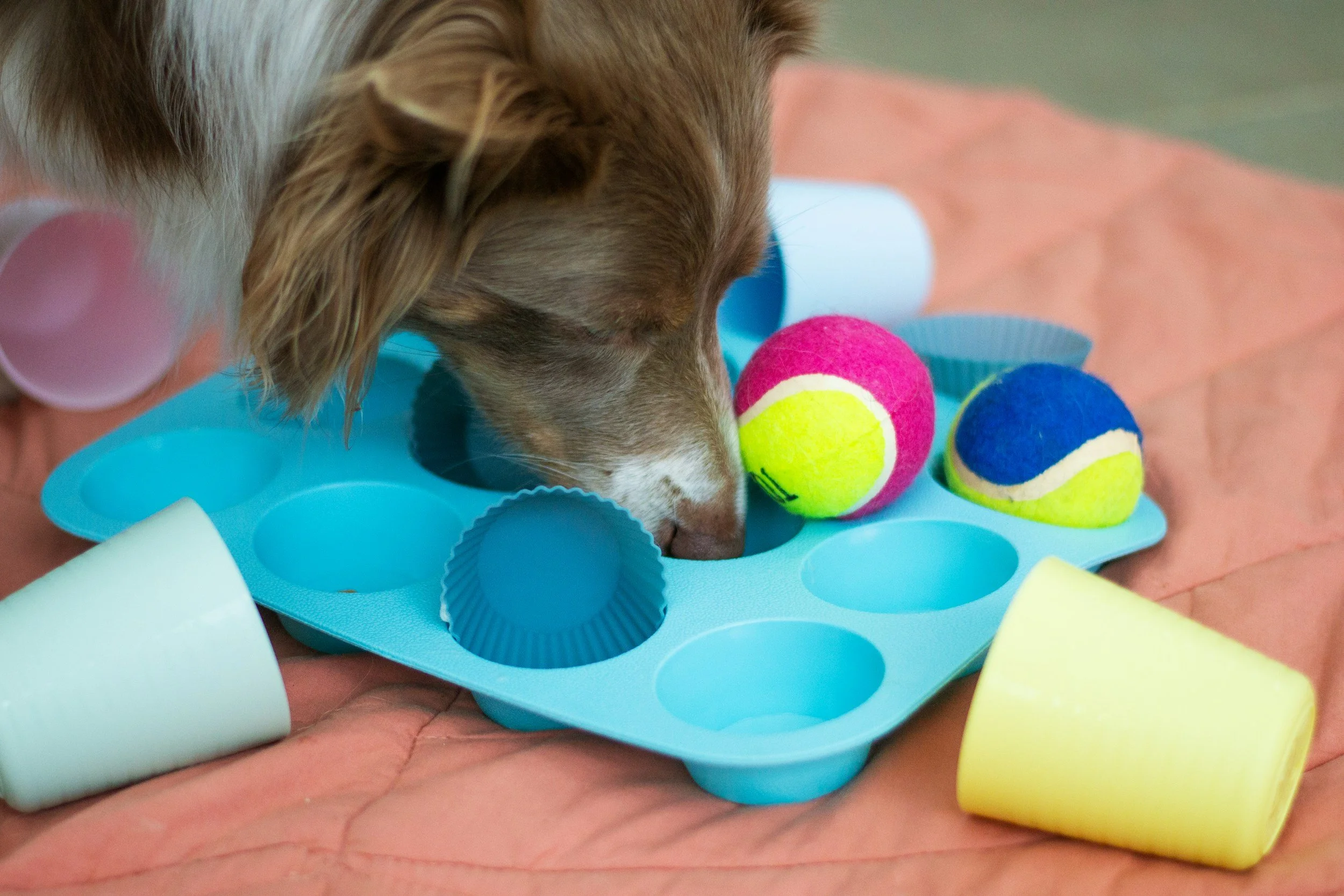
Let’s make this very simple: nosework at home means giving your dog something to find using their nose.
That might be a treat hidden under a cup. A piece of food tucked inside a cardboard box. A favorite toy hidden somewhere in another room. Or, eventually, a specific scent your dog has learned to search for.
The important part isn’t the equipment.
It’s the search.
Dogs experience much of their world through scent, and scent-based games give them an opportunity to actively investigate rather than simply follow us around the house. The American Kennel Club notes that scent games can be played indoors, including in small spaces such as a living room.
In other words: your apartment does not need to become a canine obstacle course.
Your dog just needs something interesting to sniff out.
Why Nosework Is So Good for Dogs
Dogs have an extraordinary sense of smell. The AKC estimates that a dog’s sense of smell is between 10,000 and 100,000 times more acute than a human’s.
That makes nosework more than a cute party trick.
Searching asks your dog to gather information, follow scent, make decisions, and figure something out without you directing every step. That independence is part of what makes scent work so different from many traditional training activities.
And the dog gets to be the expert.
In formal AKC scentwork, the handler often doesn’t know where the odor is hidden either. The dog has to lead the search, which means the human learns to read and trust the dog’s behavior.
That same dynamic can exist in your living room.
You set up the opportunity.
Your dog does the investigating.
Nosework by the Numbers
A few numbers put just how powerful this activity can be into perspective:
10,000–100,000x: how much more acute the AKC estimates a dog’s sense of smell is compared with ours.
2017: the first AKC Scent Work competition took place, with 97 dogs representing 20 U.S. states and Canada.
142 → 2,040: AKC Scent Work trials increased from 142 in 2017 to 2,040 in 2025, according to data compiled from AKC trial results.
33,479: dogs had earned at least one qualifying score in AKC Scent Work as of August 2026, according to the same independent compilation.
Nosework has clearly grown beyond a niche activity for professional working dogs. And you don’t need to compete to enjoy the benefits.
What Do You Need to Start Nosework at Home?
Almost nothing.
Start with:
High-value treats
A few cardboard boxes or containers
A towel or blanket
A quiet area of your home
Your dog’s favorite toy, if they’re toy-motivated
That’s it.
You don’t need a special scent kit. You don’t need a giant backyard. And you definitely don’t need to turn your house into a training facility.
The AKC also recommends simple food-based games as an accessible way to introduce dogs to scent work before progressing to more formal target odors.
4 Easy Nosework Games to Try at Home
1. The Find-It Game
Start ridiculously easy.
Show your dog a treat. Toss it a short distance away and say something like “find it.” Let them sniff it out and eat it.
Repeat.
Then gradually toss the treat farther away or into another part of the room.
You’re teaching the basic idea: use your nose, search, find the thing, get rewarded.
2. The Box Game
Put a few open cardboard boxes on the floor.
Drop a treat into one of them while your dog watches. Let them investigate and find it.
Once they understand the game, add more boxes and make the hide slightly less obvious.
You can eventually hide the treat while your dog is in another room.
Now they have a real search to solve.
3. The Room-to-Room Search
This is where your house starts getting interesting.
Hide a few treats in safe, accessible locations around one room. Let your dog search independently.
Once they understand the game, expand into another room.
Different rooms mean different smells, surfaces, distractions, and search environments. The AKC specifically notes that changing environments can add different levels of distraction and competing scents for dogs to work through.
4. Hide Their Favorite Toy
Not every dog is food-obsessed.
If your dog would sell their soul for a particular ball, tug toy, or stuffed animal, use that.
Let them watch you hide it at first. Then gradually make the hiding spots more challenging.
This turns “Where’s my toy?” into an actual scent-based search.
How to Make Nosework More Challenging
Slowly is the name of the game.
Once your dog is confidently finding easy hides, you can change one variable at a time:
Make the hide less visible.
Increase the search area.
Add more objects.
Move into another room.
Search when you aren’t standing right beside the hide.
Add mild environmental distractions.
But don’t confuse harder with better.
The goal isn’t to frustrate your dog. The goal is to give them an interesting problem they can actually solve.
And this might be the hardest part for us humans: don’t help too much.
Try not to point. Don’t hover. Don’t repeatedly tell your dog where to look.
Let them sniff.
Let them think.
Let them figure it out.
Common Nosework Mistakes to Avoid
The biggest mistake is making the game about your performance instead of your dog’s.
You don’t need to create elaborate hides right away. You don’t need to rush through increasingly difficult challenges. And you don’t need to correct your dog for investigating in their own way.
Another common mistake is accidentally making the environment too difficult too soon.
If your dog suddenly stops finding things, make the next search easier.
Success builds confidence.
And confidence makes the game more fun.
How Often Should You Do Nosework?
You don’t need an hour-long nosework session.
In fact, short sessions are often a better place to start.
Try five to ten minutes, a few times a week, and pay attention to your dog. If they’re engaged and enjoying themselves, you can continue. If they’re losing interest, getting frustrated, or wandering away, that’s useful information too.
You’re not trying to exhaust your dog.
You’re giving their brain and instincts somewhere to go.
That distinction matters.
Modern dogs live remarkably human lives: apartments, sidewalks, elevators, schedules, leashes, cars, and doorbells. Nosework creates a little pocket of wildness inside all that domestication.
Why Nosework Is Especially Good for Indoor Dogs
For dogs living in apartments or urban environments, opportunities to investigate can be surprisingly limited.
There’s only so much room to run around a living room.
But there can be an enormous amount of information for a nose to process.
Nosework takes up very little physical space while giving your dog something meaningful to do. That makes it particularly useful for rainy days, busy schedules, recovery periods, senior dogs, or simply those days when you and your dog need a different kind of enrichment.
And you don’t have to choose between a sniffy walk and nosework.
Keep the walks.
Add the nosework.
Your dog’s enrichment menu just got more interesting.
The Bottom Line
Nosework for dogs at home is really about giving your dog permission to use the equipment they’ve had with them all along: their nose.
You don’t need more stuff.
You don’t need more space.
You don’t need to become a professional trainer.
You just need a few minutes, something worth finding, and enough patience to let your dog take the lead.
Because sometimes the best enrichment isn’t another thing we teach our dogs.
It’s an opportunity to let them figure something out for themselves.
Ready to Try Nosework at Home?
The Wild Scent Ritual Guide gives you four simple scent-based exercises you can do at home using everyday items — no experience required. It’s designed to help you create more opportunities for your dog to sniff, search, focus, and connect with you.
Read more on nosework training for dogs, dog scentwork classes, and what is nosework.
Frequently Asked Questions
-
The terms are often used interchangeably. Nosework is the broader practice of encouraging dogs to search and investigate with their noses, while Scent Work can refer to more structured or competitive scent activities.
-
Scent training teaches dogs to identify and locate a particular odor. For simple nosework at home, you can start with dog treats, toys, or household objects rather than formal target odors.
-
No. Essential oils, cotton swabs, and a glass jar are used in some formal Scent Work training, but they aren't necessary for beginner nosework at home.
-
Try hiding dog treats in boxes, creating a simple scent trail, or using a muffin tin covered with appropriately sized tennis balls. These simple setups turn everyday objects into a search game and provide mental stimulation.
-
Nosework can give a reactive dog a low-pressure way to engage their brain and natural scenting instincts, particularly when practiced at home. It isn't a treatment for reactivity, but it can be a useful form of mental stimulation and enrichment.
About the Author
Lindsay is the founder of Wild Pack and a Certified Fear-free Dog Trainer and Coach dedicated to helping dogs and their guardians thrive through reward-based training, nervous system regulation and instinct-led enrichment. After thousands of hours working hands-on with dogs of every breed, age, and temperament, she specializes in helping dogs build confidence, resilience, and lasting behavior change without fear or punishment. Wild Pack is a 5-star rated Seattle pet wellness brand trusted by dog parents globally and featured by KOMO News, Seattle Refined, and Dogington Post for its unique approach to canine wellbeing. Through boutique services, practical education, and innovative products, Wild Pack’s mission is to rewild pets—and the people who love them.