What Do Wild Dogs Eat in the Wild? A Natural Diet Guide
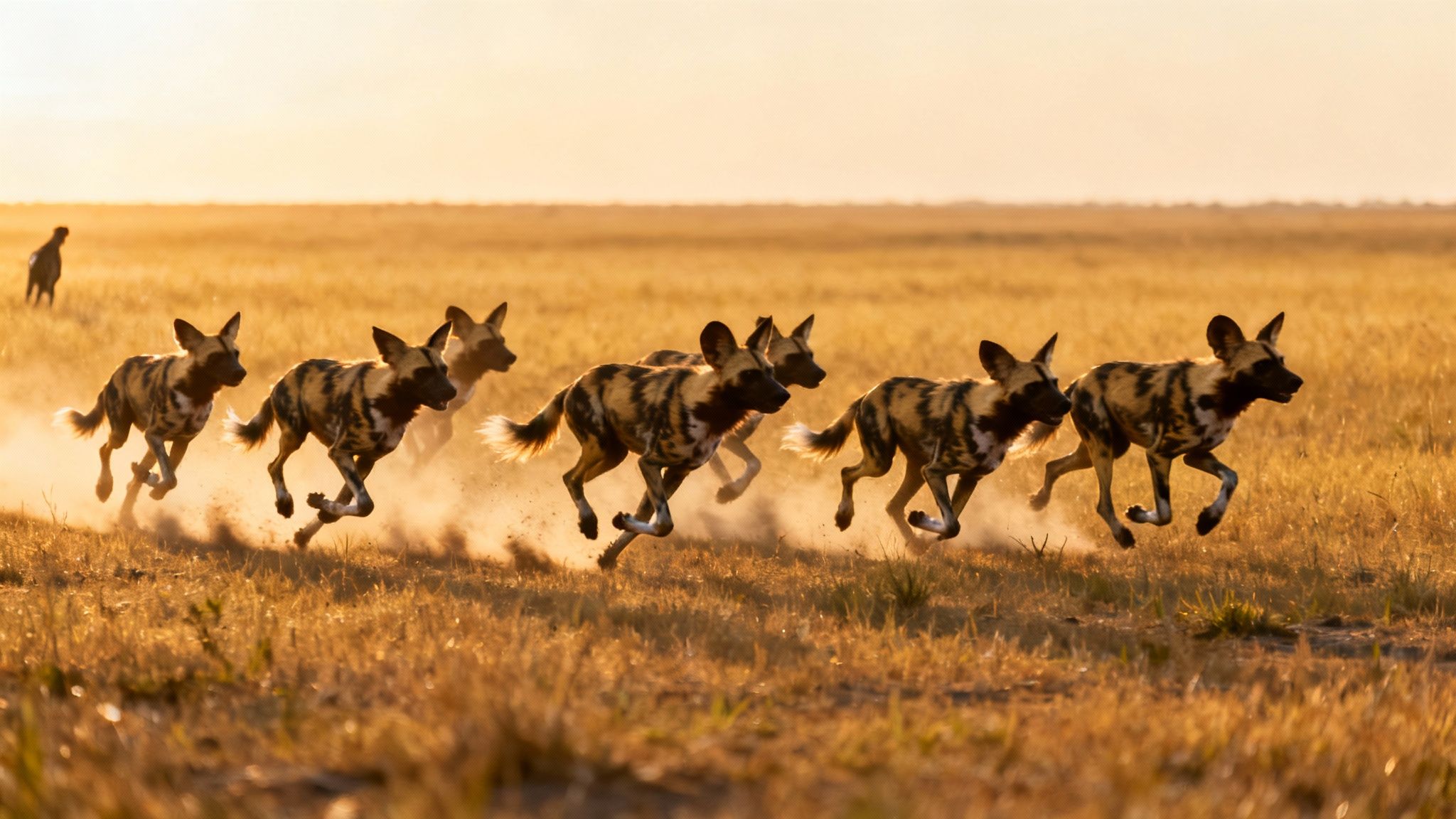
Table of Contents
A Glimpse Into the Wild Canine Menu
The Great Hunt: What African Wild Dogs Eat
How Teamwork Fuels the Hunt
The Natural Rhythm of Feast and Famine
Bringing Wild Instincts Into Your Home Safely
Frequently Asked Questions
Key Takeaways
Wild dogs are primarily carnivores, thriving on fresh prey they hunt.
Their diet is incredibly adaptable, shifting with location, season, and opportunity.
African wild dogs are cooperative hunters, often targeting medium-sized antelope like impala.
Dingoes are more flexible, hunting alone or in small groups for everything from kangaroos to insects.
We can honor our domestic dogs' wild instincts through enriching activities like puzzle feeders and scentwork, rather than trying to replicate a wild diet.
Ever wonder what's really on the menu for a wild dog? The simple truth is that wild dogs are primarily carnivores, thriving on fresh prey they hunt themselves. But it's not that straightforward. Their diet is a dynamic feast, constantly shifting based on instinct, the season, and the incredible bonds of their pack, making them some of the most adaptable eaters on the planet.
A Glimpse Into the Wild Canine Menu
Forget neat bowls and predictable feeding times. A wild dog's diet is a direct reflection of its environment and what's available. From the small rodents hunted by solitary dingoes in the Australian outback to the large antelope pursued by a coordinated African wild dog pack, what they eat tells a powerful story of survival.
Their resourceful nature also makes them opportunistic scavengers, ensuring that no potential meal ever goes to waste.
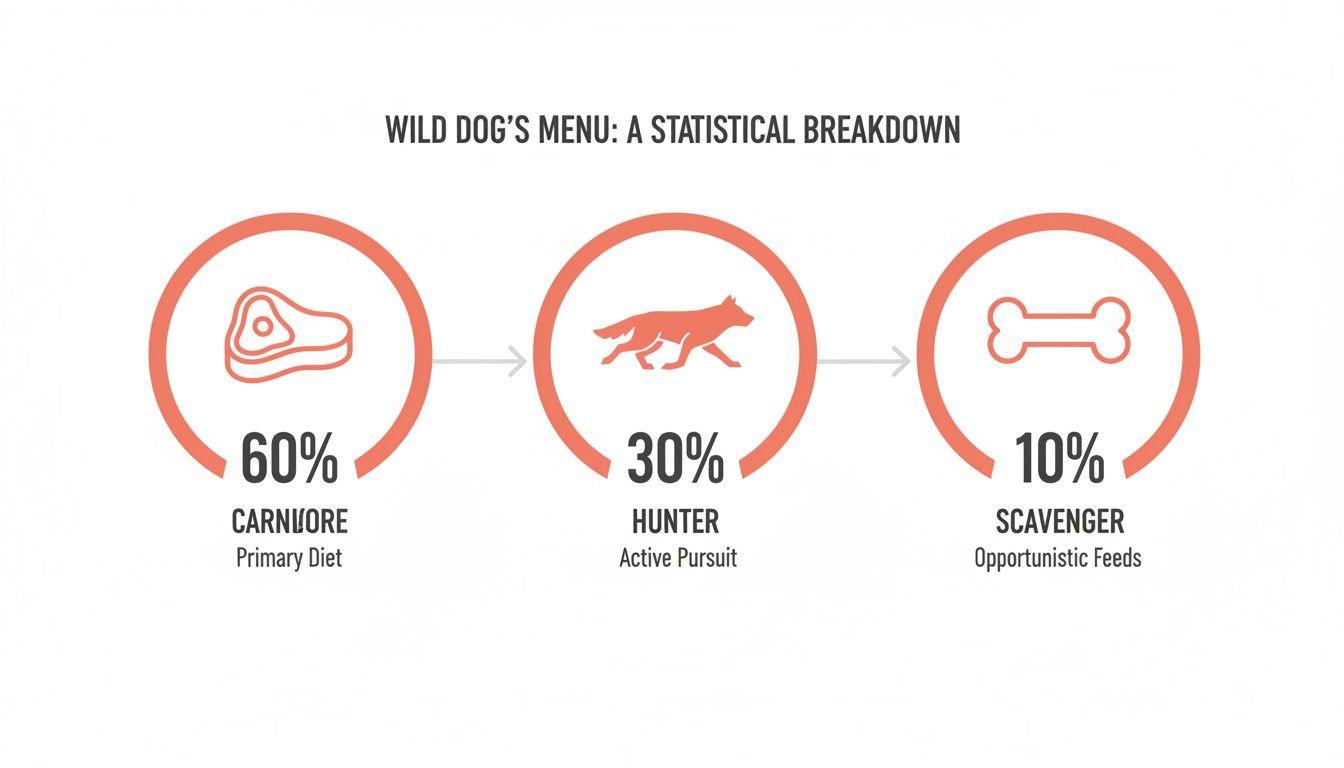
As you can see, their diet is built on a foundation of meat. Most of it is acquired through active hunting, with a little scavenging on the side to round things out.
Understanding what wild dogs eat isn't just a biology lesson. It’s a window into the soul of our own dogs, helping us see the ancient hunter that still lives within them.
Appreciating this wildness allows us to honor that spirit through mindful care and enrichment. This is at the very heart of our philosophy on rewilding dogs.
That primal drive to hunt, track, and forage is woven into their very being. While we provide for our companions, those instincts remain. Engaging these innate behaviors is a powerful way to connect with them on a deeper, more soulful level.
The Great Hunt: What African Wild Dogs Eat
The African wild dog, sometimes called the painted wolf, is the absolute picture of cooperative hunting. Their entire social world, their very survival, revolves around the chase—a powerful dance of teamwork and incredible stamina that just hums with wild, instinctual energy.
This high-octane lifestyle demands a lot of fresh prey. The hunt is so much more than just a meal; it’s a pack ritual that weaves the intricate social bonds connecting each member even tighter. It's a beautiful parallel to how we can create our own meaningful rituals with our dogs, tapping into their senses through shared activities.
The Pack's Preferred Menu
African wild dogs are brilliant strategists, typically targeting medium-sized antelope. In many regions, like Kruger National Park, impala are their go-to, making up a staggering majority of their diet. This isn't a random choice; it's a smart calculation of risk versus reward. Impala offer a substantial meal without the immense danger of taking on much larger, more powerful prey.
But these hunters are nothing if not flexible, and their menu changes with the landscape. When the opportunity presents itself, a pack will work in perfect concert to hunt much bigger game.
Wildebeest
Kudu
Waterbuck
Reedbuck
Zebra
These ambitious hunts are where you really see their remarkable intelligence and communication shine. The pack coordinates flawlessly to bring down an animal that's many times their individual size.
An Appetite for the Wild
To fuel these athletic pursuits, an adult African wild dog will eat somewhere between 1.2 to 5.9 kg of prey every single day. They hunt mostly at dawn and dusk, when their mottled coats blend perfectly into the shifting light.
Their survival instinct also dictates how they eat. A pack can devour an entire Thomson's gazelle in just 15 minutes. This speed isn't about greed; it’s a crucial survival strategy. It minimizes the chances of losing their hard-won meal to opportunistic competitors like hyenas and lions, who are always lurking nearby. Every part of the process, from the chase to the final bite, is a masterclass in efficiency and pack unity.
That same focused energy of the hunt is something our own dogs carry deep within them. Tapping into that instinctual drive can be one of the most fulfilling things we do for them. Ready to explore your dog's incredible sense of smell?
👉 Download our free nosework guide to begin the journey.
While the image of a perfectly coordinated pack hunt is powerful, it’s not the only way wild canines put food on the table. That wild instinct isn't just about the epic chase; it’s about cleverness, resilience, and making the most of whatever is available.
The Australian dingo is a perfect example of this adaptable, often solitary spirit.
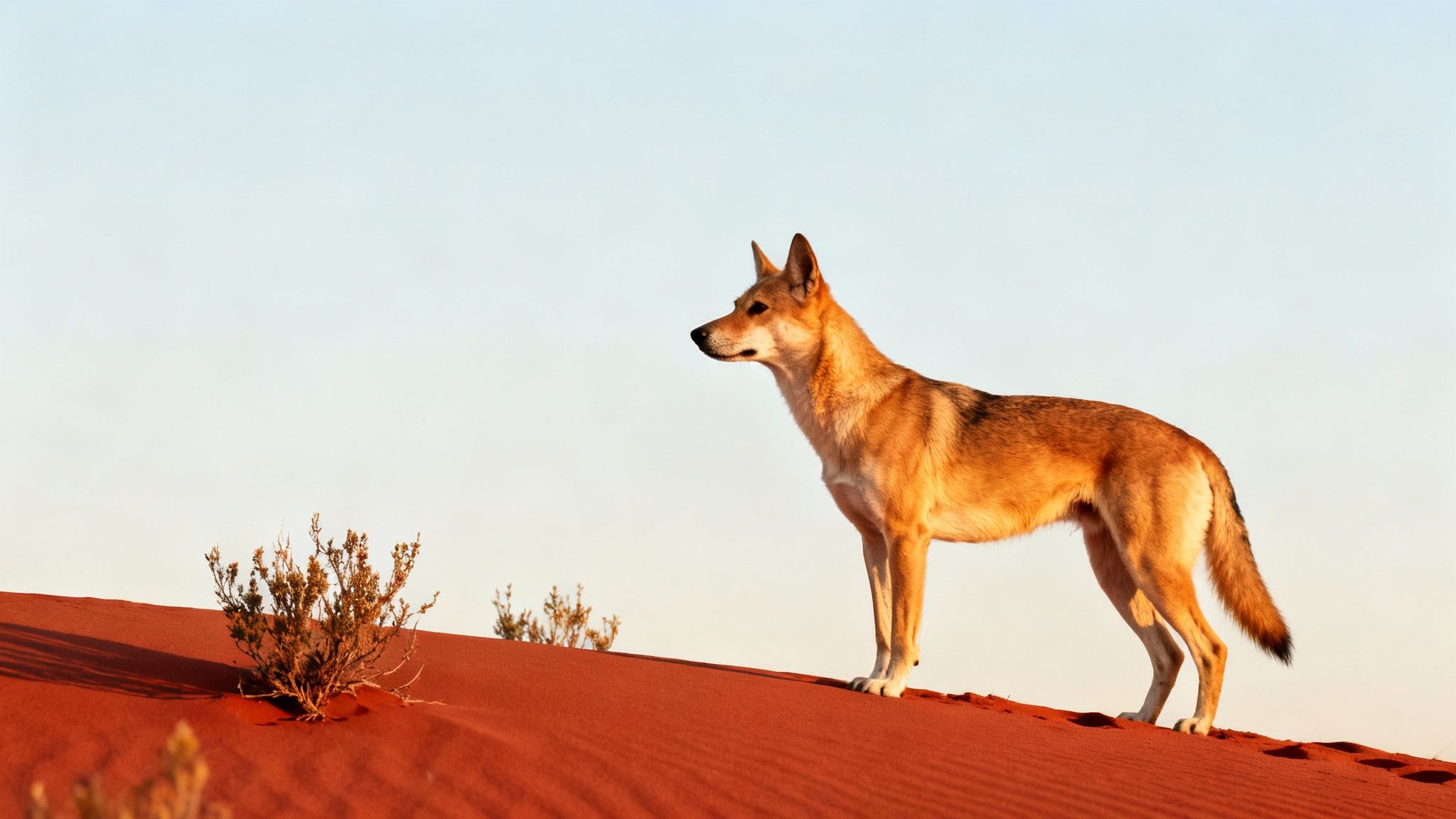
Dingoes are absolute masters of dietary flexibility. Their menu changes dramatically depending on where they are, from arid deserts to lush coastal regions. This resourcefulness is a beautiful testament to the canine ability to connect with and thrive in just about any environment.
A Menu Shaped by the Land
What a dingo eats is a direct reflection of the Australian landscape it calls home. Their diet shows an incredible range, proving they are opportunistic hunters and foragers at heart.
In the vast, open outback, dingoes often go after larger prey, including:
Kangaroos
Wallabies
Wombats
Feral rabbits
But in forested or coastal areas, their focus shifts to smaller, more readily available food. This could be anything from small mammals like possums and bandicoots to reptiles, insects, and even ground-nesting birds. This talent for switching between large and small prey is the secret to their survival.
This instinctual adaptability is a great reminder that our own dogs carry that same intelligence. They are wired to solve problems and explore their world through their senses. We can honor this part of their nature by giving them enriching challenges that engage their minds and bodies.
The Art of Solitary and Small-Pack Hunting
Unlike the highly social African wild dogs, dingoes often hunt alone or in small family groups. A solitary dingo is more than capable of taking down smaller prey, using stealth and patience to secure a meal.
When they do team up in small packs, they can coordinate to hunt larger animals like kangaroos. It’s a much more fluid and less rigid social structure. This flexible approach to hunting allows them to conserve energy and maximize their success based on the prey and the environment at hand.
Watching the dingo’s resourceful nature helps us appreciate the quiet intelligence humming away inside our own companions. We can nurture this spirit by creating opportunities for them to explore and problem-solve, transforming a simple walk or mealtime into a sensory adventure. It’s in these moments of mindful engagement that we help them reconnect with their wild, instinctual selves.
How Teamwork Fuels the Hunt
Watching a pack of wild dogs hunt is witnessing something truly special. It's a complex dance of instinct, communication, and pure athleticism that reveals just how deeply connected they are to one another. And in those instincts, we can see the whispers of what still drives our own dogs at home.
African wild dogs, in particular, are masters of the coordinated hunt. Their strategy is less about brute force and more about incredible endurance and smarts. Picture this: they'll often use a relay-style chase, with different pack members taking turns to lead the pursuit over vast distances. It's a brilliant tactic that slowly but surely exhausts even the swiftest antelope.
Each dog seems to know its role intuitively, communicating through subtle shifts in body language and quiet vocalizations. It's a seamless display of cooperation where the group's success hinges entirely on every single dog playing its part.
The Strategy Behind the Chase
The hunt's success isn't just a matter of running fast; it's pure strategy. Wild dogs are masters of anticipation. They'll often flank their target to cut off escape routes or cleverly guide it toward more open terrain where the pack has a clear advantage. That level of planning requires a deep energetic connection and trust among the pack.
But contrary to popular belief, they aren't always successful. Research shows that the hunting success rate of African wild dogs averages around 31.2%, a number that shifts depending on the prey and conditions. This statistic paints a much more realistic picture: these are strategic hunters who must carefully weigh their options. They might target impala one day, but they're ready to scale up to larger game like wildebeest when the opportunity is right. You can find a deep dive into African wild dog ecology here to learn more about their behaviors.
This cooperative spirit is a powerful reminder of the social instincts our own dogs carry with them. We can honor this by fostering positive interactions and clear communication in their lives. Understanding how to socialize your dog with other dogs is a beautiful way to nurture this innate need for connection.
When we engage our dogs in activities like scentwork, we're doing more than just playing a game. We're tapping into this ancient instinct to problem-solve and connect, strengthening the unique bond of our own little pack.
The Natural Rhythm of Feast and Famine
Life in the wild doesn’t run on a clock. For a wild canine, mealtime isn't a schedule—it’s an event dictated entirely by the success of the hunt. This creates a natural, powerful cycle of abundance and scarcity.
This rhythm of feast and famine is a world away from the twice-a-day feeding routine we’ve created for our domestic companions. After a successful hunt, wild dogs gorge, consuming huge amounts of meat as quickly as they possibly can. This isn't just about hunger; it’s a critical survival tactic. Competitors like hyenas are always lurking, ready to steal a hard-won meal. Their bodies are beautifully adapted to this cycle, built to sustain them through the inevitable lean times between kills.
From Gorge to Scarcity
The nutritional habits of wild dogs paint a picture of carnivorous precision. Free-ranging adults might pack away between 1.2 to 5.9 kg of prey in a single day, devouring roughly 60% of a kill’s total weight.
But they aren't just big-game hunters. Their opportunistic nature means they're incredibly flexible. Fecal analysis shows they also hunt smaller prey like hares and rodents, proving they can adapt to whatever is available. You can dive deeper into the surprising secrets of African wild dog diets to see just how adaptable they are.
This natural rhythm offers a profound insight for us. It helps us reframe mealtime not just as feeding, but as a deep opportunity for enrichment.
Instead of just filling a bowl, we can tap into these ancient instincts. Using puzzle feeders or hiding food mimics the mental and physical challenge of foraging. This reconnects our dogs with their innate problem-solving abilities and satisfies a part of their wild spirit that a simple bowl of kibble just can't touch.
Ready to help your dog tap into their amazing sense of smell and connect with their inner hunter?
👉 Download our free nosework guide to begin the journey.
Bringing Wild Instincts Into Your Home Safely
So, after learning all about what wild dogs eat, you might be tempted to overhaul your dog's diet. Hold on a second. This isn't about trying to perfectly replicate a wild diet—that path can get complicated, and frankly, it isn't always practical or safe for our domesticated buddies.
Instead, let's think of it as drawing gentle inspiration from their wild cousins. It's about honoring that intelligent, resourceful hunter that still lives inside your dog, nourishing their spirit just as much as their body.
Turn Mealtime Into a Ritual
That deep-seated drive to forage, track, and "work" for food? It's hardwired into your dog's DNA. We can tap into this by shifting mealtime from something passive into an exciting, engaging experience for their senses.
This simple change awakens their natural problem-solving skills, builds up their confidence, and honestly, it deepens the bond you both share. It’s a small way to bring a little piece of the wild into your modern life together.
Here are a few simple rituals to get started:
Grab a puzzle feeder or snuffle mat. These make your dog use their brain and nose to find their kibble.
Hide a few small, high-value treats around a room or in a secure yard for them to discover on their own.
Hand-feed a portion of their meal as a reward during a quick, fun training session.
These aren't just about dispensing food; they provide critical mental stimulation that satisfies their innate need to use those incredible noses and brilliant minds.
Connect Through Scent
A dog’s nose is their primary connection to the world around them. It tells them stories we can only begin to imagine. Scentwork is one of the most powerful ways to tap into this innate superpower. It gives your dog a "job" that feels deeply fulfilling.
Unlocking this sensory world is way easier than you might think. You can start with simple games that let your dog connect with their most primal instinct.
Ready to explore your dog's amazing sense of smell and strengthen your bond?
👉 Download our free nosework guide to begin the journey.
Mindful Nutrition
While we're busy drawing inspiration from the wild, it's absolutely vital that our dogs' diets remain nutritionally complete and balanced for their domestic lives. Always, always chat with your veterinarian before making any big changes to what you feed them.
Even small additions of fresh, dog-safe foods can add some welcome variety, but you have to know what's safe. Understanding topics like whether dogs can eat tofu and other human foods helps you make smart, informed choices. The goal is to nourish them safely, honoring their wild spirit with wisdom and care.
Read more about...
Frequently Asked Questions
Once you start peeking into the world of wild dogs, it’s only natural to look at the furry companion snoozing on your couch and wonder. How do those ancient instincts connect to our modern pets? Let's dig into some of the most common questions that pop up on this journey.
What do wild dogs eat most?
At their core, wild canines are carnivores, meaning meat is the star of the show. What kind of meat, though, really depends on where they call home. African wild dogs, for example, are masters at hunting medium-sized antelope like impala. Over in Australia, dingoes are more adaptable, munching on everything from kangaroos down to small rodents.
Do wild dogs eat plants or vegetables?
While meat is definitely the main course, wild dogs aren't strict carnivores like cats are. They're total opportunists. Sometimes they'll get their greens by eating the stomach contents of their plant-eating prey, but they might also nibble on fruits or grasses directly. Still, this is a very small, almost accidental, part of their overall diet.
How does a wild dog's diet differ from a pet dog's diet?
The biggest split is in the source and rhythm of their meals. Wild dogs are caught in a natural cycle of feast and famine; they eat what they manage to hunt or find. Their meals are whole prey—meat, organs, bones, the works. Our pet dogs, on the other hand, usually eat processed kibble from a bowl at the same time every single day. While that food is designed to be nutritionally complete, it misses out on the mental and physical satisfaction that comes from a natural hunt.
Can I feed my dog a wild diet?
Trying to perfectly replicate a wild diet for a domestic dog isn't something we recommend. It's generally unsafe and pretty impractical for most of us. Instead of trying to serve up wild prey, we can tap into those same instincts through enrichment. Think puzzle feeders, scent games, and nosework—these are fantastic ways to satisfy their innate drive to forage and "hunt." This approach gives their wild spirit an outlet without taking on the risks of a raw, wild diet. For more ideas on mindful feeding, check out our articles on Dog Nutrition.
