Table of Contents
Why Natural Supplements Are a Game Changer for Dog Wellness
How to Read Labels and Decode 'Natural' Ingredients
Comparing the Top Natural Supplement Categories for Dogs
How to Safely Introduce New Supplements to Your Dog
Supporting Your Dog's Health with Whole Foods
Creating Your Daily Wellness Ritual
Frequently Asked Questions About Natural Dog Supplements
Key Takeaways
Natural supplements ditch synthetic ingredients for whole-food sources that honor a dog's biology.
Giving your dog a supplement can become a meaningful daily ritual that strengthens your bond.
Choosing the right supplement is an act of care, grounded in understanding your dog's unique needs and educating yourself.
Choosing natural supplements for your dog is about so much more than just fixing a symptom. It’s a conscious choice to align their health with the rhythms of nature, moving away from harsh synthetics and toward ingredients their bodies instinctively recognize. This approach views health not as just the absence of illness, but as a vibrant state of balance.
It’s a return to something fundamental. Instead of simply masking a problem, natural supplements work gently to support the body’s own incredible healing capabilities. This is a core part of the philosophy we explore in our articles on holistic pet care, where every choice becomes an opportunity for a deeper connection with your animal.
Think of it as adding a little bit of the wild back into their daily routine. The simple act of giving a supplement can transform from a chore into a mindful moment of connection. It becomes a quiet ritual, a daily promise to honor their well-being and nurture their wild spirit.
This shift is about more than just what’s in the bottle; it's a mindset. By choosing supplements derived from the earth—like fish oils rich in omega-3s or herbs that soothe the nervous system—we are tapping into ancient wisdom. We are acknowledging that our dogs, just like us, thrive when they are connected to the natural world. This small daily act grounds both of you, reinforcing the beautiful, instinctual bond you already share.
How to Read Labels and Decode 'Natural' Ingredients
Diving into the world of natural dog supplements can feel like trying to learn a whole new language. That word, "natural," gets thrown around a lot—it's often just a whisper of marketing. But genuine wellness for your dog comes from knowing what’s actually in the bottle.
Learning to read a label with an intuitive eye is your best tool. It helps you cut through the noise and choose ingredients that truly support your dog’s instinctual health.
When a product is the real deal, its ingredient list should read like a grocery list pulled straight from the earth. You want to see recognizable, whole-food sources, not a long string of complex chemical names. This isn't just a trend; it's a fundamental shift in how we see our dogs—as family members who deserve the best.
This growing consciousness is reshaping the entire pet wellness industry. The global pet supplements market is on track to hit an incredible value by 2035, and it’s being driven by owners like us who are searching for premium, nature-based options for our companions. This boom is huge in North America, where millions of dogs are getting support for common issues like joint discomfort, which affects about 20% of dogs over the age of six.
What Real Natural Looks Like
A genuinely natural supplement works with your dog’s biology, not against it. The ingredients should be minimally processed to keep their nutritional power intact, working in harmony with your dog's body instead of forcing a synthetic reaction.
Here are a few green flags to look for on a label:
Whole-Food Sources: Ingredients are listed by their common names, like "wild-caught salmon oil" or "turmeric root," not just the isolated chemical compound.
Minimal 'Other Ingredients': The list of binders, fillers, and flow agents should be short and, ideally, come from natural sources themselves.
Organic or Wild-Crafted Herbs: These certifications signal a higher standard of purity and show a real commitment to quality sourcing.
Common Red Flags to Avoid
Knowing what to look for is only half the battle; knowing what to avoid is just as crucial. So many products use misleading terms to seem more wholesome than they are. Seeing through the fluff requires a mindful approach and a healthy dose of skepticism.
Keep an eye out for these common red flags:
Artificial Additives: Colors, flavors, and preservatives like BHA, BHT, or ethoxyquin have no place in a truly natural supplement.
Vague or Proprietary Blends: When companies hide ingredient amounts behind "proprietary blends," it's impossible to know if your dog is getting a dose that will actually do anything.
Synthetic Vitamins: Look for terms like "dl-alpha-tocopherol" (synthetic Vitamin E) instead of "mixed tocopherols" (natural Vitamin E). You can learn more about ingredient sourcing in our guides to dog nutrition.
By becoming a more conscious consumer, you turn a simple purchase into a powerful act of care. You make sure that every supplement you give your dog is a step toward reconnecting them with their vibrant, wild nature.
Comparing The Top Natural Supplement Categories For Dogs
Stepping into the world of natural supplements is really about tuning into what your dog’s body is telling you. Just like in a wild ecosystem where every plant and animal has a purpose, each supplement category plays a unique role. Getting familiar with them helps you choose the right support to bring your dog’s biology back into its natural, instinctual balance.
The market for these products is absolutely booming, and it's because so many of us are looking for targeted, natural ways to help our dogs. In the US alone, the pet supplement market is expected to grow significantly by 2035. What’s driving this? A massive demand for plant-based, vet-approved naturals that tackle common problems like joint health—a huge issue, since about one in five dogs lives with arthritis. You can see more on these trends in the pet dietary supplement market report.
The main takeaway? Approach every label with a critical, informed eye. You want to see whole-food ingredients and verified certifications before anything else.
To make this easier, let's break down the most common categories you'll encounter. Getting familiar with them helps you choose the right support.
Joint Support: Glucosamine Versus Green-Lipped Mussel
When you see your dog getting a bit stiff or slowing down, joint support is usually the first place you look. Two of the most respected natural ingredients here are glucosamine and green-lipped mussel, but they approach the problem in beautifully different ways.
Glucosamine is a fundamental building block. It’s an amino sugar that’s already in your dog’s body, where it’s crucial for building and maintaining healthy cartilage. Think of it as the raw material needed to repair the cushions between their joints. This makes it fantastic for long-term maintenance, especially for breeds prone to joint trouble or seniors who need that foundational support.
Green-lipped mussel, on the other hand, is a true whole-food powerhouse. Sourced from the clean waters of New Zealand, it’s packed with a rich blend of omega-3s, glycosaminoglycans, and other minerals. Its real strength lies in its powerful anti-inflammatory properties, making it perfect for dogs already feeling the discomfort and inflammation from conditions like arthritis.
Choosing between them really comes down to your goal. For preventative care or basic structural support, glucosamine is a solid choice. But for active inflammation and pain relief, the multifaceted profile of green-lipped mussel offers more comprehensive, soothing power.
Gut Health: Probiotics Versus Digestive Enzymes
A healthy gut is the epicenter of your dog's entire well-being. It affects everything from their immune response to their mood. Much like a forest floor, their digestive tract is a complex, living ecosystem. Probiotics and digestive enzymes are two of the key groundskeepers that help this internal environment thrive.
Probiotics are the "good guys"—the beneficial bacteria that live in the gut. They work to maintain a healthy balance of microflora, which helps fend off harmful pathogens and supports overall immune function. They’re especially helpful after a round of antibiotics, during stressful periods, or for dogs who just seem to have sensitive stomachs. They actively repopulate and nurture the gut's delicate ecosystem.
Digestive enzymes have a totally different job. Their role is to help break down food—proteins, fats, and carbs—into smaller, absorbable nutrients. While a healthy dog produces its own enzymes, some dogs, particularly seniors or those with certain health issues, might not make enough. Supplementing with enzymes can boost nutrient absorption and cut down on gas.
If your dog is struggling with general gut imbalance, probiotics are your go-to. If they seem to have trouble digesting their food, then digestive enzymes could be the missing piece.
Skin And Coat Health: Fish Oil Versus Plant-Based Omegas
A dog's coat is often a clear mirror of their internal health. A glossy, soft coat speaks to a body in balance, while a dull, flaky one can be a red flag. Omega-3 fatty acids are absolutely essential for skin and coat health, but where they come from really matters.
Fish oil, especially from wild-caught, cold-water fish like salmon or sardines, is a direct source of EPA and DHA. These are the two most powerful and bioavailable forms of omega-3s for dogs. Their bodies can put them to use immediately to reduce inflammation and soothe itchy skin.
Plant-based sources like flaxseed or algae oil contain a different omega-3 called ALA. For a dog's body to use it, it must first convert that ALA into EPA and DHA. The problem is, this conversion process is notoriously inefficient in dogs. While algae can be a decent source of DHA for dogs with fish allergies, flaxseed alone just isn't enough to do the heavy lifting.
For most dogs, fish oil provides the most direct and effective path to a healthy, vibrant coat. It taps into a primal food source their bodies were designed to process.
Calming Support: L-Theanine Versus Herbal Blends
In our often-chaotic world, our dogs can easily absorb our stress, which can manifest as anxiety. Natural calming aids can help them find their center and reconnect with their grounded, wild nature. L-theanine and herbal options like chamomile work on different, but complementary, pathways to achieve this.
L-theanine is an amino acid found in green tea that promotes a sense of relaxation without making your dog drowsy. It works by increasing the levels of calming neurotransmitters in the brain. This makes it an excellent choice for situational anxiety—think thunderstorms, car rides, or vet visits. It just helps take the edge off.
Herbal blends typically feature gentle botanicals like chamomile, passionflower, or valerian root. These herbs work together synergistically to soothe the nervous system, much like a warm cup of herbal tea calms our own senses. They are wonderful for more general, day-to-day anxiety. Exploring these botanicals is a gentle practice, and you can go deeper into how certain scents create peace by reading about essential oils for dogs.
For predictable, short-term stressors, L-theanine offers targeted support. For ongoing nervousness, a well-formulated herbal blend provides gentle, nurturing care that moves in rhythm with nature.
Awakening your dog's innate scenting abilities is another profound way to soothe their nervous system and build confidence. To explore this beautiful sensory ritual, download our free nosework guide and start this journey together.
👉 https://www.withwildpack.com/dognoseworkguide
How to Safely Introduce New Supplements to Your Dog
Bringing a new natural supplement into your dog’s world is a beautiful act of care. But like introducing a new friend to their pack, it needs to be done with intention and gentle observation. The whole point is to make this a supportive experience that honors their body’s unique rhythm.
Before you even open the bottle, your most grounding first step is to connect with a holistic veterinarian. This isn't about getting permission—it's about creating a partnership. A vet who gets both conventional and natural approaches can give you a complete picture of your dog’s health, making sure any new supplement works in harmony with what you’re already doing.
Start Low and Go Slow
The golden rule for introducing anything new to your dog’s system is simple: start small. This gentle approach gives their body time to adjust and lets you see how they respond without overwhelming their system.
Here’s an easy rhythm to follow:
Begin with a Quarter Dose: For the first few days, give just 25% of the recommended amount. Think of it as a micro-dose that lets their digestive system get acquainted with the new ingredient.
Move to a Half Dose: If everything seems fine after a few days, you can bump it up to 50% of the recommended dose. Stay here for another three to five days.
Reach the Full Dose: Once you’ve seen a positive or neutral response, you can gradually ease into the full recommended amount.
This slow, intentional process respects your dog’s sensitive biology. It turns the introduction into a mindful check-in rather than a sudden shock to their system—a wonderful way to practice patience and tune into their subtle cues.
Observe with a Soft Gaze
As you introduce the supplement, your main role is to become a quiet observer. Your dog is always communicating through their energy, body language, and physical signs. Watching them closely is how you listen to what their body is telling you.
Keep an eye on these key areas:
Digestion: Notice any changes in their stool. Is it firmer, looser, or the same? Consistent, healthy digestion is always a great sign.
Energy Levels: Does their energy seem balanced and clear? A positive change might be a little more playful energy in an older dog, not frantic hyperactivity.
Skin and Coat: Take note of any changes in itchiness or the texture of their coat. Sometimes, this is the first place you’ll see the benefits of a truly good natural supplement.
Overall Demeanor: Is your dog relaxed, happy, and comfortable? Trust your gut. You know their spirit better than anyone.
This observational period is a powerful bonding ritual in itself. While you're supporting their physical body, you can also nurture their wild spirit through sensory enrichment. Awakening a dog’s natural scenting abilities is a profound way to build confidence and soothe their nervous system.
To begin this beautiful practice together, download our free nosework guide. It’s a simple way to help them reconnect with their instincts and deepen the bond you share.
👉 Free Scent Work Guide for a Calmer, Happier Dog
Supporting Your Dog's Health with Whole Foods
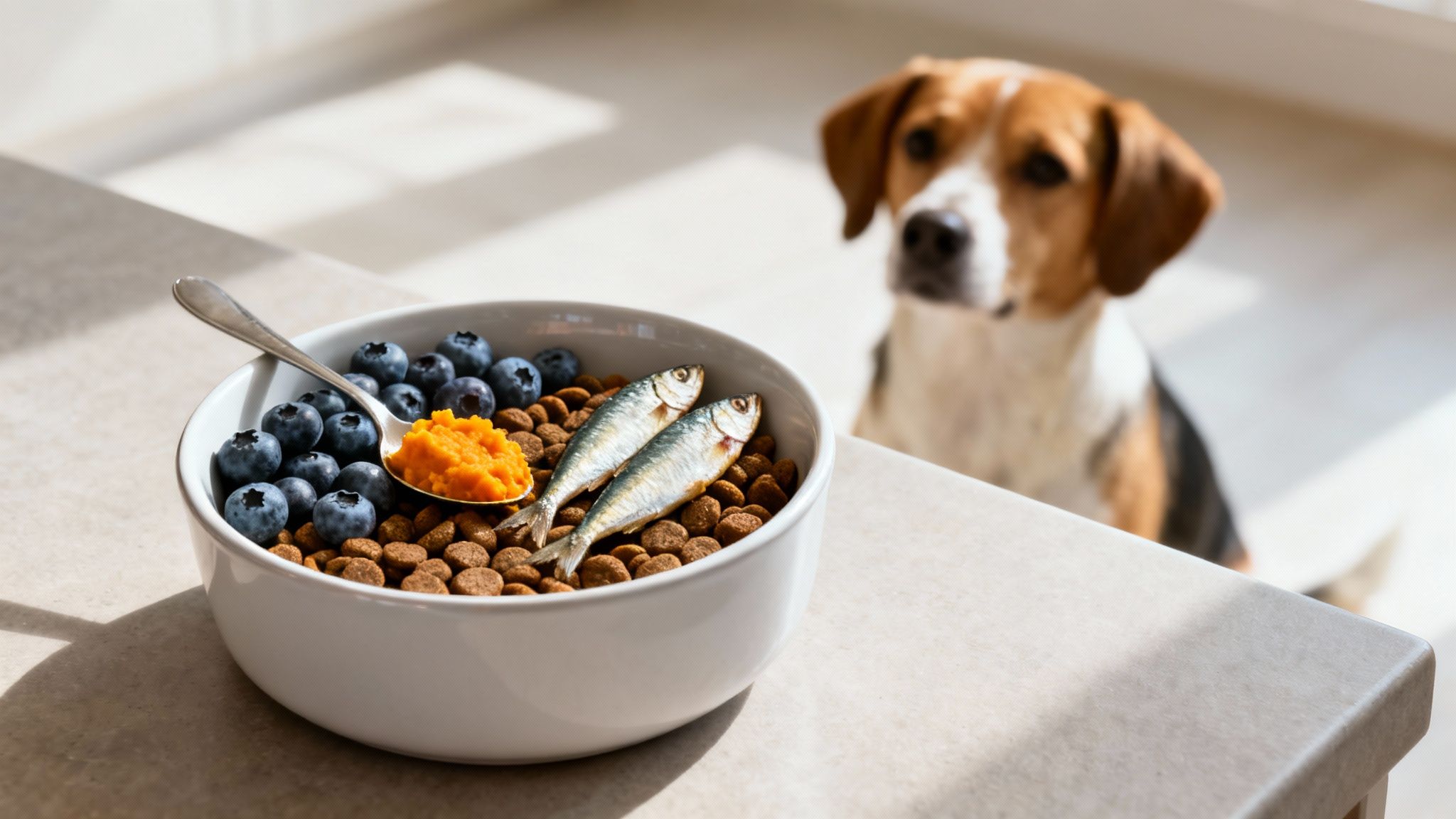
While the best natural supplements are powerful allies, they really shine when they're part of a bigger picture. The most fundamental, instinctual way to support your dog’s health is by connecting them right to the source of nourishment—whole, fresh foods.
Turning your dog’s food bowl from just a meal into an intentional offering of nature’s best is a beautiful daily ritual. It’s an act of rewilding, grounding both of you in the simple, profound rhythms of the earth. When you add fresh, dog-safe ingredients, you’re not just boosting their nutrition; you’re honoring their biology with foods their bodies instinctively recognize.
Nature's Pharmacy in Their Food Bowl
Incorporating whole foods doesn't have to be complicated or time-consuming. A small spoonful here or a few choice additions there can make a world of difference, turning mealtime into a moment of mindful care.
Here are a few simple, powerful additions from nature’s pantry:
Blueberries: These little berries are bursting with antioxidants that help protect cells from damage. A few fresh or frozen blueberries tossed into their food provides a juicy pop of wellness. You can learn all about why blueberries are so good for dogs.
Pumpkin Purée: A spoonful of plain, unsweetened pumpkin purée is a fantastic source of soluble fiber. It can gently support digestion, helping to firm up loose stools or ease constipation.
Sardines: Packed in water with no added salt, sardines are an incredible source of omega-3 fatty acids. These essential fats are amazing for reducing inflammation and promoting healthy skin and a glossy coat.
Simple Steps for Adding Fresh Foods
Bringing these nourishing additions into your dog’s daily routine is easy. The key is to start slow. Introduce one new food at a time, in a small amount, just to see how your dog’s system responds. This gentle approach lets their body adjust and keeps the experience positive.
Think of it as decorating their meal with intention. The vibrant orange of pumpkin or the deep blue of a berry adds sensory richness, inviting your dog to engage with their food in a more natural, instinctual way. This simple act elevates a routine into a ritual of connection.
It's a beautiful reminder that wellness isn't just about what comes from a bottle. It's about weaving nature back into every part of our lives—and the lives of our animal companions—creating a foundation of health that is deeply rooted and vibrant.
Creating Your Daily Wellness Ritual
Giving your dog a supplement doesn't have to feel like just another task on your to-do list. What if, instead, it became a quiet, intentional moment of connection? This is your chance to create a small ritual that honors your bond and grounds you both, turning a routine chore into a meaningful practice.
It's all about shifting your perspective—transforming a simple action into something almost sacred. By slowing down for just a minute, you infuse the moment with presence and genuine care. This is the heart of holistic wellness, where that emotional connection is just as nourishing as the physical supplement itself.
Infusing Intention into the Everyday
Making this moment a ritual is beautifully simple. It’s less about what you do and more about the energy you bring to it. Your calm, focused attention is a gift your dog can actually feel, reinforcing the deep trust between you.
Want to give it a try? Here are a few gentle ideas:
Pair the supplement with a soft touch, like a gentle massage behind the ears or a few slow strokes down their back.
Speak a quiet word of intention as you offer it—something simple like "health," "comfort," or "love."
Take a deep breath together, before and after. Try to sync your rhythm with theirs for just a moment of shared stillness.
This little practice gets to the core of the Wild Pack philosophy. We believe true well-being comes from reconnecting with our instinctual, natural selves. By turning a simple task into a mindful ritual, you’re not just supporting their physical health—you’re nurturing their spirit and deepening that one-of-a-kind bond you share.
The best natural supplements work from the inside out, and so does this practice. It’s a simple, beautiful way to say "I see you, I care for you" on every level. While you're nurturing their body with nature's best, you can also support their mind by engaging their wild instincts. A fantastic way to do this is through scent exploration.
To help your dog tap into their amazing natural abilities and build confidence, download our free nosework guide. It’s the perfect way to add another layer of enriching connection to your daily life.
👉 Download our free nosework guide
Read more about...
Frequently Asked Questions
How long does it take to see results from natural dog supplements?
This is where we learn to slow down and sync up with nature’s pace. Unlike synthetic medications designed for a quick fix, natural supplements work by gently supporting the body’s own healing intelligence. It's a gradual, nurturing process. You’ll likely spot subtle shifts in your dog’s comfort or energy within a few weeks. For deeper support, like for joints or skin, it can often take one to two months for the full benefits to shine through. Patience is your best friend here.
Can I give my dog multiple supplements at once?
While you can, the most mindful way forward is to introduce just one new supplement at a time. This simple step lets you become a keen observer, clearly seeing how your dog’s unique system responds without any guesswork. The best move? Partner with a holistic veterinarian to map out a safe and balanced plan. They can make sure all the ingredients are playing nicely together, creating a routine that’s perfectly tuned to your dog’s needs.
Are natural supplements safe for puppies and senior dogs?
Many natural supplements are wonderfully safe for dogs at every stage of life, but it’s crucial to remember that a growing puppy’s needs are worlds away from those of a wise senior. Their bodies require different dosages and specific types of support to truly flourish. Always choose products formulated for your dog’s specific age and size. And most importantly, have a chat with your vet before starting anything new to ensure it's a gentle and appropriate choice for your companion.
