Playing with Your Dog: A Guide to Bonding and Fun
Table of Contents
Why Mindful Play Is More Than Just a Game
Understanding Your Dog's Unique Play Language
Awakening Your Dog's Senses with Indoor Scent Work
Mindful Outdoor Adventures Beyond Basic Fetch
Using Tug to Build Connection and Confidence
Weaving Play Into Your Daily Ritual
Got Questions About Playing With Your Dog?
Key Takeaways
Mindful play is a powerful ritual that taps into your dog's natural instincts, building trust and strengthening your bond.
Learning to read your dog's unique play style and body language is essential for safe, connected, and joyful interaction.
Indoor scent games are a simple yet profound way to engage your dog's mind, reduce anxiety, and provide a healthy outlet for their foraging drive.
Outdoor adventures can be more than just fetch; scent walks and trail games encourage exploration and deepen your connection with nature and each other.
Structured games like tug-of-war, when played with clear rules, are excellent for teaching impulse control and building confidence.
Short, consistent play sessions woven into your daily routine are more effective than infrequent, long ones for keeping your dog mentally and emotionally balanced.
Why Mindful Play Is More Than Just a Game
Think of playing with your dog as an ancient ritual, a shared language that speaks directly to their core nature. It’s so much more than just tossing a ball. It's a dynamic conversation that builds a deep foundation of trust and mutual understanding.
When we make playtime mindful, we're creating a space for our dogs to express those innate, wild behaviors—like chasing, sniffing, and problem-solving—in a healthy, positive way. These instincts are written into their DNA, and modern life can sometimes quiet them down a little too much.
The Power of a Shared Ritual
Globally, there are an estimated 900 million dogs, and in tens of millions of U.S. households, they are truly part of the family. This bond is especially powerful in single-dog homes, where one-on-one play rituals become a cornerstone of the relationship.
For many of us, interactive play like scentwork isn't just fun—it's a vital tool for connection and grounding. Engaging your dog's mind is every bit as important as exercising their body. If you want to dive deeper, you can explore our guide to dog mental stimulation games.
Shifting from Task to Connection
Let's reframe playtime. Instead of seeing it as another task to check off the to-do list, think of it as a practice in presence. This simple shift in perspective—from "exercising the dog" to "connecting with my packmate"—changes absolutely everything.
Suddenly, a simple game of fetch becomes a collaborative dance. A scent game turns into a shared exploration. Mindful play reduces stress for both you and your dog. It strengthens your communication and deepens your bond. It also provides a healthy outlet for instinctual energy, which helps prevent boredom and frustration.
By transforming playtime into a sacred practice, we don't just enrich our dogs' lives; we enrich our own. It’s a chance to step away from our busy human world and tap into a more instinctual, joyful way of being, together.
Ready to awaken your dog's natural instincts? Our free guide is the perfect place to start.
👉 Download your free nosework guide and begin your journey into the world of scent exploration.
Understanding Your Dog's Unique Play Language
Before we can build a meaningful play ritual, we have to learn how to listen. Playing with your dog is a conversation, and every single dog speaks a unique dialect. Think of yourself as a student of your dog's personal play language—that’s the real first step toward a connection that feels both safe and deeply instinctual.
Every dog has a distinct play style, and it’s a fascinating window into their personality and ancestral drives. Some dogs are all about the chase, their bodies a blur of focused energy. Others are more like methodical thinkers, carefully dissecting a puzzle toy with quiet determination.
Recognizing these innate archetypes helps us honor who they truly are. The 'chaser' might be tapping into old predatory instincts, while the thoughtful 'puzzler' is satisfying a deep need for cognitive work. Neither is better; they're just different expressions of their wild heart. By simply observing without judgment, we start to learn what truly fills their cup.
Reading the Subtle Cues of Play
A real connection during play requires us to be present and observant. It's on us to learn the difference between the joyful, wiggly body language of an engaged dog and the subtle, often-missed signs of stress or overstimulation.
Joyful play is usually loose and bouncy. Look for a relaxed jaw, a playfully wagging tail, and reciprocal, give-and-take movements. A "play bow"—front end down, back end up—is that universal, adorable invitation to get the game started.
On the flip side, a dog that’s getting overwhelmed might start showing signs of anxiety. These can be easy to miss if you're not looking closely. Keep an eye out for a tucked tail or a lowered body posture, lip licking or frequent yawning when they're not actually tired, a stiff, rigid body or "whale eye," where you can see the whites of their eyes, or frantic, repetitive behaviors that have lost that bouncy quality of joyful play.
Mindful play is a collaborative dialogue, not just a one-sided activity. It’s all about guiding us toward that deeper connection.
Building Trust Through Two-Way Communication
Play is a partnership. When we notice our dog getting too wound up or showing signs of discomfort, it's our job to gently guide that energy down. This isn't about stopping the fun; it's about showing them we are a safe, reliable leader who has their back.
Pausing the game for a moment of calm sniffing or scattering a few treats in the grass can help reset their nervous system. This teaches your dog that excitement doesn't have to spiral into stress. You are co-regulating, creating a shared, peaceful rhythm together.
This responsive approach builds a profound foundation of trust. Your dog learns that you understand their language and, just as importantly, that you respect their boundaries. It's in these quiet, attuned moments that a simple game transforms into a powerful bonding ritual, nurturing the wild, trusting spirit within them.
Awakening Your Dog's Senses with Indoor Scent Work

Think your home is just a place for naps and cuddles? Think again. It can transform into a vibrant, sensory playground for your dog, all by honoring their most powerful tool: that incredible nose.
Scent work is so much more than a simple game. It’s a grounding, confidence-building ritual that taps directly into their deepest foraging instincts. This kind of focused work is a fantastic way to calm an anxious mind or channel a burst of wild energy when you just can't get outside.
Getting Started with Simple Scent Games
You absolutely don't need any fancy equipment to get started. The real beauty of scent work is its simplicity. You're just creating little opportunities for your dog to solve problems with their nose, which is one of the most fulfilling things a dog can do.
A great first step is a game we call "Find the Treat." Let your dog watch as you place a really good, smelly treat under a blanket or behind a pillow a few feet away. Give them a simple cue like "find it!" and shower them with gentle praise when they succeed. Once they get the hang of it, you can up the challenge by hiding treats in another room or under a few different objects.
Another wonderful starting point is the "Muffin Tin Puzzle." It's a classic for a reason. Grab a standard muffin tin and a handful of tennis balls or small toys. Place a single, fragrant treat in one of the muffin cups. Cover all the cups with the balls or toys. Encourage your dog to sniff out the right cup and move the ball to claim their prize. This simple puzzle teaches them to rely on their nose instead of just their eyes. It’s a fantastic way to introduce the concept of problem-solving through scent.
Creating an Indoor Scent Trail
Once your dog gets the basic idea of searching, you can level up by creating a scent trail. This activity mimics how they’d track in the wild, providing an incredibly enriching experience right in your living room. You can use their favorite toy or a few tasty treats to lay the path.
Start easy. Rub a toy or treat on the floor in a short, straight line leading to a "jackpot" of a few treats behind a chair. Make the trail obvious at first—only a few feet long. Let them sniff the starting point and encourage them to follow it.
As their confidence grows, you can make the trails longer and more complex. Add gentle curves, cross over different surfaces like a rug and then hardwood, and even elevate the final reward on a low stool. This challenges them to stay focused and really put that powerful nose to work.
DIY Puzzles from Household Items
You can create some seriously engaging puzzle toys with items you already have around the house. These DIY games satisfy your dog's cognitive needs and strengthen their ability to focus, all without spending a dime.
A "Snuffle Box" is a perfect example. Find an empty cardboard box (a shoebox is great for this). Fill it with dog-safe materials like crumpled-up packing paper, old t-shirts, or even just more cardboard scraps. Sprinkle some of your dog’s kibble or a few small treats inside the box, hiding them among the filler material. Let your dog have at it! They'll explore the box with their nose and paws to find all the hidden treasures.
This game is brilliant because it satisfies their instinct to forage and dig in a safe, controlled way. Just be sure to supervise your dog during this type of play to ensure they aren't actually eating the box or its contents.
Looking for even more ideas to get your dog's nose working? You can explore our more detailed beginner's guide to scentwork training for extra inspiration.
When you start weaving these simple scent-based games into your indoor routine, you're providing a vital outlet for your dog's mental energy. This isn't just about killing time or preventing boredom; it's about honoring their wild spirit and giving them a deeply satisfying job to do. You'll find it strengthens your bond one sniff at a time.
Mindful Outdoor Adventures Beyond Basic Fetch
The great outdoors is the ultimate playground for tapping into your dog’s wild spirit. So often, though, we fall back on the same old routine: repetitive, high-impact fetch. Let's reimagine what outdoor play can be by shifting our focus from mindless chasing to mindful exploration and connection.
When we move beyond the basics, we open up a world of activities that engage not just your dog's body, but their brilliant mind, too. These games connect you both to the rhythm of nature, turning a simple walk in the park into a genuine shared adventure.
Deconstructing and Rebuilding Fetch
Let’s be clear: fetch isn't a bad game. But the way it's often played can lead to over-arousal, repetitive strain, and a surprising disconnect between you and your dog. Instead of a frantic, endless chase, we can transform fetch into a collaborative training exercise that reinforces impulse control and deepens your bond.
Think of it as "scented fetch." Rather than throwing the ball where your dog can see it land, try tossing it into some taller grass or behind a tree. This small change forces them to switch from relying on sight to using their incredibly powerful nose. It taps directly into their natural tracking instincts, slowing the game down and turning it into a thoughtful puzzle instead of a pure adrenaline rush.
You can also weave in simple obedience cues. Ask for a "sit" or a "stay" before you throw the toy. This builds patience and helps keep their excitement at a manageable level. Once they bring it back, practice a calm "drop it" and reward them for releasing it gently.
This transforms the game from a mindless activity into a focused, two-way dialogue. You're no longer just a ball-throwing machine; you're a calm, consistent partner in a shared activity. Exploring different ways to approach exercise is key, and you can learn more about finding the right balance by understanding your dog's exercise requirements by breed in our detailed guide.
The Art of the Scent Walk
One of the most profound ways to connect with your dog in nature is to simply let them lead. We call this a "scent walk" or a "decompression walk," and it’s a core part of our rewilding philosophy. It's all about surrendering our human agenda—our pace, our route, our destination—and allowing our dog to explore the world through their nose.
A dog's sense of smell is their primary way of understanding everything around them. Every blade of grass, every tree stump, and every gust of wind tells a story. When we give them the freedom to follow these scent trails, we are giving them the gift of being fully present in their own sensory world.
For your next walk, try this: swap your short leash for a long line to give them more freedom to meander. Head somewhere with interesting smells, like a quiet trail or a big grassy field. Let your dog choose the direction and the pace. If they want to spend five full minutes sniffing a single bush, let them. Your only job is to stay present, keep them safe, and quietly observe.
This isn't about covering distance; it's about the quality of the experience. It’s a meditative practice that calms the nervous system for both of you, grounding you in nature's rhythm.
Trail Games to Spark Joyful Connection
A quiet trail offers the perfect setting for games that activate your dog's natural abilities and strengthen your bond. "Hide and seek" is a wonderful way to do this, turning you into the most exciting thing in the environment.
Start simply. While on a walk, have a friend or family member gently hold your dog's leash. Step behind a large tree just a few yards off the trail and call your dog's name in a happy, encouraging voice. When they "find" you, celebrate with tons of praise and maybe a special treat.
As they get the hang of it, you can increase the difficulty. Hide a little further away or wait a few moments longer before calling them. This game reinforces a powerful recall and teaches your dog to keep track of you in a fun, low-pressure way. It taps into their pack instincts, making your presence a source of joy and rewarding discovery.
This is what playing with your dog is all about—creating shared moments of delight that honor their wild heart.
Using Tug to Build Connection and Confidence
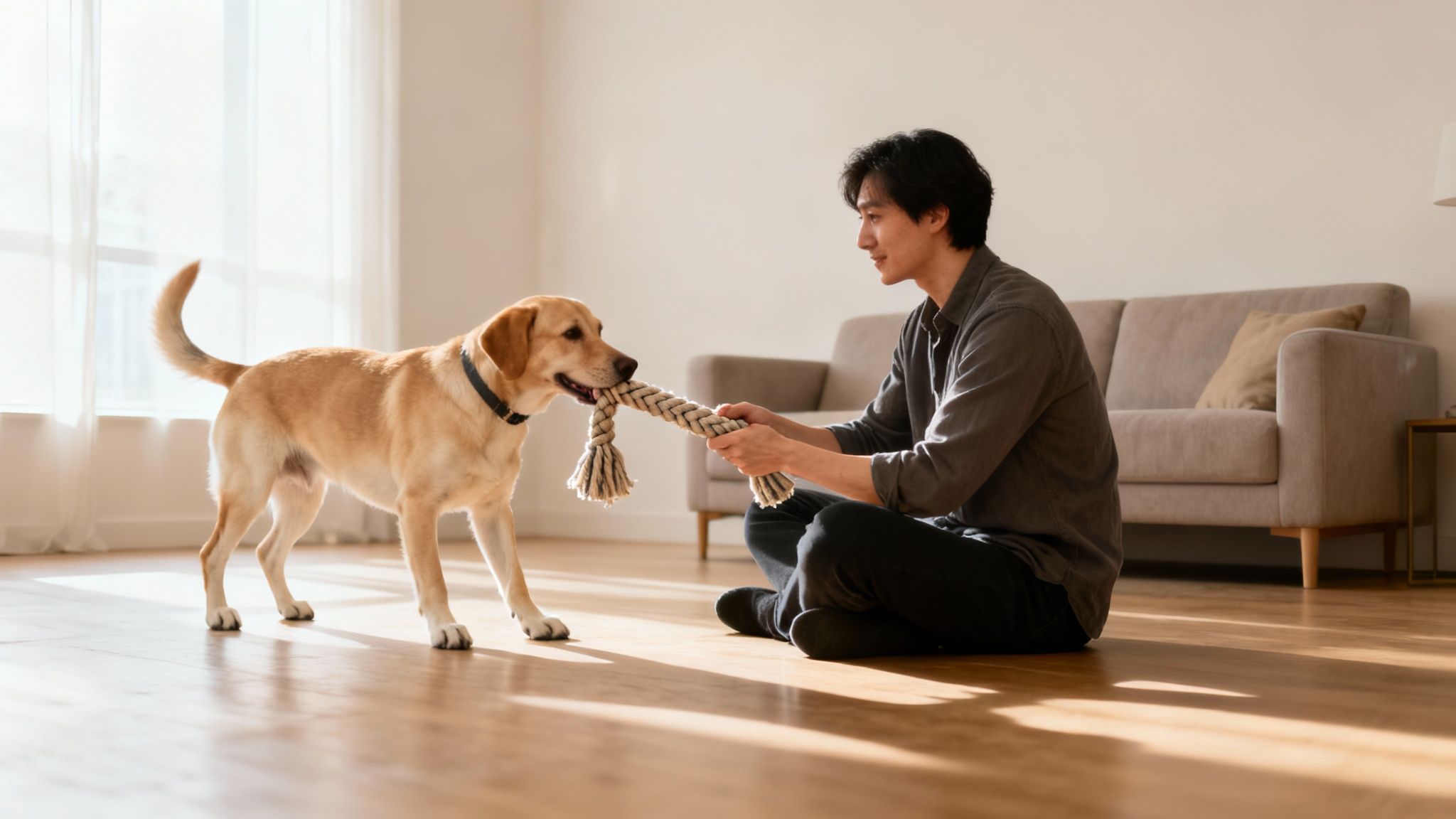
Tug-of-war gets such a bad rap, doesn't it? There's this stubborn myth that it makes dogs aggressive or dominant. But I'm here to tell you that when played with intention, it's one of the most powerful ways to build a deep, cooperative bond with your dog.
Let’s reframe this game. It’s not a battle of wills. It’s a shared ritual, a dance that channels your dog’s natural desire to grab and pull into a safe, structured activity. This isn’t about winning; it’s about connection. Playing tug this way teaches incredible impulse control and reinforces a soft, gentle mouth.
Ground Rules for a Gentle Game
To keep tug fun and productive, a few simple rules are key. Think of them less as rules and more as the agreed-upon language of your game. These boundaries transform a potentially chaotic free-for-all into a profound trust-building exercise.
The most important one? Teeth only ever touch the toy. Never your skin. If you feel their teeth, even by accident, the game stops instantly. I just say a calm "oops" and drop the toy for a few seconds before we restart. This is how you teach precision and bite inhibition without any stress.
Another non-negotiable is a solid "drop it" cue. This is your safety valve. Start by trading them for a high-value treat. As you offer the goodie, say "drop it." The moment they release the toy to get the treat, praise them like they just won the lottery. Practice this until they start releasing the toy on cue alone, even before they see the treat.
A reliable "drop it" ensures you can pause or end the game whenever you need to, reinforcing your role as a safe, predictable leader.
How to Initiate and End Play Calmly
The way you start and end the game is just as important as how you play it. This is where you set the whole energetic tone for the interaction. You should always be the one to start the game—don't let your dog demand it by shoving a toy into your leg. A simple, inviting "Wanna play?" is a perfect starting signal.
Keep the energy playful but controlled. Your dog will probably growl, and that’s totally normal! It’s just a sign of engagement and effort, not aggression. Your job is to stay grounded. Avoid frantic, wild shaking and instead use a slow, steady pulling motion from side to side.
Ending the game should be just as intentional. Before your dog gets too hyped up, give your "drop it" cue, praise them for letting go, and then put the toy away. This teaches them that all good things come to a calm, gentle end. This process of setting clear boundaries is a beautiful way of building confidence in your dog, showing them that their world is a predictable and safe place.
When you approach tug with this mindful philosophy, a simple game becomes a profound lesson in communication, boundaries, and mutual respect. It’s a beautiful, instinctual way to strengthen your pack bond.
Weaving Play Into Your Daily Ritual
The strongest bonds aren't built on grand gestures. They're forged in the small, consistent moments you share every single day. Meaningful play isn't some big event you have to block out on your calendar once a week; it’s a daily ritual that weaves its way into the fabric of your life together, strengthening that incredible connection you have with your dog.
Forget the idea of one long, exhausting play session. Instead, think in short, focused bursts. Just five or ten minutes of intentional, connected play a few times a day can do absolute wonders for your dog's state of mind. This kind of consistency is a game-changer for preventing the restlessness and boredom that often bubble up into unwanted behaviors. It gives them a reliable, healthy outlet for all that natural energy.
The Art of the Cool-Down
Just like you wouldn't sprint a mile and then immediately flop onto the couch, your dog needs a gentle transition from high-energy play back to a state of calm. The way you end playtime is just as important as how you begin. This is your chance to guide their energy downward, reinforcing a feeling of safety and peace.
This wind-down ritual doesn't need to be some complicated, drawn-out process. It's really just about intentionally shifting the energy from exciting and dynamic to quiet and still. A few simple practices can make all the difference.
After a lively game, toss a small handful of their kibble or a few healthy treats into the grass or onto a snuffle mat. This gets them using their nose, and sniffing is a naturally calming, decompressing behavior for dogs. You can also take a few minutes to offer long, slow strokes along your dog's back and shoulders. This kind of intentional, soothing touch helps co-regulate their nervous system and is a beautiful way to reinforce your bond. Or, simply sit together. Find a quiet spot on the porch, under a tree, or in a cozy room and just be together. Your calm presence is one of the most powerful signals you can send that the excitement is over and it's now time for rest.
This mindful transition does more than just calm them down in the moment—it teaches your dog how to self-regulate their own excitement over time. They learn that every interaction with you, from the rowdiest game of tug to the quietest moment of stillness, is an opportunity for connection and presence.
Ready to make scent work a part of your daily ritual? Unlock your dog's natural instincts with our step-by-step guide.
👉 Download your free nosework guide and discover the power of sensory play.
Read more about...
Frequently Asked Questions
How often should I play with my dog?
Consistency is more important than duration. Aim for two or three short, focused play sessions of 5-10 minutes each day. This is more effective for mental stimulation and bonding than one long, exhausting session and helps prevent over-arousal.
What if my dog doesn’t like toys?
That's perfectly okay! Not all dogs are naturally drawn to toys. Play is about connection, not objects. Try interactive games that don't require toys, like hide-and-seek, or focus on scent work by hiding treats around the house. You can also try making toys more appealing by adding a bit of dog-safe peanut butter or experimenting with different textures to discover what piques their interest.
How can I tell if play is getting too rough?
Watch for a shift in body language from loose and bouncy to stiff and rigid. Other signs of over-arousal include a hard stare, frantic or repetitive movements, or ignoring cues to stop. If you see these signs, calmly pause the game. You can scatter a few treats on the ground to encourage sniffing, which is a natural de-stressor for dogs. This helps teach your dog how to regulate their own excitement.
