Dog Exercise Requirements By Breed Guide
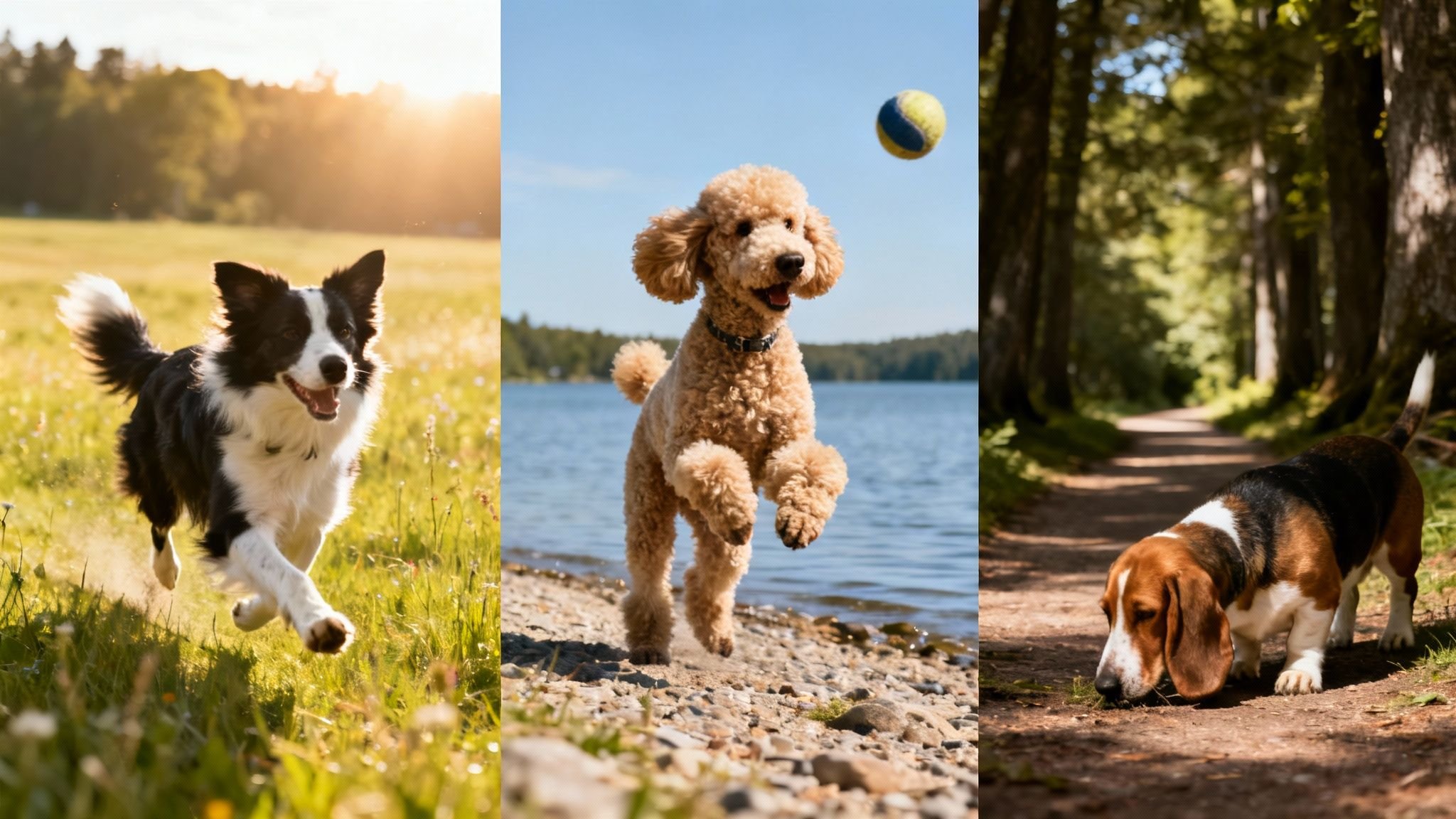
Table of Contents
High-Energy Breeds: The Endurance Athletes
Medium-Energy Breeds: The Versatile Companions
Low-Energy Breeds: The Mindful Observers
Adapting Exercise for Every Age and Lifestyle
Frequently Asked Questions About Dog Exercise
Key Takeaways
A dog's breed history is your best clue. Herding and sporting dogs were bred for tireless work and need more intense activity than their companion breed cousins.
Mental workouts are just as vital as physical ones. Scentwork, puzzle toys, and training tap into a dog’s natural instincts and prevent boredom.
Always adapt exercise for your dog’s age, health, and unique personality. A senior dog’s needs are a world away from a puppy's.
Keep it fresh. Mixing up activities prevents your dog from getting bored, works different muscle groups, and keeps them engaged and balanced.
When it comes to your dog's exercise, there's no one size fits all. A high-octane Border Collie might need a solid 60-120 minutes of intense activity every single day, while a chill older Pug is perfectly happy with a gentle 30-45-minute stroll. The real secret is looking at your dog’s roots—their ancestral purpose—to figure out the right kind and amount of movement that will keep them happy, both in body and mind.
Thinking about your dog’s exercise needs really begins with honoring where they came from. A one-size-fits-all routine just won't cut it, because every breed was developed for a unique job, whether it was herding sheep across rolling hills or simply being a warm lap companion. Finding that happy, balanced state for your dog means matching their daily activity to those deep-seated instincts.
This is exactly why a Border Collie is always looking for a job to do and can run for what feels like forever, while a Basset Hound is perfectly content with a slow, scent-filled wander around the block. One was bred for tireless stamina; the other for methodical, ground-scenting tracking at a much slower pace. When you start seeing exercise through this lens, it stops being a chore and becomes a beautiful expression of their authentic, wild spirit.
When we give them breed-appropriate outlets to expend their energy, we're doing so much more than just tiring them out. We're giving them a sense of purpose that satisfies their mind and soul.
Physical exercise is crucial for maintaining a healthy weight, supporting strong joints, and keeping their heart healthy.
Mental stimulation, a huge part of our philosophy on dog enrichment and exercise, is what keeps boredom and anxiety at bay.
Bonding activities are the glue. Shared experiences out in nature strengthen your connection, building trust and communication along the way.
Think of this guide as your map to reconnecting with your dog’s inner world. By understanding their history, you can provide the kinds of activities that let them be their happiest, healthiest, and most authentic selves.
Quick Exercise Guide: The Core Principles
Before we get into the nitty-gritty of specific breeds, let's start with the foundational truths. Think of these as your guiding principles for creating a fulfilling, instinct-driven exercise plan that truly honours your dog.
The image above really breaks it down to the essentials: your dog's ancestry, their innate energy, and the activities that speak to their soul. Getting a handle on these three pillars is the first step toward building a more connected and natural exercise routine.
Your Dog's History is the Blueprint
A dog’s original purpose is the single most powerful clue to what they need today. Herding and sporting dogs were bred for endurance and require vigorous, challenging activity. On the other hand, companion breeds are often perfectly happy with more gentle, shorter outings.
It's About More Than Just Miles
Mental exercise is just as vital as physical exertion—sometimes even more so. Activities like scentwork, puzzle toys, and training sessions tap into their natural drives, preventing the restlessness and anxiety that stems from pure boredom. A tired mind makes for a calm dog.
Adapt to Their Life, and Yours
An exercise routine isn't set in stone. It has to flow with the rhythm of your dog's life. Always be ready to adjust for their age, current health, and even where you live. A growing puppy's needs are a world away from those of a senior dog.
Variety is the Spice of Life (and Exercise)
Mixing things up keeps your dog engaged and strengthens your bond. A blend of structured walks, free play, and new adventures works different muscle groups and keeps their mind sharp. For more on finding the right balance, check out our guide on how often dogs should be walked.
High-Energy Breeds: The Endurance Athletes
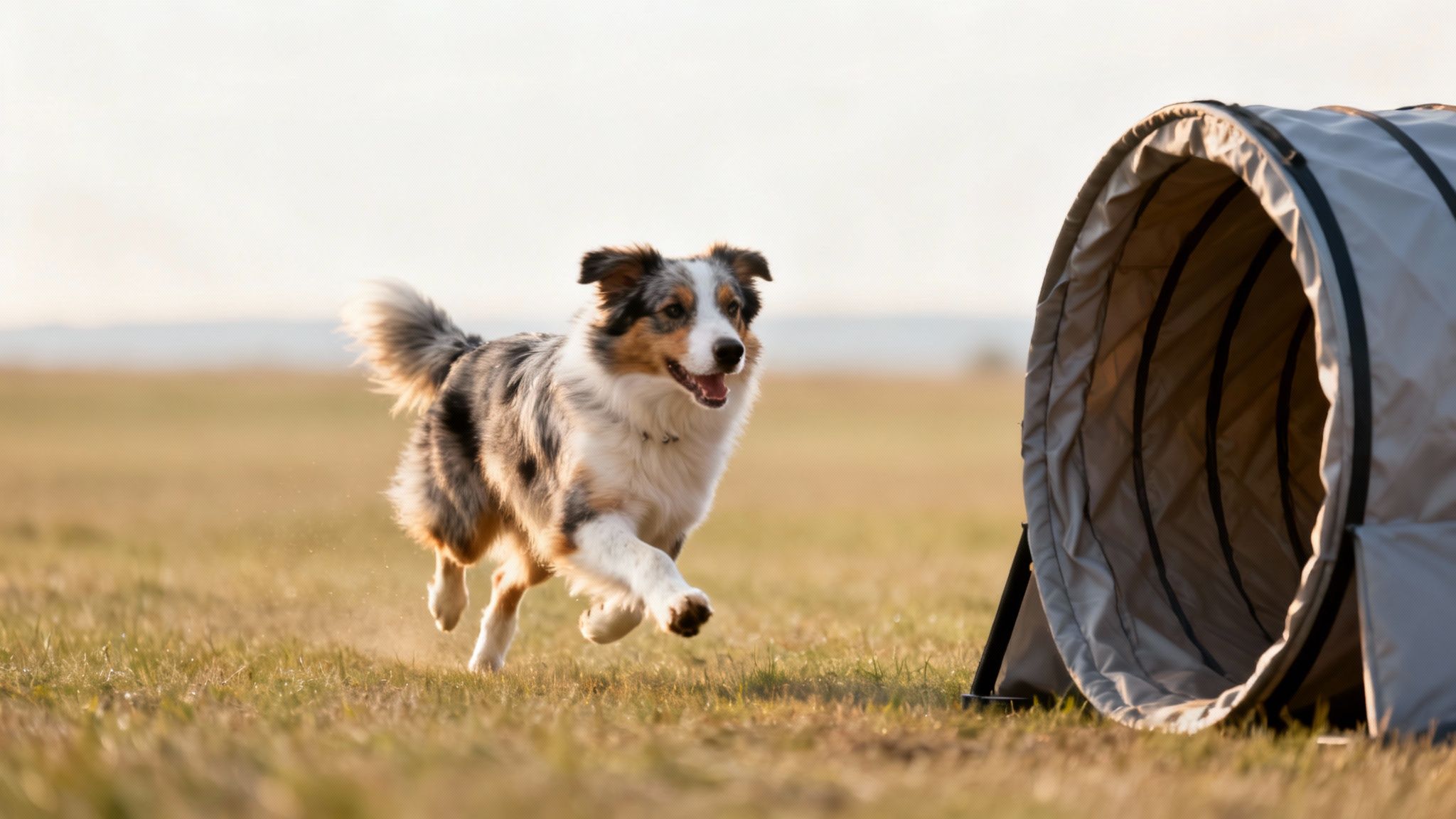
Now we’re talking about the dogs whose hearts beat to the rhythm of the wild—the marathon runners, the tireless workers, the endurance athletes of the canine world. Breeds from the Herding, Sporting, and Working groups carry a legacy of intense, purpose-driven activity in their very bones. Think of Australian Shepherds, Labrador Retrievers, and Siberian Huskies; their ancestors spent their days covering vast territories, and that instinctual need for movement remains just as strong today.
For these dogs, exercise isn't just a casual walk around the block. It’s a fundamental need, like air and water. Without a proper outlet for their boundless energy, they can become restless, anxious, or develop behaviors that are simply their way of saying, "I need a job to do!" Honoring their heritage means providing them with the vigorous activity their bodies and minds crave.
High-energy dogs need a lot more daily movement than their low-energy cousins. Sporting and herding breeds, in particular, demand 60 to 120 minutes of vigorous activity every single day. Breeds like Labrador Retrievers and Golden Retrievers were developed for high-endurance tasks like retrieving all day, which is why they thrive on running, hiking, and dog sports. In fact, without at least 90 minutes of daily exercise, it’s common for these dogs to become hyperactive or develop destructive behaviors.
Tapping into Their Natural Drives
The most fulfilling exercise for these breeds connects directly to the jobs they were bred for. It's about letting them express their innate talents in a way that feels deeply satisfying. A simple walk rarely scratches the surface of what they truly need to feel balanced and content.
Instead, think about activities that engage their powerful instincts:
Herding Breeds (e.g., Border Collies, Australian Cattle Dogs): These dogs are brilliant problem-solvers who need a task. Agility courses mimic the quick turns and focus needed for herding, while Treibball (urban herding) allows them to "herd" large exercise balls. Even a dynamic game of frisbee can satisfy their drive to chase and control movement.
Sporting Breeds (e.g., Pointers, Weimaraners, Retrievers): Bred to work alongside hunters, these dogs excel at activities involving running and retrieving. Long games of fetch, swimming sessions to retrieve a bumper, or even dock diving are perfect outlets. Scentwork is another incredible way to engage their powerful noses.
Working Breeds (e.g., Siberian Huskies, Bernese Mountain Dogs): These dogs were built for stamina and strength. Activities like canicross (running with your dog harnessed to you), bikejoring, or pulling a cart can be incredibly rewarding.
Mental Workouts are Non-Negotiable
For these intelligent breeds, a tired body isn't enough; they need a tired mind. Mental stimulation prevents boredom and channels their focus in a positive direction. Integrating mental challenges into their physical routine is key to their well-being.
This can be as simple as practicing obedience cues during a hike or as structured as enrolling in a nosework class. Puzzle feeders can turn mealtime into a brain game, while learning new tricks keeps their minds sharp and engaged. This combination of physical and mental work is what helps these high-drive dogs find their "off switch" at the end of the day.
Ready to awaken your dog's most powerful natural instinct? A great place to start is with scent exploration. Download our free nosework guide and start exploring the world through their nose today.
👉 https://www.withwildpack.com/dognoseworkguide.
A Sample Daily Rhythm
So, what does this look like in practice? Here's a sample routine for a high-energy dog living a modern life:
Morning (45-60 mins): A brisk run, bike ride, or an intense game of fetch at a park. Follow this with a short, focused training session to engage their mind.
Midday (20 mins): A puzzle toy filled with their lunch or a quick scent game in the yard to break up the day.
Evening (30-45 mins): A long "sniffari" walk where they get to lead the way and explore scents, or a structured activity like an agility class. Check out of nosework guide for more.
This blend of high-intensity physical work, mental challenges, and sensory exploration honors their whole self—the athlete, the thinker, and the wild spirit within.
Medium-Energy Breeds: The Versatile Companions
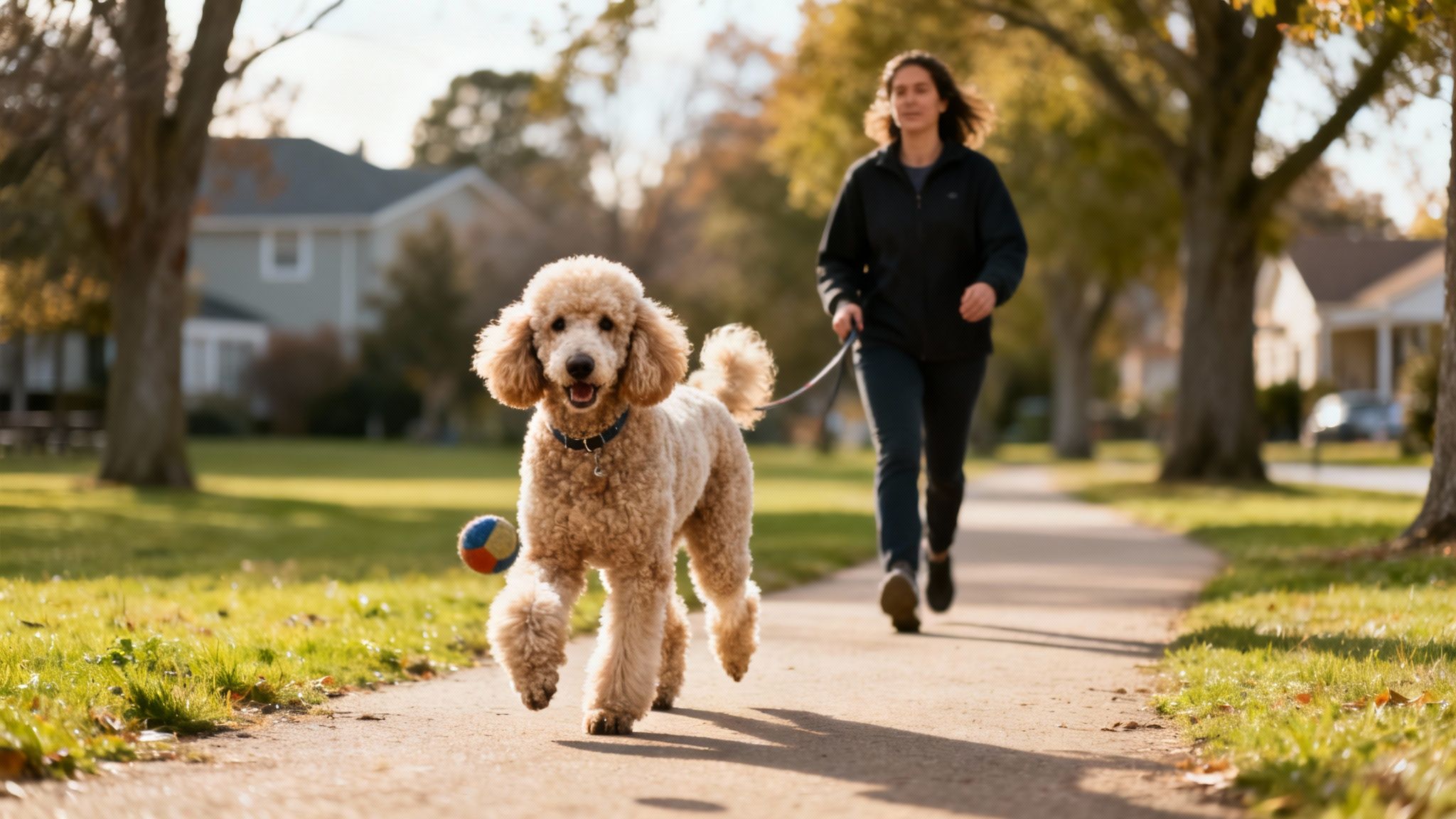
Leaving the endurance athletes behind, we step into the world of the versatile companions. These are the dogs that truly embody balance—they aren't built for non-stop work, but they are a far cry from being couch potatoes. This group is wonderfully diverse, covering everything from spirited Terriers to intelligent Standard Poodles and some of the more moderate Hound breeds.
These dogs are the perfect middle ground. They thrive on a routine that beautifully blends spirited activity with quiet, calm connection. Adaptable and easy-going, they’re often just as happy with a brisk walk through the neighborhood as they are with a more structured game. The secret to their happiness lies in finding that sweet spot of variety and consistency.
Finding Their Sweet Spot
Medium-energy breeds really flourish with about 45 to 60 minutes of moderate exercise each day. And no, this doesn’t have to be a single, grueling session. In fact, most of them do much better when this time is split into a couple of engaging activities spread throughout the day.
A common mistake is thinking a simple leash walk around the block is enough. While walks are absolutely essential for potty breaks and sniffing out the neighborhood news, these dogs need more to feel truly satisfied. Their minds are often just as active as their bodies, and without a way to channel that mental energy, they can easily become bored and restless.
Think of their daily exercise as a recipe with a few key ingredients:
Physical Movement: This is for the body. Brisk walks, gentle jogs, or a lively game of fetch keeps them healthy and strong.
Mental Engagement: This is for the brain. Activities that make them think, like puzzle toys or learning new cues, are crucial.
Sensory Exploration: This is for the soul. It's time to simply be a dog—using their nose to read the stories left behind in their environment.
This balanced approach honors their whole being. It nurtures their physical needs while also satisfying their deep-seated instincts to explore, sniff, and solve problems.
Activities That Honor Their Nature
The real beauty of a medium-energy dog is their versatility. They're often game for just about anything, which opens up a world of possibilities for finding activities you both genuinely love. The goal is to provide a healthy mix of structured play and instinct-driven fun.
For instance, many Terriers were bred for chasing and digging. A good flirt pole session or a designated "digging pit" in the yard lets them express that fiery instinct in a safe and appropriate way. Standard Poodles, with their retriever background and brilliant minds, often excel at activities like swimming or nosework.
Nosework is an especially powerful tool for these dogs. It taps directly into their most primal sense, providing incredible mental stimulation that can be just as tiring as a long run. It's a quiet, focused activity that calms the mind and awakens their inner wild.
Ready to awaken your dog's most powerful natural instinct? Download our free nosework guide and start exploring the world through their nose today!
👉 Download the free nosework guide here.
A Sample Daily Rhythm
Crafting a routine for a medium-energy dog is all about creating a predictable flow that still leaves room for spontaneity. Their needs can be beautifully met without the high-intensity demands of a working breed, which is what makes them such a great fit for many active families.
Here’s what a balanced day might look like:
Morning (20-30 mins): Kick off the day with a brisk "sniffari" walk where your dog gets to set the pace and follow interesting scents. This warms up their body and engages their mind right away.
Midday (15 mins): A quick game of fetch in the yard or a short training session practicing a new trick is perfect. This little burst of activity helps break up the day and prevent boredom.
Evening (20-30 mins): Wind down with another walk, maybe combined with some intentional playtime or a puzzle feeder for their dinner. This helps them settle down for a calm, peaceful evening.
Low-Energy Breeds: The Mindful Observers
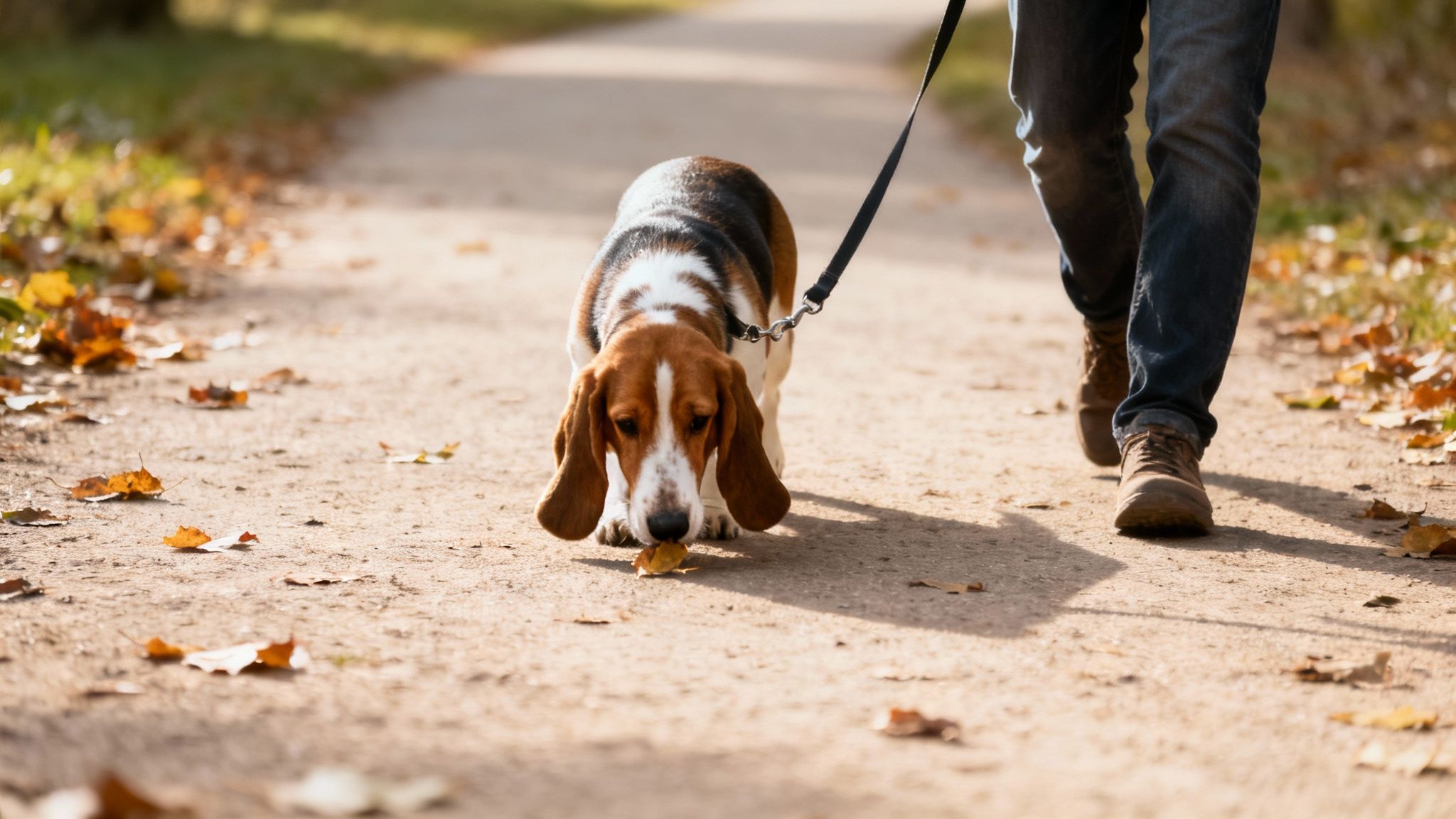
Not every dog is cut out for marathons or high-flying agility courses. Some of our most beloved companions are the mindful observers, the calm souls who find their joy in the quiet moments. This is where we celebrate breeds from tiny companions like the Pug to gentle giants like the Great Dane and thoughtful hounds like the Basset Hound.
These dogs teach us that exercise is about quality, not always quantity. Their needs are often met with around 30 minutes of gentle, low-impact activity each day. Pushing them into high-intensity workouts can be counterproductive and even harmful, especially for brachycephalic (flat-faced) breeds or those with large frames. Instead, their wellness comes from a more grounded, sensory approach to movement.
The Art of the Sniffari
For a low-energy dog, the most enriching activity is often a leisurely "sniffari." This is a walk where your dog leads the way, using their incredible nose to explore the world. It’s a profound shift from a structured, fast-paced walk to a meandering journey of scent discovery.
When a Basset Hound puts their nose to the ground, they're not just sniffing; they're reading stories left behind by other animals. Allowing them this time connects them directly to their most powerful instinct. For these breeds, a 20-minute sniffari can be more mentally tiring and fulfilling than a 40-minute brisk walk.
This mindful practice slows us down, too. It invites us to be present, to notice the world from our dog's perspective, and to reconnect with nature's subtle rhythms right alongside them.
Low-Impact Indoor Enrichment
Just because a dog is low-energy doesn't mean their mind is idle. In fact, their thoughtful nature often means they have a deep need for mental engagement. A quiet dog still has a wild mind that needs tending, and indoor enrichment is a beautiful way to honor that.
Indoor activities are perfect for these breeds, as they provide stimulation without putting stress on their joints or respiratory systems.
Puzzle Toys: These turn mealtime into a thoughtful game, satisfying their instinct to work for their food in a calm, focused way.
Scent Games: Hiding treats around a room for your dog to find is a simple way to engage their nose and brain. It’s a gentle form of nosework that any dog can enjoy.
Gentle Training: Practicing simple cues or teaching a new, low-impact trick keeps their mind sharp and strengthens your bond.
These calm activities are a wonderful way to build confidence and provide fulfillment. For more inspiration on nurturing your dog's intellect, you can find a wealth of dog mental stimulation games to try at home.
A Sample Daily Rhythm
Creating a routine for a mindful observer is about weaving gentle activity and sensory enrichment into a calm daily flow.
Morning (15-20 mins): A slow, sniff-heavy walk around the neighborhood to greet the day.
Midday (10 mins): A puzzle feeder for lunch or a short session of hide-and-seek with a favorite toy.
Evening (15-20 mins): Another gentle walk or some quiet cuddle time on the couch combined with a relaxing lick mat.
This gentle rhythm honors their physical needs while nourishing their soulful, observant nature, ensuring they feel content and connected.
Adapting Exercise for Every Age and Lifestyle
A dog’s journey with movement is a living, breathing story that changes over their lifetime. Their needs aren't set in stone; they ebb and flow with each season, from the chaotic energy of puppyhood to the quiet dignity of their senior years. To truly honor them, we have to learn to adapt, listen closely to their bodies, and find the joy in movement, no matter the stage.
Think of your dog's exercise routine like a river—it needs to stay fluid. That high-impact game of fetch your adult dog loved might be too taxing for their aging joints. Our role is to be keen observers, adjusting their activities to match their current rhythm so they always feel supported, comfortable, and happy.
Honoring the Puppy Years
Puppies are basically little bundles of curiosity and explosive energy, but we have to remember their bodies are still under construction. While they need a ton of stimulation, their growing joints and bones are incredibly delicate. Pushing a puppy too hard can lead to long-term joint problems, so the name of the game is short, sweet, and low-impact fun.
Forget long, structured runs. Instead, think in short, frequent bursts of playful exploration—it's so much better for their developing frames.
Gentle Play: Quick games of tug or rolling a ball on a soft surface like grass or a rug are perfect.
Sensory Walks: Let them lead the way in a safe new spot, sniffing everything to their heart's content. All that mental work is just as tiring as a full-on run.
Mindful Socialization: Supervised playtime with other calm, gentle dogs is fantastic for learning social cues without the risk of getting overwhelmed or playing too rough.
The Graceful Senior Dog
As our dogs step into their golden years, they naturally start to slow down. The purpose of exercise changes from burning off crazy energy to simply maintaining mobility, keeping their minds sharp, and nurturing their comfort. It's a time for gentle movement that respects their changing bodies.
Low-impact activities become their absolute best friends. These exercises keep muscles toned and joints lubricated without adding unnecessary strain.
Swimming: This is a game-changer for seniors. It's a fantastic, non-weight-bearing workout that’s incredibly easy on the joints.
Slow-Paced Sniffaris: These walks are all about the journey, not how fast you get there. Letting your dog lead with their nose provides incredible mental stimulation and enrichment.
Gentle Stretches: Simple, guided stretches can do wonders for maintaining flexibility and easing any morning stiffness.
Adapting to Different Lifestyles
Not every dog has a huge backyard, and some are navigating unique health challenges. But every single dog, no matter their circumstances, deserves a life filled with fulfilling activity.
For city dogs, the urban landscape can become a playground. Hallways are perfect for scent games, and puzzle feeders can turn mealtime into an engaging challenge. If you're caring for a dog with a health condition like arthritis or heart issues, your vet is your co-pilot. Activities like hydrotherapy or controlled leash walks on soft surfaces can provide safe, beneficial movement, allowing every dog to tap into their inner wild, no matter their age or lifestyle.
Lastly, if you can't find the time to exercise your pup as much as is ideal, a great substitute is mental enrichment, which oddly enough tires them out even more than a walk. Download out free nosework guide here on how to enrich your dog's mind in less than 9 minutes a day - without toys or training.
Read more on dog behavior modification, how to socialize your dog safely and the best dog crate for your pup.
Frequently Asked Questions About Dog Exercise
How Can I Tell if My Dog Is Getting Enough Exercise?
Your dog is always communicating with you through their behavior, and exercise is a big part of that conversation. A well-exercised dog is a joy to be around; they're generally calm, content, and can settle down peacefully at home. After a good session, they should seem relaxed and ready for a nice, long nap. On the flip side, if your dog isn't getting enough physical and mental stimulation, they'll often show it through restlessness. This can look like pacing around the house, excessive barking, chewing on furniture, or just being unable to truly relax.
What Are The Best Exercises For Apartment Dogs?
Living in a smaller space definitely doesn't mean your dog can't live a full, active life. It just means shifting the focus from wide-open sprints to activities that tap into their powerful senses—especially their incredible nose. Indoor nosework is the perfect apartment activity. Simply hiding treats or a favorite toy around your home gets your dog using their brain and nose, which can be just as tiring as a long walk. Puzzle feeders and gentle games of hallway fetch are also great options.
How Do I Keep My Dog Active in Bad Weather?
A rainy or snowy day is a perfect invitation to get creative and lean into indoor enrichment. Think of a storm outside as an excuse to focus on scent games and mental workouts that connect with your dog's core instincts. You can set up a simple scent trail just by dragging a smelly treat along the floor, leading them to a hidden prize at the end. Another fantastic option is teaching a new trick; the focus and concentration required is an amazing mental workout. These indoor adventures not only burn energy but also strengthen your bond.
What Are The Signs of Too Much Exercise?
More is not always better when it comes to exercise. Over-exercising can be just as harmful as under-exercising, leading to sore muscles, joint strain, and even dangerous heat exhaustion. Key signs of over-exercise include excessive panting that doesn't calm down, lagging behind on walks, visible stiffness, or a sudden reluctance to play. Just like us, dogs need rest days for their bodies and minds to recover. Honoring their need for downtime is a crucial part of a balanced, compassionate wellness routine.