Simple Dog Training Commands: 9 Easy Cues Every Dog Should Know
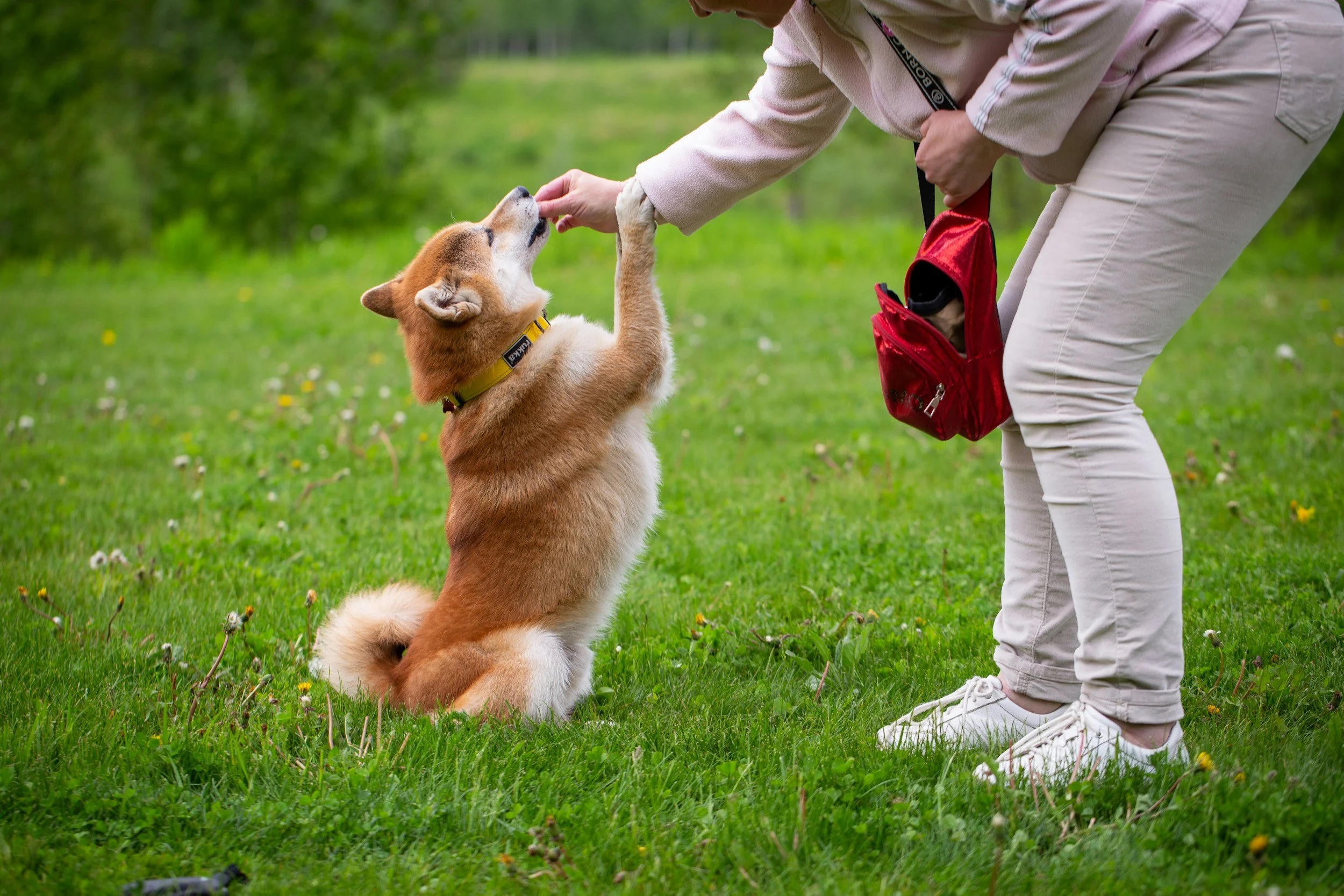
Editor's Note: This guide is written by a certified fear-free dog trainer and follows Wild Pack's nervous-system-first, reward-based training philosophy. Training should support your dog's emotional wellbeing and quality of life—not simply produce a perfectly obedient dog.
Strong communication with your dog doesn’t require dozens of commands. A handful of simple dog training commands can make everyday life safer and easier while giving your dog a clearer understanding of what you're asking.
In fear-free training, we prefer thinking of them as cues rather than commands. When training your dog using fear-free, reward based methods, the goal isn't perfect obedience. It's building a shared language while giving your dog room to sniff, explore, make choices, and simply be a dog.
Key Takeaways
Learn the essential cues that can make everyday life with your dog safer, easier, and more predictable — from coming when called to waiting, leaving something alone, and settling on a mat.
Fear-free training isn’t about making your dog obey at all costs. It’s about making the behavior clear, rewarding, and achievable without fear, pain, or intimidation.
When a dog doesn’t respond to a cue, think difficulty before disobedience. Distractions, stress, excitement, fatigue, and unfamiliar environments can all affect a dog’s ability to respond to something they already know.
Training builds a shared language, but dogs also need opportunities to sniff, explore, solve problems, and express natural behaviors. Good training supports your dog’s quality of life — not just their obedience.
Table of Contents
What Are Simple Dog Training Commands?
9 Simple Dog Training Commands to Teach Your Dog
What About Other Dog Training Cues?
How Fear-Free Training Changes the Way We Teach
When Behavior Isn't an Obedience Problem
The Bottom Line
Frequently Asked Questions (FAQs)
What Are Simple Dog Training Commands?
A dog training cue is a signal associated with a particular behavior. You might use verbal commands, hand signals, or other visual signals your dog has learned to recognize.
Here's something many pet owners don't realize: when teaching a completely new behavior, the word doesn't need to come first. Repeating "down" to a dog who hasn't learned what it means isn't giving them useful information. Help the behavior happen, reinforce it, and then begin pairing your cue with a behavior your dog understands.
That's something unique to fear-free training. Instead of asking, "How do I make my dog obey?", we asking, "How can I make what I'm asking easier to understand?"
9 Simple Dog Training Commands to Teach Your Dog
1. Their Name
Your dog's name should have a positive association and ideally mean, “Check in with me,” not “You're in trouble.” Start somewhere quiet and say their name once. The moment your dog looks toward you, mark and reward.
Once they're consistently responding, increase distance. Eventully, you’ll want to practice in different rooms and gradually around mild distractions. You're building a valuable foundation: hearing their name predicts that checking in with you is worthwhile.
2. Come

Once your dog understands that their name means to check in, you can begin building recall. Start just a few feet away in a quiet environment. Say your recall cue cheerfully, move backward to encourage your dog toward you, and reward generously when they arrive.
As the skill develops, gradually increase distance and distractions. Occasionally reward your dog and then release them back to whatever they were enjoying, so “come” doesn't always mean the fun is over.
Never punish your dog for coming back, even if they took longer than you'd like. You want returning to you to remain a safe and rewarding choice.
3. Sit
Sit is often one of the first cues people teach because it’s a behavior most dogs naturally offer. Start by watching for your dog to sit on their own, then mark and reward the moment it happens. You can also gently lure the movement with a treat if needed.
Once your dog is consistently offering the behavior, begin pairing it with the verbal cue. Avoid pushing your dog’s rear to the floor or physically positioning them. Fear-free training lets the dog participate in discovering what behavior earns reinforcement, rather than forcing them into position.
4. Down
Sit is often one of the first cues people teach because it’s a behavior most dogs naturally offer. Start by watching for your dog to sit on their own, then mark and reward the moment it happens. You can also gently lure the movement with a treat if needed.
Once your dog is consistently offering the behavior, begin pairing it with the verbal cue. Avoid pushing your dog’s rear to the floor or physically positioning them. Fear-free training lets the dog participate in discovering what behavior earns reinforcement, rather than forcing them into position.
5. Stay
“Stay” teaches your dog to remain where they are until you give them a release cue. Start with just a second or two: ask for the position, pause, mark and reward, then release. Gradually build duration before adding distance or distractions.
Keep in mind that dogs don't automatically generalize a skill to new environments. A dog who can stay in your kitchen may struggle at the park, so when the behavior falls apart, think difficulty before disobedience. Make the situation easier and build back up from there.
The goal isn't to see how long your dog can stay. It's to build a reliable skill while keeping the learning experience successful and low-pressure.
6. Leave It
“Leave it” teaches your dog to disengage from something they’re interested in and choose to redirect their attention to you. Start with a low-value treat in your closed hand. Let your dog investigate, and the moment they move away or stop trying to get it, mark and reward from your other hand.
As they understand the game, gradually practice with more interesting objects and distractions. You're not teaching your dog that curiosity is wrong — you're teaching them that they have another choice.
Keep the difficulty appropriate to the dog in front of you. Asking a dog to “leave it” when they're already highly aroused by a squirrel or another dog is very different from practicing in a quiet room. Fear-free training builds the skill before expecting it in challenging situations.
7. Drop It
“Drop it” teaches your dog that releasing something doesn’t have to mean losing it. Start with a toy your dog enjoys but isn’t highly possessive of. Offer a treat that’s more valuable to your dog than the toy they’re giving up. When they release the toy, mark and reward. When appropriate, give the toy back.
That last part matters. If “drop it” always means the fun ends or the object disappears, your dog may learn to hold on more tightly. By making the exchange worthwhile and predictable, you’re building cooperation rather than conflict. As your dog gets better at the skill, you can gradually practice with more valuable objects.
If your dog guards toys, food, or other objects, don’t force an exchange. Resource guarding can be rooted in fear or anxiety and may require an individualized behavior plan.
8. Place or Mat
“Place” teaches your dog to go to a designated spot — such as a mat, bed, or blanket — and settle there. It can be useful when you need your dog to have a comfortable place to relax while you’re cooking, answering the door, or having guests over.
Start by rewarding your dog for showing interest in the mat, then for stepping onto it. Gradually reinforce standing, sitting, or lying down there, depending on what you want the behavior to look like. Once your dog is consistently choosing the mat, add your verbal cue.
The goal isn’t to send your dog away or keep them there indefinitely. A good “place” cue gives your dog a predictable spot to settle while still allowing them to move freely when released.
9. Find It
"Find it" asks your dog to use their nose rather than simply follow another instruction. Toss a treat where they can see it, give the cue, and gradually progress to easy hidden searches.
Then step back and let your dog solve the problem. Unlike many verbal commands, nosework gives your dog a chance to be the expert—which is exactly why I love weaving it into basic behavior modification and obedience work.
Check out a demonstration of find it in this video.
What About Other Dog Training Cues?
There's no universal list of cues every dog needs. An around command, for example, might teach a dog to circle an object or move around your body, while some people teach separate cues for getting into a car, moving behind them, or switching sides.
You can also pair spoken cues with hand signals or use clicker training to precisely mark the behavior you want. The best system is the one your dog understands consistently—not the one with the longest vocabulary.
How Fear-Free Training Changes the Way We Teach
Fear-free puppy training and adult dog training consider how the dog feels while learning. Fear, frustration, excitement, fatigue, and distractions can all affect whether a dog can respond to familiar cues.
Keep early sessions easy and reinforce success. Whether you're working on basic obedience, recall, or new skills, short sessions can help you finish while your dog is still engaged instead of waiting until either of you becomes frustrated.When Behavior Isn't an Obedience Problem
A dog who isn't responding isn't necessarily stubborn. Freezing, avoiding, lunging, or excessive barking can tell us that something about the environment or situation has become difficult.
Before adding more commands, get curious about what's driving the behavior. Significant fear, aggression, reactivity, or separation-related concerns may require an individualized plan with an appropriately qualified professional.
The Bottom Line
The best simple dog training commands aren't about creating a perfectly obedient dog. They're tools that help two different species understand each other while a reward based approach keeps learning safe, clear, and worthwhile.
Teach useful skills, but don't stop there. Give your dog opportunities to sniff, investigate, solve problems, and make choices because training helps your dog understand your world, while enrichment gives you a window into theirs.
Ready to give your dog something more than another training exercise?
Explore the Wild Pack Dog Nosework Guide and discover simple enrichment activities you can start at home.
Read more on beginner scentwork suppies, training a dog to calm with visitors, and nosework for dogs at home.

Frequently Asked Questions
-
Not always. Many pet owners can teach foundational skills at home, while dog training classes can provide structure, professional guidance, and controlled opportunities to practice around distractions.
-
Sit, down, stay, come, and leave it are common foundational cues used in obedience training. The most useful commands will depend on your dog's lifestyle, environment, and the situations you regularly encounter together.
-
To teach the sit command, reward your dog when they naturally sit or use a treat to gently guide them into position. Keep sessions short and use a positive approach, especially during puppy training, so your dog has plenty of opportunities to succeed.
-
A busy dog park usually isn't the best place to introduce a new cue because there are so many distractions. Once your dog reliably understands a behavior at home, you can gradually practice around more challenging environments while keeping enough distance for them to stay comfortable and engaged.
-
The around command can have different meanings depending on how it's taught. Some trainers use it to teach a dog to move around a person or object, so the important thing is to choose a specific behavior and consistently pair it with the same cue.
-
A dog collar can be useful for identification and everyday handling, but training doesn't depend on a particular piece of equipment. Choose comfortable, appropriately fitted equipment for your individual dog and focus on clear communication and positive reinforcement rather than relying on the collar to correct behavior.
About the Author
Lindsay is the founder of Wild Pack and a Certified Fear-free Dog Trainer and Coach dedicated to helping dogs and their guardians thrive through reward-based training, nervous system regulation and instinct-led enrichment. After thousands of hours working hands-on with dogs of every breed, age, and temperament, she specializes in helping dogs build confidence, resilience, and lasting behavior change without fear or punishment. Wild Pack is a 5-star rated Seattle pet wellness brand trusted by dog parents globally and featured by KOMO News, Seattle Refined, and Dogington Post for its unique approach to canine wellbeing. Through boutique services, practical education, and innovative products, Wild Pack’s mission is to rewild pets—and the people who love them.