How to Teach a Puppy to Be Calm: 7 Easy Steps
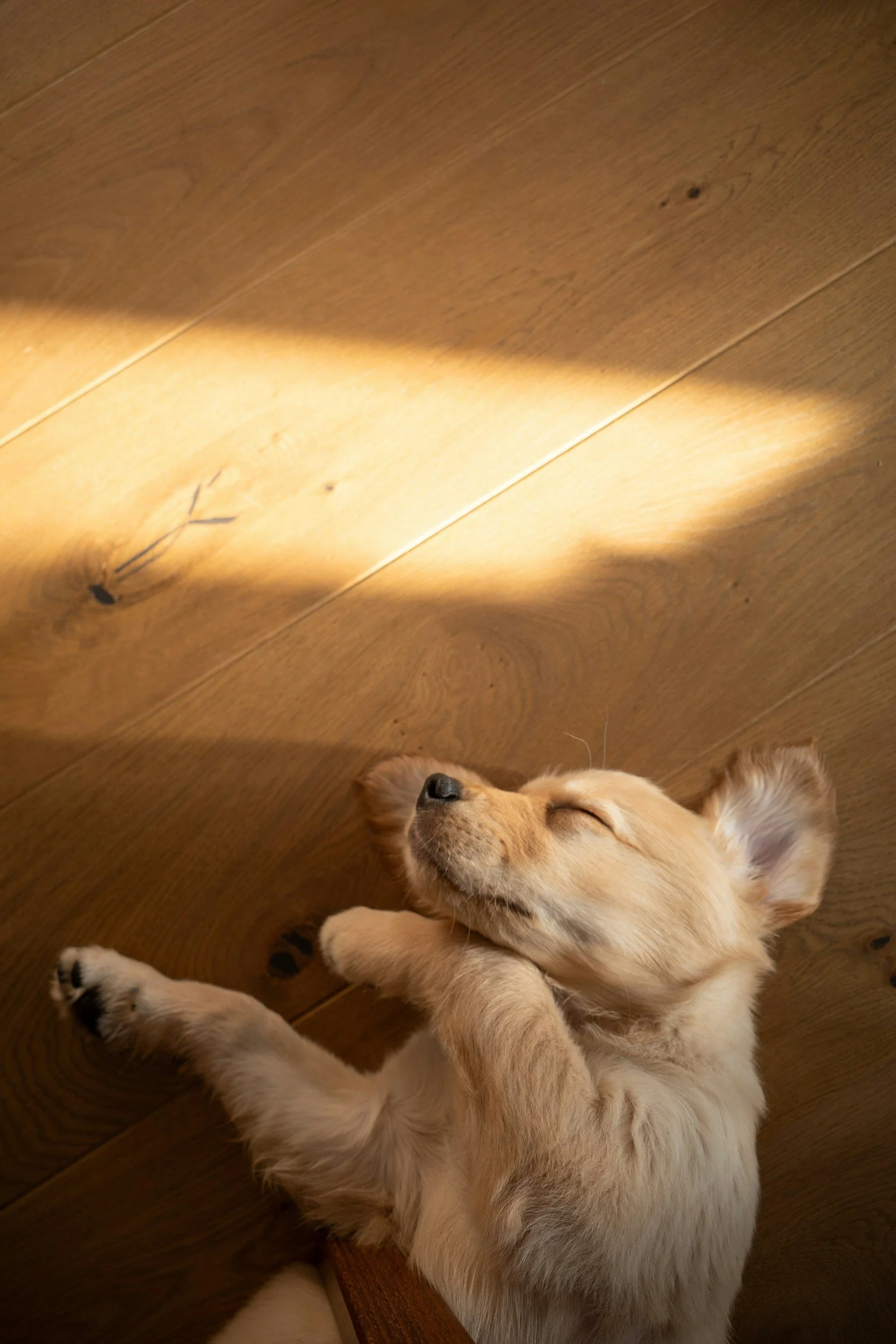
Editor's note: This article is written by a certified fear-free dog trainer and built on Wild Pack's approach: nervous-system-first, instinct-led, and fear-free.
If you've ever watched a puppy sprint around the house at full speed and wondered how to teach a puppy to be calm, your first instinct might be to teach “settle,” add more exercise, or correct the chaos.
But calm isn't really an obedience command.
A puppy has to learn what calm feels like, and that takes practice. Instead of expecting them to go from full-speed play to lying quietly at your feet, we can create small opportunities for their body and brain to shift gears.
Table of Contents
Key Takeaways
Calm Isn’t the Same as Tired
Notice Calm Before You Ask for It
Don’t Turn Every Calm Moment Into Training
Give Their Nose Something to Do
Make Settling Easier
Watch for the Shift After Activity
Protect Rest Instead of Filling Every Minute
Match the Challenge to Your Puppy
What If My Puppy Is Still Wild?
Calmness Is Something You Practice Together
Frequently Asked Questions (FAQs)
Key Takeaways
Learning how to teach a puppy to be calm starts with creating opportunities to practice calm (not demanding it)
Puppies need appropriate movement, sleep, sniffing, play, and mental enrichment—not endless activity.
Positive reinforcement like rewarding naturally calm moments helps your puppy discover that settling can be worthwhile.
Calm Isn't the Same as Tired
A common strategy for an energetic puppy is simple: tire them out.
More walks. More fetch. More play.
Physical activity matters, but constantly trying to exhaust a puppy can turn calmness into something that only happens when they're completely spent. Puppies also need opportunities to practice doing less.
Think about the difference between making your puppy tired and helping your puppy settle.
One depends on burning through energy. The other teaches your puppy that life doesn't always require action.
That distinction can change how you approach calmness entirely.
1. Notice Calm Before You Ask for It
Your puppy probably already gives you tiny moments of calm.
Maybe they lie down after drinking water. Perhaps they sit beside you for a few seconds or quietly watch something across the room.
We often ignore those moments because nothing is going wrong.
Instead, notice them. Calmly place a treat near your puppy, offer gentle affection if they enjoy it, or simply allow the peaceful moment to continue.
You're helping your puppy discover that calm behavior has value without repeatedly telling them what to do.
2. Don't Turn Every Calm Moment Into Training
Learning simple dog training commands can make communication easier. Sit, wait, come, and other cues all have useful places in everyday life.
But there's an important difference between a puppy who sits because you said “sit” and one who chooses to relax when nothing is happening.
If every quiet moment comes after an instruction, your puppy may become very good at following cues without necessarily getting much practice settling independently.
Sometimes the best thing you can do is create a comfortable environment and give your puppy a chance to make the choice themselves.
3. Give Their Nose Something to Do
Not every puppy activity needs to involve running, chasing, or wrestling.
Try scattering part of your puppy's meal across a safe area and letting them search for it. Hide a few pieces of food in open cardboard boxes or loosely fold treats into a towel.
These simple dog scentwork games give your puppy an opportunity to investigate with their nose and make independent choices.
That's one reason we like dog scentwork as part of a puppy's enrichment routine. It gives curious puppies something meaningful to do without requiring you to turn every activity into another high-energy game.
4. Make Settling Easier
Sometimes we're asking puppies to be calm in environments that make calmness incredibly difficult.
Imagine trying to relax while people repeatedly walk past you, toys are scattered everywhere, children are playing nearby, and someone keeps talking to you.
Your puppy may feel something similar.
If you're practicing quiet time, reduce unnecessary stimulation. Put exciting toys away, provide a comfortable resting area, and choose a quieter part of the day.
You're not forcing your puppy to settle. You're making settling an easier option.
5. Watch for the Shift After Activity
Here's something interesting to observe: what does your puppy do immediately after an activity ends?
After a sniffing game, they might drink water, wander around, chew something, or lie down. After an exciting game of tug, they might still be bouncing around looking for the next round.
Neither response makes an activity inherently good or bad. But noticing what happens afterward can help you understand your individual puppy.
This is especially useful when choosing enrichment. Dog nose work training, food searches, chewing, play, and walks may affect your puppy differently. Instead of following generic training advice, watch what actually helps your puppy transition into quieter behavior.
6. Protect Rest Instead of Filling Every Minute
Puppies don't need entertainment every moment they're awake.
When we constantly provide another toy, another game, another walk, or another training session, we may unintentionally make quiet moments rare.
Give your puppy appropriate opportunities to rest without feeling like you need to fill every empty minute.
A puppy who has had appropriate activity, enrichment, food, bathroom breaks, and connection may simply need the environment—and permission—to switch off.
Calmness needs space to happen.
Read more on teaching your dog the quiet cue.
7. Match the Challenge to Your Puppy
If you use scentwork as part of your puppy's routine, keep it simple.
You don't need a Dog Nosework Kit for beginner searches. Food, cardboard boxes, towels, and safe household objects are plenty for getting started.
The same principle applies beyond nosework: don't make everything progressively harder simply because your puppy succeeded yesterday.
Learning isn't a race toward difficulty. If an activity becomes frustrating or your puppy disengages, make it easier.
What If My Puppy Is Still Wild?
Some days, your puppy may still race around the living room like they've been personally assigned to create chaos.
That's puppyhood.
Before assuming they need stricter puppy training, consider the bigger picture. Have they had an opportunity to move and sniff? Could they need a bathroom break? Has the day been unusually stimulating? Have they had opportunities for uninterrupted rest?
The goal isn't to eliminate excitement.
It's to gradually help your puppy experience a wider range of states: playing enthusiastically, exploring curiously, learning with you, and eventually settling when the excitement is over.
Calmness Is Something You Practice Together
When you're learning how to teach a puppy to be calm, it's tempting to search for the perfect command.
But calmness often grows in the spaces between commands.
It's in the moment you notice your puppy lying quietly and don't interrupt. It's in the easy scent search that lets them investigate without your direction. It's in choosing not to add another game simply because your puppy is awake.
If you eventually explore dog nose work classes, structured scent training, or other enrichment activities, keep that same principle with you: the goal isn't to create a puppy who performs perfectly.
It's to learn what helps the dog in front of you engage, explore, and settle.
Learn more about training dogs to be calm with visitors, simple dog training cues, and dog nosework classes. If you’re crate training your dog, explore the best crates we have curated here.

Frequently Asked Questions (FAQs)
-
You can teach a settle cue, but don't rely on a command alone. Give your puppy opportunities to experience calmness naturally and reinforce quiet behavior when it happens.
-
Activity is important, but more isn't automatically better. Consider your puppy's overall routine, including appropriate movement, enrichment, sniffing opportunities, downtime, and rest.
-
Simple dog training commands can improve communication and give your puppy predictable behaviors to perform, but following a cue isn't the same as independently settling. Practice both skills.
-
Dog nose work training involves giving dogs opportunities to locate food, objects, or specific odors using smell. For puppies, simple food searches can be an accessible introduction without complicated equipment.
-
No. A Dog Nosework Kit may be useful later if you explore structured scent training, but beginner puppy searches can use treats and safe household objects.
-
Dog nose work classes can provide structured guidance if they're appropriate for your puppy's age and experience. Look for reward-based instruction that allows individual dogs to progress comfortably rather than pressuring them to perform.
About the Author
Lindsay is the founder of Wild Pack and a Certified Fear-free Dog Trainer and Coach dedicated to helping dogs and their guardians thrive through reward-based training, nervous system regulation and instinct-led enrichment. After thousands of hours working hands-on with dogs of every breed, age, and temperament, she specializes in helping dogs build confidence, resilience, and lasting behavior change without fear or punishment. Wild Pack is a 5-star rated Seattle pet wellness brand trusted by dog parents globally and featured by KOMO News, Seattle Refined, and Dogington Post for its unique approach to canine wellbeing. Through boutique services, practical education, and innovative products, Wild Pack’s mission is to rewild pets—and the people who love them.