7 Poodle Games to Reconnect With Your Dog's Wild Side
Table of Contents
Scent Work & Nosework Games
Puzzle Toys & Interactive Feeders
Agility & Obstacle Course Training
Fetch & Retrieve Games
Hide & Seek & Tracking Games
Treibball & Flirt Pole Training
Canine Trick Training & Shaping Games
Play as a Pathway to Presence
Frequently Asked Questions
Key Takeaways
Poodle games should tap into their natural instincts for retrieving, tracking, and problem-solving to reawaken their "wild" side.
Scent work is a powerful, low-impact game that honors a poodle’s innate drive to use their nose, building confidence and providing deep mental stimulation.
Puzzle toys and interactive feeders turn mealtime into a mindful ritual, satisfying a poodle’s intelligence and foraging instincts.
Agility, retrieval games, and flirt poles provide healthy outlets for physical energy and channel their athleticism and prey drive.
Trick training using methods like clicker training becomes a collaborative game that strengthens communication and your shared bond.
Beneath that elegant coat and intelligent gaze lies a spirit brimming with instinct. Poodles, originally bred as brilliant water retrievers, carry an ancestral wisdom that thrives on connection, challenge, and play. But in our modern world, it's easy for this innate spark to dim. This isn't just about burning off energy; it's about reawakening their wild heart. True enrichment through poodle games taps into their core instincts, strengthening the bond you share while satisfying their deep-seated need to problem-solve and explore.
This guide moves beyond simple fetch to offer a curated collection of games designed to engage your poodle’s mind, body, and spirit. We will explore activities that honor their natural drives for tracking, retrieving, and joyful movement, helping you and your poodle reconnect with the grounding rhythms of nature, together. From scentwork that awakens their powerful nose to agility that celebrates their athleticism, these poodle games transform everyday moments into sacred rituals. Let's step away from routine and rediscover the playful wildness waiting within.
1. Scent Work & Nosework Games
Scent work is one of the most powerful poodle games because it honors their very essence. Bred as intelligent water retrievers, poodles possess a keen nose and an innate drive to seek and find. These games tap directly into this ancestral skill, providing deep mental stimulation that satisfies their natural instincts far more than a simple game of fetch ever could.
This type of enrichment involves teaching your poodle to find a specific scent, often starting with high-value treats and progressing to specific essential oils like birch. It's a collaborative activity that calms the nervous system, builds incredible confidence, and strengthens the bond between you and your dog. By encouraging them to use their most powerful sense, you are helping them connect with their wild, instinctual self.
How to Get Started with Poodle Scent Work
Getting started is simple and can be done right in your living room. The goal is to make it a fun, rewarding experience that builds your poodle’s enthusiasm for using their nose.
Introduce the Scent: Begin by letting your poodle sniff a high-value, aromatic treat like a small piece of cheese or dried liver. Use a verbal cue like "Find it!" as they sniff it.
Easy Hides: Place the treat in an obvious spot nearby while they watch, then give your cue. Celebrate enthusiastically when they find it. Repeat this a few times to build a positive association.
Increase Difficulty: Gradually start hiding the treat in slightly harder spots, like under the edge of a blanket or inside an open cardboard box.
Keep it Short: Keep sessions brief, around 10-15 minutes, to maintain focus and prevent fatigue. The goal is joyful engagement, not a grueling task.
For a complete, step-by-step ritual you can practice at home, explore our free beginner's guide to dog scent work.
This game is more than just a trick; it's a mindfulness practice for both of you. As your poodle focuses on scent, you can focus on your breath and presence, moving together in a quiet, instinctual dance. It’s a beautiful way to rewild your daily routine.
2. Puzzle Toys & Interactive Feeders
Puzzle toys and interactive feeders are a brilliant way to honor your poodle's sharp intellect. For a breed known for its problem-solving abilities, these games transform mealtime from a simple five-minute task into a rich, mindful ritual. They invite your poodle to use their brain and paws to unlock their food, tapping into their natural foraging instincts and providing a deeply satisfying mental workout.
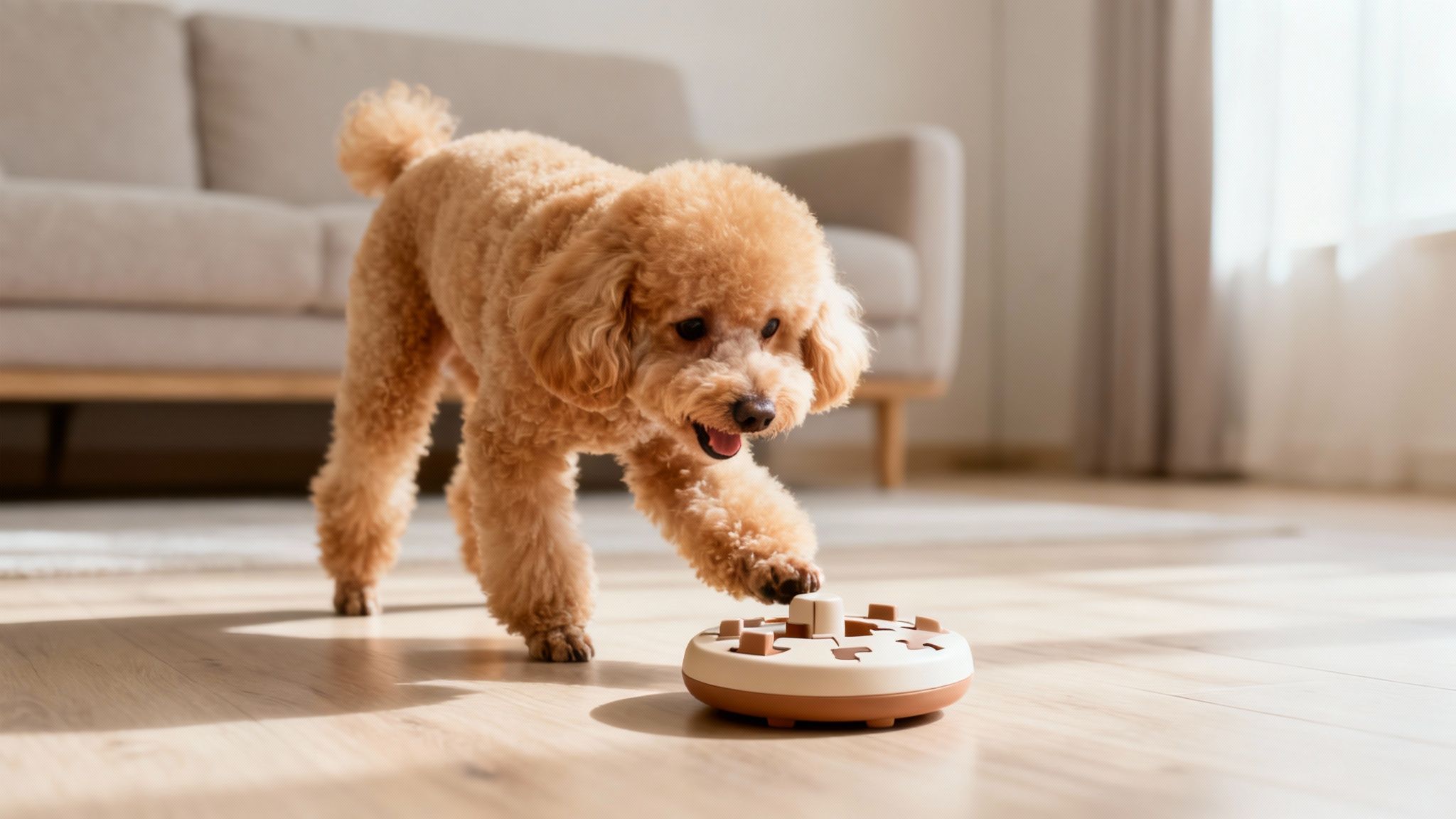
This type of enrichment slows down eating, which aids digestion, but its real power lies in cognitive engagement. By turning a meal into a challenge, you are preventing boredom and building your dog's confidence and patience. For a poodle, successfully solving a puzzle is more than just getting a treat; it’s a moment of instinctual fulfillment that quiets the mind and engages their powerful intelligence.
How to Get Started with Poodle Puzzle Toys
Introducing puzzle toys should be a positive and encouraging experience. The aim is to build your poodle's confidence so they see the puzzle as a rewarding game, not a frustrating chore.
Start Simple: Choose a beginner-level puzzle, like a KONG Wobbler or a simple slide-and-find toy. Use high-value treats to capture their interest and show them how the toy works.
Guide and Encourage: Sit with them and gently guide them if they seem stuck. Your calm presence makes the activity a bonding experience rather than a solitary task.
Rotate for Novelty: Keep things interesting by rotating different types of puzzles every week. This prevents them from simply memorizing a pattern and keeps their problem-solving skills sharp.
Create a Ritual: Use puzzle feeders for one of their daily meals. As they focus on their task, take a moment for yourself to breathe and observe, grounding you both in the present moment.
Exploring different types of mental engagement is key to a poodle's well-being. To discover more ways to challenge your clever companion, explore our complete guide to canine cognitive enrichment games.

These poodle games do more than just dispense food; they provide a structured outlet for your dog's mental energy. It's an opportunity for them to engage their mind in a focused, rewarding way, helping them reconnect with their innate ability to think and solve problems.
3. Agility & Obstacle Course Training
Agility training taps into the very core of a poodle’s being: their brilliant mind, athletic body, and deep desire to work in partnership with their human. This dynamic game involves guiding your poodle through a sequence of obstacles like jumps, tunnels, and weave poles. It’s a full-body and full-mind workout that channels their energy into a focused, joyful activity, strengthening your bond with every cue and every successful navigation.
This practice is far more than just a sport; it’s a moving meditation. As you and your poodle move in sync, you both become fully present, focused on the flow of movement and communication. It builds incredible confidence, especially in timid dogs, and provides a powerful outlet for their natural intelligence and physical grace, embodying a true sense of rewilding through purposeful play.
How to Get Started with Poodle Agility
Creating a simple backyard agility course is an accessible way to begin this rewarding poodle game. The key is to introduce obstacles slowly and make the experience overwhelmingly positive, building a foundation of fun and trust.
Start with Foundations: Ensure your poodle has a solid "stay" and "come" before introducing equipment. This is the bedrock of safe and effective agility training.
Introduce One Obstacle: Begin with something simple, like a low jump made from PVC pipes or a tunnel crafted from a children’s play tunnel. Lure them through with a high-value treat and celebrate wildly when they succeed.
Build Sequentially: Once they master one obstacle, you can introduce another. Only begin linking obstacles together once they are confident with each one individually.
Keep it Playful and Short: Limit sessions to 15-20 minutes to keep your poodle engaged and excited. Always end on a high note with a successful run and lots of praise.
Agility is an excellent way to meet your poodle's activity needs. You can learn more about finding the right balance of activity with our guide to dog exercise requirements by breed.
Ultimately, agility becomes a beautiful, instinctual dance between you and your dog. It’s a practice in presence, connection, and embodied wellness, allowing you both to tap into a state of joyful, synchronized flow.
4. Fetch & Retrieve Games (Dock Diving, Retrieval Competitions)
Fetch and retrieve games are among the most classic poodle games because they honor the breed’s original purpose. Poodles were bred as intelligent water retrievers, tasked with fetching waterfowl for hunters. Modern retrieval games, from simple backyard ball-tossing to competitive dock diving, tap directly into this deep-seated ancestral drive. This is not just physical exercise; it's a way for your poodle to connect with their history and instincts.

Engaging in this work provides explosive physical activity, satisfies their natural prey drive, and strengthens obedience commands like "drop it" and "come." For a poodle, retrieval work is a spiritually aligned activity that builds joy, confidence, and deepens the human-animal bond through focused, collaborative play. It transforms a simple game into a meaningful ritual that celebrates their heritage.
How to Get Started with Poodle Retrieval Games
Beginning this journey is about creating a positive and joyful association with retrieving. The key is to start slow and build on success, making it a favorite shared activity.
Introduce the Toy: Start with a high-value toy, like a special retrieving bumper or a favorite ball. Let your poodle investigate it and build excitement.
Short Tosses: Begin by tossing the toy a very short distance. When they pick it up, use an enthusiastic voice to call them back. Reward them heavily for returning it.
Teach ‘Drop It’: This command is crucial. Have a high-value treat ready. When your poodle returns with the toy, say "Drop it" and offer the treat. They will release the toy to take the treat, creating a positive association with letting go.
Keep it Brief: Limit sessions to 10-15 minutes. This prevents overexertion and keeps the game novel and exciting, avoiding obsessive behaviors.
This game becomes a mindful practice when you are fully present with your poodle. Notice the sheer joy in their movements, from the focused sprint to the triumphant return. This shared focus is a beautiful, wild dance that strengthens your connection.
5. Hide & Seek & Tracking Games
Hide and seek taps into a poodle's profound social intelligence and innate desire to track. More than just a simple game, it honors their instinct to work collaboratively, strengthening the cooperative bond that once made them exceptional partners to hunters. This game transforms your home or a local park into a thrilling landscape of discovery.
These activities engage multiple senses, from sight and sound to their powerful sense of smell, providing a holistic mental workout. By asking your poodle to find you or a favorite toy, you are validating their problem-solving skills and building incredible confidence. It’s a joyful ritual that deepens trust and presence, turning a simple search into a meaningful connection with your dog's inner world.
How to Get Started with Poodle Hide & Seek
Beginning this game is easy and builds on the playful bond you already share. The key is to start simple and make the experience a celebration of your poodle’s cleverness.
Start Indoors: Have one person hold your poodle while you go into another room and hide in an obvious spot, like behind a door. Call their name excitedly. When they find you, reward them with praise, pets, and treats.
Increase the Challenge: Gradually make your hiding spots more difficult. Hide behind furniture, under a blanket, or in a closet. The goal is to encourage them to use their nose and ears, not just their eyes.
Introduce Toy Hides: Once they master finding you, begin hiding a favorite toy. Let them see you hide it at first, then progress to hiding it when they aren’t looking, using a cue like "Find your toy!"
Keep it Positive: Sessions should be short, around 10-15 minutes, to keep them fun and engaging. Always end on a successful find to build enthusiasm for the next game.
This game is a beautiful, interactive meditation. While you wait in your hiding spot, you can practice deep breathing and quiet presence. The moment of joyful reunion when your poodle finds you becomes a shared celebration of connection, a small but powerful way to rewild your daily routine.
6. Treibball (Ball Herding) & Flirt Pole Training
Treibball and flirt pole training are dynamic poodle games that honor an often-overlooked aspect of their heritage: herding. While famed for their water retrieving skills, many poodles retain the instinct to gather and direct, and these activities provide a perfect outlet. Treibball channels this drive into a constructive sport, while the flirt pole engages their innate prey drive in a controlled, exhilarating way.
These games are powerful tools for building focus, impulse control, and a deep working partnership. Treibball teaches your poodle to think independently while staying attuned to your cues, and the fast-paced flirt pole action hones their physical coordination and ability to switch from high arousal to a state of calm. By providing a job that satisfies these deep-seated instincts, you offer profound mental and physical enrichment.
How to Get Started with Treibball & Flirt Pole
You can introduce these activities with simple, DIY equipment in your own backyard or even a spacious room. The key is to build enthusiasm and control from the very first session.
Introduce the Flirt Pole: Start in an enclosed space to prevent uncontrolled chasing. Drag the toy on the ground in slow, predictable circles. Use a cue like "Get it!" and let them catch it easily.
Teach 'Drop It': Once they catch the toy, immediately trade them for a high-value treat to teach a reliable release. This is crucial for maintaining control and preventing possessiveness.
Introduce Treibball: Begin with a single, large exercise ball in an open area. Reward your poodle for any interaction with the ball, such as sniffing it, nudging it with their nose, or pawing it.
Shape the 'Push': Gradually shape the behavior by only rewarding nose bumps that move the ball forward. Keep sessions short, just 5-10 minutes, to end on a positive, successful note.
These games are more than just exercise; they are a ritual of focused, cooperative play. They allow your poodle to express their full athletic and intellectual capabilities, strengthening the instinctual bond you share.
7. Canine Trick Training & Shaping Games (Clicker Training, Free Shaping)
Canine trick training is far more than just teaching cute parlor tricks; for a poodle, it's a profound form of mental engagement that honors their incredible intelligence. This activity becomes a collaborative game, especially when combined with tools like clicker training and free shaping. These methods tap into a poodle’s innate desire to problem-solve and communicate, transforming basic obedience into a joyful, creative dance.
This type of enrichment allows your poodle to use their brain to figure out what you're asking, rather than just following a lure. Free shaping, in particular, gives them a sense of agency, as they "discover" behaviors on their own. This builds confidence, strengthens your bond through clear communication, and provides an outlet for their cognitive energy, leading to a more settled and fulfilled companion. It's a beautiful way to connect through shared celebration and play.
How to Get Started with Poodle Trick Training
Getting started with trick training is about building a language of positive reinforcement. The goal is to make learning fun and to celebrate your poodle's creativity and effort, turning training into one of their favorite poodle games.
Introduce the Clicker: Before training a trick, charge the clicker. Simply click, then immediately give your poodle a tiny, high-value treat. Repeat this 10-15 times. Your poodle will quickly learn that the "click" sound means a reward is coming.
Start Simple: Choose an easy trick like "touch" (targeting your hand with their nose). Hold your hand out, and the moment their nose makes contact, click and treat. Keep sessions short, just 5-10 minutes.
Try Free Shaping: To shape a "spin," reward any small head turn in one direction. Gradually, only reward bigger turns, until they offer a full circle. This teaches them to experiment and think for themselves.
Keep it Joyful: Always end on a high note before your poodle gets tired or frustrated. Your enthusiasm is contagious and will keep them motivated to learn.
This process is a mindfulness practice that requires you to be fully present, observing and responding to your dog’s smallest efforts. To dive deeper into the science of positive reinforcement, you can explore these powerful dog behavior modification techniques that form the foundation of this joyful training.
Ready to deepen your bond through the power of scent? At Wild Pack, we believe nosework is one of the most transformative poodle games you can play. Download our free, step-by-step nosework guide to unlock your dog’s natural talents and start your rewilding journey together.
👉 https://www.withwildpack.com/dognoseworkguide
Play as a Pathway to Presence
The journey through these poodle games reveals a beautiful truth: play is far more than simple fun. It is a powerful language of connection, a way to speak directly to your poodle’s intelligent, instinctual soul. From the focused calm of a scent work challenge to the joyful explosion of energy on an agility course, each game is an invitation to be fully present with your companion.
We’ve explored how activities like Treibball tap into their herding heritage and how puzzle toys honor their profound problem-solving abilities. We saw how something as classic as fetch can be elevated into a mindful ritual of shared purpose. These aren't just ways to burn off energy; they are intentional practices that build trust, sharpen the mind, and deepen the bond you share. By consistently engaging in these poodle games, you are co-creating a world rich with sensory input and mutual understanding.
Cultivating a Ritual of Play
The most significant takeaway is to view play not as an item on a to-do list, but as a daily ritual. It’s about creating small, consistent moments that signal to your poodle, "I see you, I understand you, and I delight in who you are." This shift in perspective is the essence of rewilding your relationship. It’s about stepping away from the human-centric pace of life and entering your dog’s world, a world guided by scent, curiosity, and immediate joy.
Your role is to be the gentle guide, the trusted pack member who introduces new, exciting challenges. Whether you're setting up a simple "find it" game in your living room or practicing shaping for a new trick, you are communicating in a way that respects their innate intelligence. This consistent engagement satisfies their need for mental stimulation, preventing boredom and a host of related behavioral issues.
The Lasting Impact of Intentional Play
Mastering these poodle games does more than create a well-behaved dog; it nurtures a resilient, confident, and emotionally balanced companion. Each puzzle solved, scent tracked, and obstacle navigated is a small victory that builds their self-esteem. You are giving them a "job" that fulfills their instinctual drives, a core component of canine wellness.
As you integrate these practices, you'll notice the benefits extending beyond your poodle. This shared focus becomes a form of mindfulness for you, too. It pulls you out of your head and into the present moment, grounding you in the simple, profound happiness of watching your best friend thrive. So, embrace the spirit of play. Let your poodle’s enthusiasm be your guide, and together, rediscover the wild, joyful connection that awaits.
Read more about reconnecting with your dog's instincts:
FAQ: Poodle Games
What are the best indoor games for poodles?
The best indoor poodle games tap into their intelligence without needing much space. Scent work, where they find hidden treats, is fantastic for mental stimulation. Puzzle toys and interactive feeders are also excellent for turning mealtime into a problem-solving challenge. Trick training using a clicker is another great way to engage their brain and strengthen your bond indoors.
How much playtime does a poodle need?
While physical exercise needs vary by age and size (Standard, Miniature, Toy), most poodles benefit from 45-60 minutes of dedicated activity per day. This should be a mix of physical exercise like walks or fetch and mental enrichment like the poodle games listed in this article. Mental exercise can be just as tiring as physical exercise for this intelligent breed.
Do poodles get bored easily?
Yes, due to their high intelligence, poodles can get bored if they don't receive adequate mental stimulation. Boredom can lead to undesirable behaviors like excessive barking, chewing, or digging. Engaging them in poodle games that challenge their mind is crucial for a happy, well-balanced companion.
How do I make fetch more interesting for my poodle?
To elevate a simple game of fetch, turn it into a training ritual. Use it to reinforce commands like "drop it" and "come." You can also make it more challenging by tossing the toy into taller grass so they have to use their nose to find it, or by using multiple toys to practice impulse control. This taps into their natural retrieving instincts in a more structured way.