Can Puppies Chew Bones: A Safe Guide for Teething
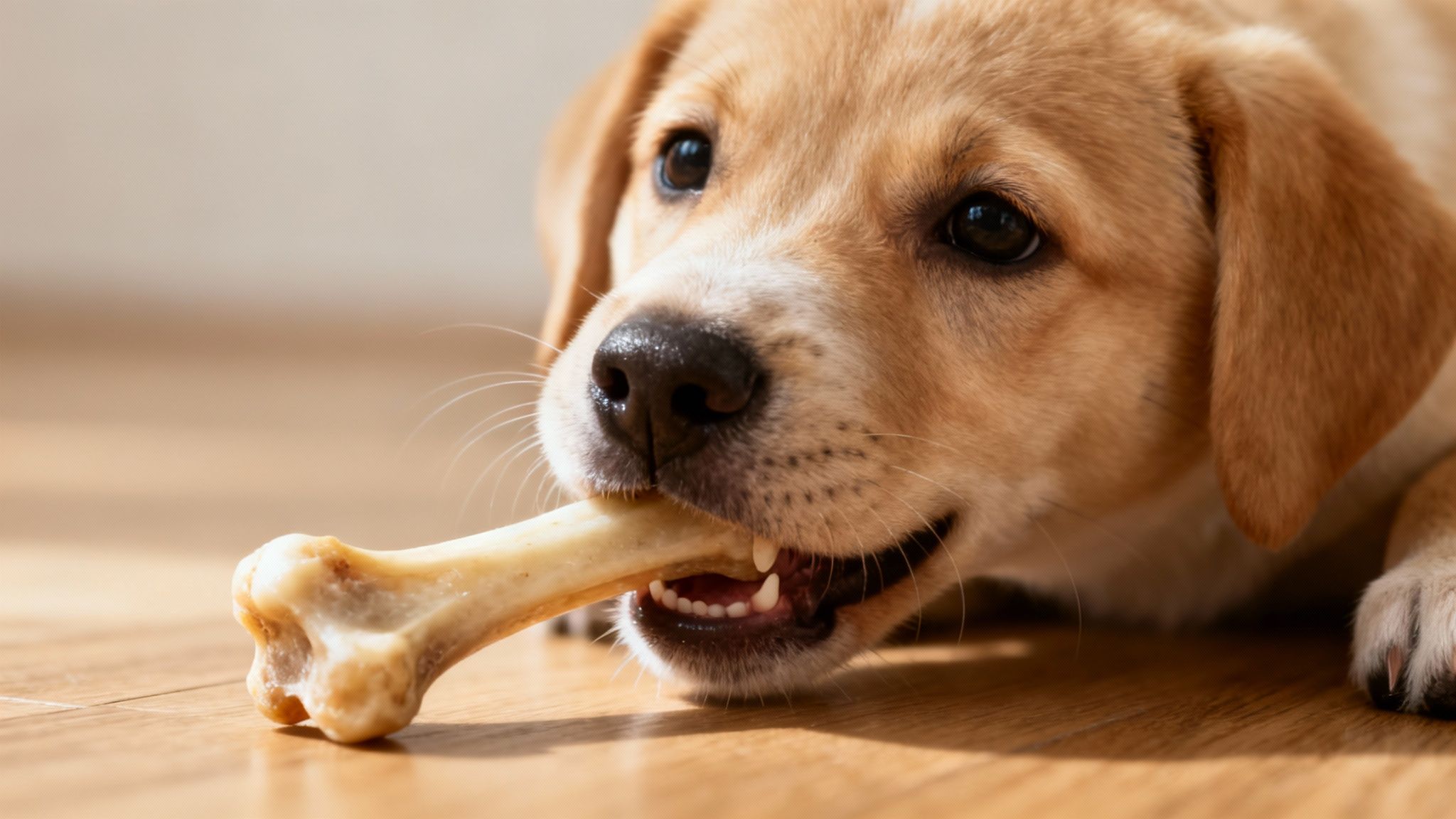
Table of Contents
Why Your Puppy Is a Chewing Machine
The Unbreakable Rule: Raw Versus Cooked Bones
How to Choose the Right Bone for Your Puppy
Natural Alternatives When Bones Aren't an Option
Creating a Mindful Chewing Ritual
Knowing the Warning Signs of a Problem
Frequently Asked Questions
Key Takeaways
The instinct to chew is a natural, wild behavior for puppies, especially during teething. It connects them to their ancestral roots.
Never give a puppy a cooked bone. Cooking makes bones brittle and prone to splintering, which can cause serious internal injury.
Always choose raw bones that are larger than your puppy’s muzzle to prevent choking.
Supervise all chewing sessions to ensure safety and use the time as a bonding ritual.
Safe alternatives like durable rubber toys, bully sticks, and root chews can also satisfy a puppy's chewing instinct.
Yes, puppies can absolutely chew bones—but it’s all about choosing the right kind and offering them in the right way. That powerful urge to chew isn't just a naughty habit. It’s a deep, instinctual need handed down from their wild ancestors, and it’s especially important for soothing sore gums during that intense teething phase.
Why Your Puppy Is a Chewing Machine
Ever look at that tiny ball of fluff and wonder how it can dismantle a shoe with such single-minded focus? This isn't just random destruction; it's a behavior woven deep into their DNA.
For a puppy, chewing is a fundamental way of learning about the world, much like a human baby reaches out to touch everything. Their mouth is their number one tool for exploring. Every new texture and taste is a piece of information that helps them map out their environment.
This instinct kicks into high gear during teething, which usually ramps up between three and six months of age. Chewing is nature's teething ring, providing much-needed relief for those achy gums.
The Wild Instinct to Chew
But chewing is so much more than a teething soother. It's an essential activity for a puppy’s physical and mental well-being. It strengthens their jaw muscles, helps keep their teeth clean, and provides a healthy outlet for all that boundless puppy energy.
Think of it as a grounding activity, one that connects them to their ancestral roots. Wild canids like wolves have remarkably healthy teeth because their diet naturally includes chewing on bones and cartilage. This simple, instinctual act keeps their jaws strong and their teeth clean.
Without the right things to chew on, our companions are far more likely to develop plaque and other dental problems. Simply providing safe, appropriate chews can honor this natural ritual and support their wellness. As we explore in our first-time dog owner tips, the key is to channel this instinct safely.

Turning Chewing into Connection
When you truly understand the "why" behind your puppy's chewing, you can transform a potential source of stress into a powerful bonding activity. It becomes a ritual that strengthens the connection between you and your pup.
By offering a safe, appropriate chew, you're doing more than just saving your furniture. You're giving your puppy a job—one that satisfies their mind and body. This simple act helps them tap into their inner wild, fostering a deep sense of calm and contentment.
The Unbreakable Rule: Raw Versus Cooked Bones
If you take only one piece of advice away from this, let it be this: never, ever give your puppy a cooked bone. I can't stress this enough. This isn’t a gentle suggestion—it’s the golden rule for keeping your new friend safe and sound. The second a bone gets cooked, whether it's roasted, boiled, or smoked, its entire structure changes, and not for the better.
Cooking sucks all the moisture and collagen out of a bone, making it dry, brittle, and dangerously prone to splintering. Picture the difference between a fresh, bendy tree branch and a sun-baked twig that snaps into sharp pieces with the slightest pressure. A cooked bone is that twig. When your puppy chomps down, it can shatter into jagged shards that pose a huge risk.
These splinters can lead to some truly scary situations, including:
Choking or blocking their airway.
Puncturing their tongue, gums, or esophagus.
Internal bleeding from tears in the stomach or intestines.
Serious blockages that require emergency surgery.
This is exactly why the answer to "can puppies chew cooked bones?" is always a hard, unwavering no.
Why Raw Bones Are a Different Story
Raw bones, on the other hand, are a whole different ball game. A high-quality, raw bone from a source you trust is softer and more pliable, so it's much less likely to splinter. It’s a far more natural material for a puppy's mouth, letting them gnaw and scrape at it in a way that truly satisfies their chewing instincts without the intense risks of cooked bones.
Chewing on a raw bone is a primal, grounding experience for a puppy. It helps scrape away plaque from their teeth, gives them a fantastic mental workout, and connects them to their deep ancestral roots. It’s a beautiful way to channel their boundless energy into something productive.
Of course, it’s crucial to remember that not all raw bones are created equal. Safety still comes down to picking the right type and size for your specific puppy.
The Problem with Marrow
Even when you're in the "safe zone" with raw bones, there are still a few things to keep in mind. Let's talk about marrow bones. That rich, fatty marrow inside is like a five-star meal for dogs, but it can be way too much for a puppy’s sensitive digestive system to handle.
A marrow overload can quickly lead to an upset stomach, diarrhea, or even pancreatitis—a very serious and painful inflammation of the pancreas. To avoid this, keep marrow bone sessions short and sweet, just 10-15 minutes at a time. For very young pups, it’s a good idea to scoop out some of the marrow before you hand it over. This way, they get all the fun of chewing without overwhelming their little system.
Tapping into a Puppy's Natural Drive
By understanding the critical difference between raw and cooked bones, you can safely give your puppy an outlet for one of their most powerful, natural drives. This is about more than just preventing accidents; it's about providing deep, meaningful enrichment that truly honors their nature.
For puppies, exploring the world with their mouth is a key part of how they learn and grow. If you're looking for other ways to engage their powerful senses, scentwork is a beautiful practice that awakens their instinctual world.
👉 Discover another way to connect with your pup's wild heart. Download our free nosework guide: https://www.withwildpack.com/dognoseworkguide.
How to Choose the Right Bone for Your Puppy
This little decision tree cuts right to the chase. When you're wondering if a bone is safe for your puppy, the single most important question is: Is it raw or cooked? As the chart shows, the only safe path forward is with raw bones. Nature really does know best, giving our pups an option that’s perfectly suited to their instincts.
Once you’ve embraced the "raw is law" mindset, the next step is to find a bone that's a perfect match for your puppy's size, age, and chewing habits. This isn’t a one-size-fits-all deal. It’s about being a mindful observer and choosing something that truly honors their individual needs.
A fantastic starting point is the "rule of thumb": the bone must always be bigger than your puppy’s muzzle. It should be so large that there’s absolutely no way they could attempt to swallow it whole. Think of this simple check as your non-negotiable safety guard against a serious choking hazard.
Recreational vs. Edible Bones
Not all raw bones are created equal—or for the same purpose. It’s helpful to understand the difference between recreational and edible bones, as they each offer a unique kind of enrichment.
Recreational Bones: These are the big, tough guys meant for gnawing, not for eating. We're talking about beef femurs or large knuckles. Their purpose is to provide incredible mental stimulation and a top-notch dental cleaning as your puppy works away at them. They are not meant to be consumed.
Edible Bones: These are much softer, more pliable raw bones that a puppy can actually crunch up and digest. Common examples include chicken wings, necks, and feet. While they’re packed with calcium and other nutrients, they absolutely must be served raw and sized appropriately so your pup can eat them safely.
For a young, teething puppy, a large recreational bone is almost always the best place to start. It lets them satisfy that deep, primal urge to chew in a safe, supervised way, without the risk of them eating too much bone too soon.
Size and Breed Considerations
Your puppy's breed and size play a massive role here. A tiny Yorkie just doesn't have the same needs—or jaw power—as a growing Great Dane. For those large-breed puppies, a hefty beef femur is a solid choice because it can hold its own against their powerful jaws. For smaller breeds, a lamb neck might be a more manageable (but still larger-than-muzzle!) option.
This is especially critical for certain breeds. For brachycephalic (flat-faced) pups or tiny breeds, the risk of tooth fractures from chewing hard objects is significantly higher due to their unique jaw anatomy. While chewing is vital for every dog, it's always important to choose chews that are appropriate for their specific build.
Ultimately, picking the right bone is an act of observation. Pay close attention to how your puppy chews. Are they a gentle nibbler or a full-on power chewer? That insight is your best guide to selecting a bone that not only brings them joy but keeps them safe. It's a beautiful way to bring a little piece of the wild into your home, thoughtfully and responsibly.
Natural Alternatives When Bones Aren't an Option
Let's be real: raw bones aren't the right choice for every dog or household, and that is completely okay. You can still honor your puppy’s deep-seated instinct to chew without ever bringing a bone into your home. Thankfully, there are tons of wonderful and safe alternatives that satisfy their natural drive and provide fantastic enrichment.
Exploring these options is all about finding the perfect match for your puppy's unique personality and your own peace of mind. It’s a way to provide a safe outlet for that primal need to gnaw, explore the world with their mouth, and soothe their tender gums.
Durable Rubber and Nylon Toys
Modern chew toys have come a long, long way. Brands like KONG and West Paw have perfected the art of creating toys from incredibly tough, non-toxic rubber that can stand up to even the most determined little chewers.
These toys are brilliant because they do double duty. On their own, they offer a satisfying texture for a good chew session. But the real magic happens when you stuff them with healthy goodies like mashed sweet potato, plain yogurt, or even just some of their regular kibble.
This simple act transforms a basic toy into an engaging puzzle. It mimics the natural challenge of working for food, tapping into their instinct to forage and problem-solve. This kind of mental workout is just as crucial as physical chewing for raising a happy, well-balanced pup.
Earthy and Wholesome Natural Chews
If you’re looking to offer something a bit more organic, several natural chews provide a fantastic bone-free experience. These options connect your puppy to the wild textures and scents they crave, but in a safe, digestible form.
Bully Sticks: These are a classic for a reason. As a single-ingredient chew, they are highly digestible and pretty much irresistible to most dogs. They soften as your puppy chews, which lowers the risk of tooth fractures. Just be sure to always source them from reputable companies to ensure you’re getting a quality, safely prepared product.
Root Chews: Sustainably harvested from tree roots, these chews are incredibly tough and long-lasting, and they won't splinter like cooked bones. They're a great match for powerful chewers and offer a wonderfully earthy, natural experience.
Fish Skins: For a lighter chew, dried fish skins are an excellent choice. They are packed with omega-3 fatty acids—amazing for skin and coat health—and provide a satisfying crunch that helps clean teeth.
The key takeaway here is that mental exercise is just as vital as physical activity. For another fantastic way to engage your pup's amazing senses, check out our guide on dog mental stimulation games to discover some fun and easy activities you can do together.
Providing these kinds of enriching experiences is a beautiful way to nurture your bond. Ultimately, the goal is to provide a safe, satisfying, and instinct-honoring outlet for your puppy's need to chew. Whether it's a clever puzzle toy or a natural root, these alternatives ensure that every chew session is a positive one.
Creating a Mindful Chewing Ritual

Giving your puppy a bone can be so much more than just a way to keep them occupied. Think of it as a beautiful, intentional practice that actually deepens your connection. When you transform chew time into a mindful ritual, you’re creating a shared moment of calm and trust that nourishes both of you.
This isn't about distraction; it's about presence. This simple act of being there tunes you right into your puppy's energy and reinforces your role as their calm, steady leader. It’s a quiet conversation, a shared pause in the day that honors their most natural instincts in a safe, loving space.

Setting the Scene for Safe Chewing
First things first: create a calm and secure environment. Designate a specific, comfortable spot for these chewing rituals—maybe a cozy dog bed or an easily cleaned mat in a quiet corner. This simple step helps your puppy understand that this is their special place for this special activity.
Before you start, clear the space of other distractions. That means putting away other toys and making sure other pets or family members won't interrupt the session. The goal is to create a peaceful little bubble where your puppy can focus completely on their chew, and you can focus completely on them.
The Importance of Active Supervision
Mindful chewing is always supervised chewing. Your presence is the most important safety tool you have. And this isn't about passively scrolling on your phone from across the room; it’s about being actively engaged and observant.
Stay close enough to step in if a piece of the bone breaks off or if it gets worn down to a dangerous, swallowable size. Your calm attention ensures that if anything goes wrong, you are right there to handle it. This practice builds incredible trust, teaching your puppy that you are their reliable protector.
Teaching a Positive 'Trade' Command
Eventually, every chewing session has to end. Instead of just grabbing the bone away—which can create anxiety or resource guarding—teach a positive "trade" command. This turns the whole exchange into a rewarding, positive experience.
Here’s a simple way to do it:
Have a high-value treat ready—something your puppy loves even more than the bone.
Calmly approach your puppy and show them the special treat.
As they drop the bone to take the treat, say your chosen cue, like "trade" or "all done."
Praise them warmly as you calmly pick up the bone.
This simple exercise is a fantastic addition to any training routine. For more guidance, you can explore our advice on how to train a puppy at home.
Proper Storage for Raw Bones
If you're using raw recreational bones, proper storage is non-negotiable for keeping them fresh and safe. After a supervised chew session of about 10-15 minutes, rinse the bone with water, pat it dry, and pop it into a sealed container in the refrigerator.
Most raw bones will stay fresh this way for about three to four days. This simple clean-up routine prevents nasty bacteria from growing and ensures the bone is safe for the next mindful session. Whatever you do, never leave a raw bone just sitting out; it can become a health hazard in no time.
Knowing the Warning Signs of a Problem
Connecting with your puppy is all about tuning into their world—their little quirks, their subtle cues, their unique rhythms. Part of this mindful awareness is knowing how to spot the signs when something isn’t quite right.
While safe chewing is a beautiful, instinctual activity, accidents can happen. Being prepared means you can stay calm and act fast, making sure your little one gets the help they need right away. This isn't about creating fear; it's about feeling empowered. You're learning to honor your role as their trusted guardian, blending their wild instincts with responsible, modern care so they can keep thriving safely.
Physical Signs of Distress
Your puppy’s body is often the first to tell you there’s an issue. Stay present and observant during and after chew time, and keep an eye out for any of these physical red flags.
Some of the most common signs include:
Bleeding from the Mouth: This could be a sign of a cut on the gums or tongue from a sharp bone edge, or even a more serious broken tooth.
Choking, Gagging, or Pawing at the Mouth: These are urgent signals that something may be lodged in their throat. This is an absolute emergency that requires you to act immediately.
Vomiting or Diarrhea: This can point to simple digestive upset from rich marrow, but it can also indicate a more serious internal problem like a blockage.
Straining to Defecate: Bone fragments can sometimes create constipation or painful blockages as they move through the digestive tract.
Behavioral Changes to Watch For
Sometimes, the clues are more subtle, showing up as shifts in your puppy's typical energy and behavior. A sudden change is often your puppy’s clearest way of saying they don't feel well.
Keep an eye out for these behavioral shifts:
Sudden Lethargy or Weakness: If your puppy is suddenly tired, withdrawn, or completely uninterested in playing, they might be in pain or discomfort.
Loss of Appetite: When a normally hungry pup turns their nose up at food, it’s a clear signal that something is wrong.
Whining or Crying: Vocalizing more than usual, especially when you gently touch their mouth or stomach, can be a direct indicator of pain.
If you notice any of these signs—especially something as serious as choking or significant bleeding—it's critical to seek veterinary care immediately. Having a trusted vet on speed dial is a cornerstone of responsible pet ownership.
It’s also incredibly empowering to know basic first aid. For more information, you can learn the essentials in our dog CPR guide. This knowledge helps you stay grounded and prepared, ensuring you can always be the calm leader your puppy trusts.
Read more about...
Frequently Asked Questions
When can I give my puppy a bone?
You'll want to hold off on hard chews like raw bones until your puppy's adult teeth are fully in. This usually happens right around the six-month mark. Before that, their baby teeth are just too delicate and can easily break. For now, stick with softer, puppy-specific chew toys and natural alternatives to satisfy that chewing instinct safely.
How long should a puppy chew on a bone?
Keep those chew sessions short and sweet, especially when you're just starting out. Aim for about 10-15 minutes at a time, maybe once or twice a day. That’s plenty of time for them to get the mental stimulation and dental benefits without risking a sore jaw, broken teeth, or an upset tummy from too much rich marrow. And always, always supervise.
What kind of bones can puppies have?
Here’s the golden rule: only raw, appropriately sized bones. Never, ever give your puppy a cooked bone of any kind. They become brittle and can splinter into dangerous, sharp pieces. For young dogs, large, raw recreational bones like beef femurs are a great starting point. They're designed for gnawing and cleaning teeth, not for being eaten. Just make sure any bone you offer is bigger than your puppy’s muzzle to completely avoid a choking hazard.
What if my puppy swallows a piece of bone?
If your pup happens to swallow a small, smooth piece of a raw, edible bone, it will likely pass without any trouble. However, if they swallow a large chunk, a sharp fragment, or any piece of a cooked bone, you need to watch them closely. Look for any signs of distress: choking, gagging, vomiting, lethargy, or straining to go to the bathroom. If you see anything that worries you, call your veterinarian for guidance right away.
