Is My Dog Having a Seizure or Dreaming? A Guide to Your Dog's Inner World
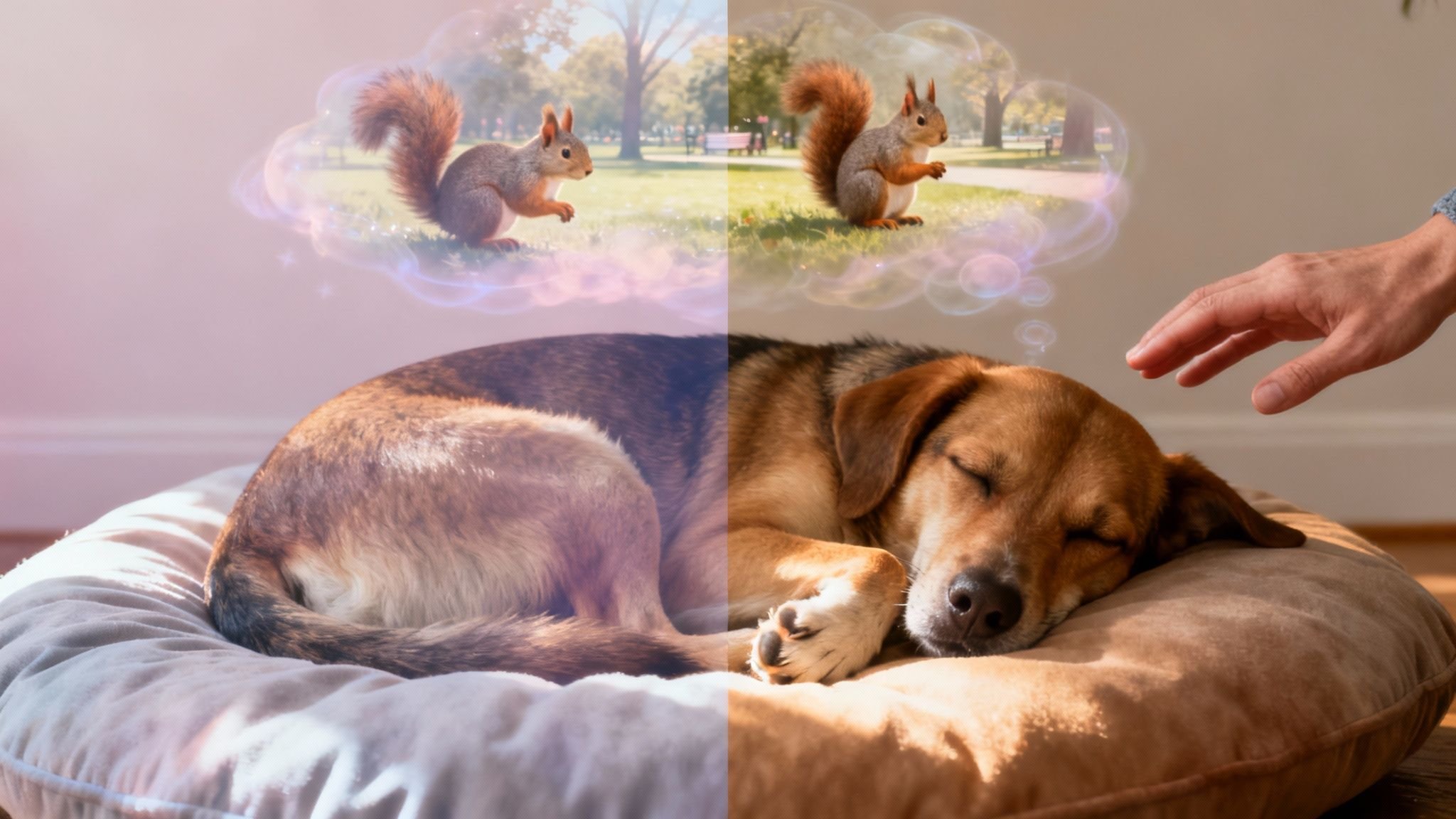
Table of Contents
Connecting to Your Dog's Inner World
The Science Behind Your Dog's Dreams
How to Recognize the Signs of a Canine Seizure
A Mindful Approach for What to Do During a Seizure
Creating a Healing Ritual After a Seizure
Partnering with Your Vet for Long-Term Wellness
Frequently Asked Questions
Key Takeaways
Dreaming involves gentle, brief twitches and soft whimpers, and your dog can be easily woken up.
Seizures often involve rigid muscles, violent, uncontrolled shaking, and a lack of responsiveness.
Small dogs may dream more frequently than larger dogs due to different sleep cycle patterns.
Your calm presence is essential if your dog is having a seizure; focus on creating a safe space.
Documenting episodes with video and notes provides crucial information for your veterinarian.
When your dog twitches in their sleep, it's often a sign of a vivid dream, marked by gentle movements and soft whimpers. A seizure, in contrast, involves rigid, uncontrolled convulsions and a lack of awareness. Understanding these key differences can turn worry into calm, mindful observation.
Connecting to Your Dog's Inner World
It’s a quiet moment that can quickly fill a room with anxiety. You glance over at your sleeping companion, only to see their legs paddling and their body twitching. Your heart sinks as the question floods your mind: is my dog having a seizure or dreaming? This feeling is a testament to the deep bond you share, a connection that makes their wellness feel as vital as your own.
This guide is here to offer clarity and calm. We'll explore the gentle, rhythmic world of canine REM sleep and contrast it with the unmistakable signs of a seizure. Our goal isn't to create fear, but to empower you with knowledge.
Dreams Versus Seizures
Learning to spot the difference is a form of deep listening. It’s about tuning into the subtle language of your dog’s body and strengthening your intuitive connection.
Dreaming twitches are often brief, lasting less than 30 seconds, and your dog's breathing remains relaxed. They might let out soft barks or whimpers, reliving a run through the woods or a chase after a favorite toy.
A seizure is a different story. It often involves stiff, rigid limbs, violent and rhythmic convulsions, and potential loss of bladder or bowel control. During a seizure, your dog will be unresponsive to your voice.
This distinction is more than just clinical observation; it’s about honoring your dog’s natural rhythms. Dogs cycle through REM sleep just like we do, a process vital for memory and well-being. The frequency can even vary by size, with smaller dogs dreaming as often as every 10 minutes, while larger breeds may only dream once every 90 minutes.
This understanding transforms you from a worried observer into a grounded guardian, present and attuned to their needs. By learning these cues, you’re not just easing your own mind; you’re deepening the sacred trust that forms the heart of your pack.
The Science Behind Your Dog's Dreams
When you see your dog's paws paddling in their sleep, you're getting a tiny glimpse into their secret world. It’s a beautiful, instinctual process, a quiet sorting of the day's adventures. Just like us, dogs cycle through different stages of sleep, but the real magic happens during Rapid Eye Movement, or REM sleep.
This is when their brain activity kicks into high gear, looking almost as if they were awake. It’s the brain’s prime time for processing and consolidating memories. That new scent trail they followed, the pure joy of a perfect fetch, the simple comfort of your hand on their head—it all gets filed away during these precious moments.
What Canine Dreams Look Like
So, what are the tell-tale signs they're off in dreamland? Those soft whimpers and gentle twitches are the physical expression of all that mental activity. Their brain is replaying the day, and their body follows along in a muted, gentle way. Think of it as a sign of a healthy, functioning mind, a natural rhythm that helps them learn and adapt.
You might notice their breathing gets a little faster or more irregular. Maybe you'll see their eyes moving behind their closed lids. These are all classic signs of a dog deep in a dream. It’s a vulnerable, peaceful state that shows just how safe and secure they feel in your home.
The Instinctual Purpose of Dreaming
Dreaming isn't just a quirky habit; it’s a vital part of their wellness, tying them back to their wild roots. For a dog, processing sensory information is everything—it’s how they learn to survive and thrive. Dreaming helps them make sense of the world by reinforcing important lessons and experiences.
Consider it their own internal form of rewilding. Just as a walk in nature helps us reset, their dream state helps them integrate their instinctual experiences. It’s a moment where their primal self gets to roam free, even while they're peacefully snoozing on the rug. If you want to dive deeper, you can explore more about what your dog might be dreaming about in our detailed guide.
This whole process is a beautiful reminder that our dogs have incredibly rich inner lives. When we understand the science behind their sleep, we can look at those nighttime twitches not with worry, but with a sense of wonder and connection.
How to Recognize the Signs of a Canine Seizure
It’s one of the most jarring things to witness: your dog, fast asleep, suddenly starts twitching, paddling their paws, and maybe even whimpering. The first thought that rips through your mind is often, "Is this a seizure?"
Learning to tell the difference between a vivid dream and a serious neurological event is a crucial part of being an intuitive, responsive pet parent. Knowing what to look for empowers you to act with a calm, grounded presence instead of panic. A seizure isn't a single, straightforward thing; it's a whole spectrum of events, and spotting the signs is the first step toward getting your companion the right support.
Seizures are essentially sudden, uncontrolled electrical storms in the brain. They can look wildly different from one dog to another—and even from one episode to the next in the same dog. Generally, we see them fall into two main categories, each with its own distinct calling cards.
Focal or Partial Seizures
Not every seizure is the dramatic, full-body event we often see portrayed. In fact, sometimes the signs are so subtle they’re easy to write off as just a weird quirk. This is often the case with a focal seizure, which affects only a small, specific area of the brain and leads to localized, unusual behaviors.
What can be confusing is that your dog might be totally conscious and aware during one of these episodes, though they may seem dazed, confused, or even a little scared. Paying attention to these small, out-of-the-blue behaviors is a huge part of tuning into your dog's neurological health.
Keep an eye out for things like:
Unexplained twitching in just one leg or on one side of their face.
Random "fly-biting" behavior, where your dog snaps at the air as if trying to catch invisible bugs.
Compulsive licking or chewing when there’s nothing there.
Strange vocalizations, like a sudden howl or bark for no apparent reason.
Gentle, brief twitching is a classic sign of dreaming. Violent, uncontrolled shaking, however, points straight toward a seizure.
Grand Mal or Generalized Seizures
This is the type of seizure most of us picture. A grand mal seizure involves electrical activity across both sides of the brain, affecting the entire body. It’s an incredibly intense event to witness, and it can be deeply upsetting. But knowing what to expect is the key to staying grounded for your dog when they need you most.
During a grand mal seizure, your dog will lose consciousness. They won't respond to your voice or your touch. Their body will become stiff, and they'll often fall onto their side.
The most common signs of a grand mal seizure are:
Stiffened muscles and rigid limbs.
Violent, rhythmic shaking or convulsions.
Paddling or "running" motions while lying on their side.
Excessive drooling or foaming at the mouth.
Involuntary urination or defecation.
While a dreaming dog might paddle their paws, their body stays relatively relaxed, and you can usually wake them with a gentle nudge. A seizing dog, on the other hand, is completely unresponsive with unmistakably rigid limbs.
Studies show that epilepsy is a common neurological issue in dogs, which highlights how important it is to recognize these events and get in touch with your vet, especially if your dog has more than one seizure in a 24-hour period.
It's also worth noting that other sudden health events can sometimes be mistaken for seizures. To learn more about how to respond in those situations, you can read our posts on what to do in a dog collapse emergency. By arming yourself with this knowledge, you deepen the profound trust between you and your dog, becoming a more confident and intuitive guardian of their well-being.
A Mindful Approach for What to Do During a Seizure
When you realize your dog is having a seizure, your first instinct might be to panic. It’s a terrifying moment. But the most powerful tool you have right then is your own calm, grounded energy.
Your dog is going through something intense and disorienting. Witnessing it is hard, but your steady presence creates a safe container for the event to pass. This isn't about ignoring your fear but channeling it into mindful action. It’s about being the anchor in their storm.
Your First Steps: Stay Grounded
Your main job here is to keep your dog physically safe while the seizure runs its course. You can’t stop the electrical storm in their brain, but you can protect their body from getting hurt.
Start by gently clearing the space around them. Move any furniture, sharp objects, or general clutter they could bump into. The goal is to create a soft, open area where the convulsions can happen without causing any secondary injuries.
Next, if you can, dim the lights and turn down any loud sounds. A seizure makes the brain incredibly sensitive to stimulation. Creating a quiet, low-light environment helps soothe their overactive nervous system. This simple act of softening their surroundings is a profound way to show you care.
Crucial Safety Measures
It's a natural instinct to want to comfort your dog by holding them or touching their face, but it's vital you don't. During a seizure, a dog loses control of all their muscles, including their jaw.
They can bite down involuntarily and with incredible force. To avoid getting seriously hurt, keep your hands and face away from their mouth.
Instead of touching them, offer your calm energy. Speak to them in a low, soothing voice. Even if your dog isn’t conscious, your gentle tone can fill the space with a feeling of security.
One of the most important things you can do is time the seizure. Take out your phone and use the stopwatch. Note exactly when it starts and when it ends. This information is incredibly valuable for your vet. A seizure lasting more than five minutes is considered a medical emergency requiring immediate vet attention.
A Mindfulness Practice for You
While you're watching over your dog, bring your attention to your own breath. It sounds simple, but it works. Inhale slowly for a count of four, and exhale slowly for a count of six. This breathing exercise will help regulate your own nervous system, keeping you present and preventing your own anxiety from spiraling.
By staying grounded, you project an energy of safety that your dog will feel, even on an unconscious level. This practice of co-regulation is at the very heart of the human-animal bond, turning a frightening event into an act of deep connection.
Documenting what happens is also key. If you can do it safely, take a short video of the episode to show your veterinarian. Also, jotting down a few notes about their specific body movements—like paddling legs or chomping jaws—provides critical details for their care plan. Knowing how to react in these situations is a vital part of responsible pet care; you can find more guidance in our resources on emergency pet response.
Creating a Healing Ritual After a Seizure
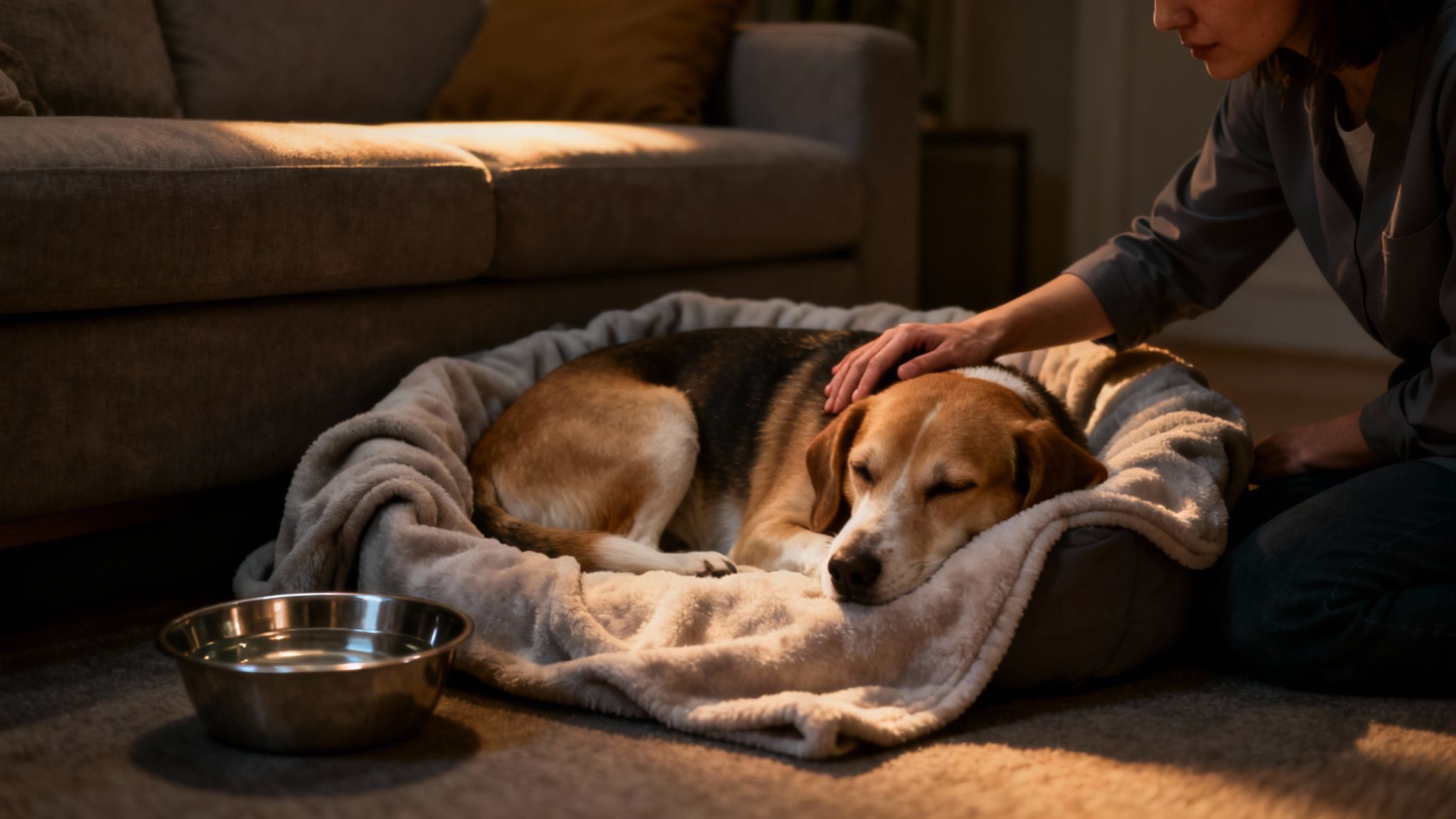
The moments right after a seizure are just as critical as the event itself. This window of time, known as the postictal phase, is often a period of deep confusion and disorientation for your dog. Your calm, grounding presence is the only anchor they have as they slowly find their way back to themselves.
This isn't just about first aid. It's a chance to turn a scary experience into a ritual of connection and healing. When you create a gentle, safe space for them to recover, you’re sending a powerful message of reassurance and deepening the trust at the very heart of your bond. You're helping them return to nature's simple rhythm of rest and recovery.
Creating a Recovery Nest
Once the seizure activity stops, your dog will probably seem dazed, wobbly, and may even be temporarily blind. They desperately need a quiet, comfortable sanctuary to re-center. This is when you create their "recovery nest."
Find a calm spot in your home with dim lighting, away from all the foot traffic and noise. Lay down their favorite soft blanket or bed. That familiar scent and texture will bring immediate comfort, like a warm hug for their frazzled nervous system.
Resist the urge to crowd them or force interaction. Your job right now is simply to hold space for them, offering your quiet presence as a source of stability. Sit near their nest, breathe deeply, and project an energy of peace. Your steadiness tells them everything is okay without you having to say a word.
Gentle Support and Reassurance
Your voice can be an incredibly powerful healing tool. Speak to your dog in a low, soothing tone, gently using their name. This helps reorient them and reminds them that you’re right there. Make sure to avoid any loud noises or sudden movements that could startle them.
After a few quiet minutes, you can offer a small bowl of fresh water. Many dogs are thirsty after a seizure, but don't push it if they show no interest. Just make it available. It’s best to hold off on offering food until they are fully alert and stable, as their coordination might still be off.
This gentle, patient approach helps their body and mind slowly reconnect. It’s a mindful practice that truly honors their need for a slow return to balance. The simple act of sitting quietly with them strengthens your connection, turning a moment of vulnerability into a profound expression of unconditional love.
Grounding Through Gentle Touch
Once your dog seems more aware and starts to seek you out, you can offer gentle, grounding touch. Try to avoid petting their head directly, as that can feel overwhelming. Instead, use long, slow, calming strokes along their back.
Think of it as helping their energy settle back into their body. This practice is not just calming for them; it’s grounding for you, too. Some caregivers find that exploring gentle energy work is a beautiful way to support their pet's recovery. You can learn more about how to create this kind of calming presence through practices like animal reiki and its benefits.
These quiet rituals are a way of reconnecting with the instinctual need for safety and care. You aren't just helping your dog recover from a seizure; you are guiding them back to their center, reminding them that they are safe, loved, and part of a steadfast pack.
Partnering with Your Vet for Long-Term Wellness
When your dog has a seizure, it can feel like your whole world stops. Navigating what comes next feels overwhelming, but figuring out the potential ‘why’ is the very first step toward finding a path forward. The good news is, you don’t have to walk this road alone. A solid, trusting partnership with your veterinarian is the absolute cornerstone of your dog’s long-term wellness.
Think of it this way: your vet is the expert navigator, and you are the expert on your dog's daily life, their little quirks, and subtle cues. Together, you’re an unstoppable team. Your careful observations paired with their medical knowledge create the complete picture needed to map out the best possible care plan.
Understanding the Causes of Seizures
Seizures happen for all sorts of reasons, and they’re more common than most people realize. One of the most frequent culprits is idiopathic epilepsy, a neurological condition that’s thought to be inherited. The term simply means there's no other identifiable cause for the seizures. It often shows up in dogs between six months and six years of age.
But seizures can also be a symptom pointing to something else going on.
Underlying health problems like liver disease or kidney failure can trigger them.
Accidental exposure to toxins is another potential cause.
In older dogs, a brain tumor might be a factor.
Your vet will likely run a series of diagnostic tests, like blood work or even an MRI, to start ruling these other possibilities out. This process is crucial because it clarifies whether you’re managing a primary seizure disorder or treating a completely different root problem. Your job here is to be your dog's advocate—ask questions, share your insights, and make sure they get the most attentive care.
How to Best Document Episodes for Your Vet
The information you bring to your vet appointments is invaluable. Honestly, your detailed notes can be the key that helps them spot patterns, understand the severity of the seizures, and fine-tune any treatment plans. Your mindful observation turns a scary event into powerful, actionable data.
When an episode happens, try to grab a notebook or your phone and jot down the following:
Date and Time: Pinpoint the exact time the seizure started and when it ended.
Duration: How long did the convulsions or physical signs last? Seconds? Minutes?
Physical Signs: Describe exactly what you saw. Was there paddling, stiffness, drooling, or a loss of bladder control? No detail is too small.
Pre- and Post-Behavior: Did you notice anything odd right before it began? And how did your dog act afterward? Were they disoriented, and for how long?
Video: A short video clip can be one of the single most helpful tools you can give your vet.
This logbook becomes a vital chapter in your dog's health story.
Proactive Wellness and Neurological Support
Beyond the vet’s office, you can support your dog’s neurological health with simple, daily practices that honor their wild instincts. It’s all about creating an environment that promotes balance and dials down stress, which can be a seizure trigger for some dogs.
A nutrient-rich, whole-foods diet provides the essential building blocks for a healthy brain. And creating a calm foundation by reducing environmental stressors, like constant loud noises or chaotic situations, can make a huge difference.
Most importantly, giving them natural outlets for their energy and instincts is profoundly supportive. Engaging their powerful sense of smell through activities like scentwork taps directly into their innate drive to explore the world. This kind of sensory enrichment is incredibly grounding and can help regulate their entire nervous system.
👉 https://www.withwildpack.com/dognoseworkguide.
By teaming up with your vet and weaving these wellness practices into your daily life, you're doing so much more than just managing a condition. You are actively nurturing your dog’s mind, body, and wild spirit.
Read more on:
Frequently Asked Questions
Can my dog have a seizure while sleeping?
Yes, absolutely. A seizure can happen while a dog is fast asleep, and these are often called nocturnal seizures. This is precisely why it’s so tricky to tell the difference between a really active dream and a neurological event. When a sleeping dog has a seizure, the signs often mirror those of a seizure in a waking dog—think body stiffening, violent shaking, and a complete lack of response. The biggest giveaway compared to a dream is that you absolutely cannot wake them up, not with your voice or even a gentle touch.
What does a mild seizure look like in a dog?
Mild seizures, which vets sometimes call focal or partial seizures, can be incredibly subtle and are easy to miss. They don't always look like the dramatic, full-body convulsions you might imagine. Instead, you might just see localized twitching in one leg or a facial tic on one side of their face. Other odd signs can pop up, too, like suddenly snapping at the air as if they're chasing invisible flies, or moments of compulsive licking or chewing that seem to come out of nowhere. Your dog might even be conscious during a mild seizure but look dazed, confused, or "zoned out." Catching and documenting these smaller, unusual moments is invaluable information for your vet.
How can I comfort my dog after a seizure?
Once a seizure is over, the most powerful thing you can offer is your own calm energy. That period right after, known as the postictal phase, can leave your dog feeling incredibly disoriented and scared. Your job is simply to create a safe, quiet bubble for them to land in. Here are a few gentle ways to help: speak to them in a low, soothing voice, dim the lights and turn down any loud noises, make a little "recovery nest" for them with a soft, familiar blanket, and offer some fresh water, but only after they seem more aware and steady. Don't force cuddles or interaction; just be present and let them come to you when they're ready.
When should I worry about my dog twitching in their sleep?
Those little twitches and muffled barks during sleep are totally normal! That's just a sign of healthy REM sleep and an active dream cycle, so there's no need to worry. Your concern should only kick in if what you're seeing crosses the line from gentle twitching into something more alarming. It's time to worry if the movements look violent and uncontrolled rather than soft and rhythmic. Other red flags are body-wide stiffness, a loss of consciousness where they can't be roused, or if they lose control of their bladder or bowels. If you see these signs, it's time to get in touch with your veterinarian.