Do Dogs Dream in Color? A Journey into Their Inner World
Table of Contents
Your Dog's Dream World, Unveiled
The Science of a Dog's Dream
Seeing the World Through Your Dog's Eyes
What Do Dogs Dream About Anyway?
Creating a Dream-Nurturing Sanctuary
Frequently Asked Questions
Key Takeaways
Yes, in Their Own Palette: Dogs likely dream in color, but not like us. Their world is painted in shades of blue, yellow, and gray, reflecting their dichromatic vision.
Dreams Mirror Daily Life: A dog's dreams are woven from their daily experiences—the scents they follow, the games they play, and the connections they make.
Scent is a Key Player: While we focus on color, a dog's dream is likely dominated by the rich tapestry of smells they encountered during the day.
Enrichment Fuels Sweet Dreams: Providing sensory experiences, like nosework and nature walks, gives your dog vibrant material for their nightly adventures, nurturing their wild spirit.
A Calm Space is Crucial: A safe, predictable sleep environment helps dogs achieve the deep, restorative rest needed to process their world and dream peacefully.
So, do dogs dream in color? The short answer is yes, but probably not in the same way we do. Think of their dream world as being painted in a beautiful, wild palette of yellows, blues, and grays. It’s less like a vivid technicolor movie and more like a classic film, full of life and movement, but with its own unique color story.
Your Dog's Dream World, Unveiled
When you catch your dog’s paws twitching or hear those little yips in their sleep, it’s natural to wonder what they’re chasing. Are they dreaming of that squirrel from the park? A long run on the beach? And what does that world even look like?
For a long time, the common myth was that dogs saw the world in black and white. We now know that's not true. Their world—and by extension, their dream world—is a unique sensory landscape, just not the full rainbow we experience.
A Glimpse Into Their World
Imagine you're walking through a forest at dusk. The fiery reds and oranges of the sunset have softened, and the world is washed in shades of blue, gold, and deep shadow. This is a pretty good approximation of your dog’s daily reality.
Their color vision is perfectly adapted for their ancestral instincts. It's not about seeing every color; it's about detecting movement and contrast—skills that are essential for a creature tuned into the subtle rhythms of the wild. So, when they dream, they're likely re-living their day's adventures in this beautifully filtered light.
More Than Just Sight
But here's the thing: the colors of their dreams are just one small piece of the puzzle. A dog’s primary sense is smell, a tool so powerful it’s almost like a superpower. They interpret the world through scent, so it’s a safe bet their dreams are rich with the scent stories they collected all day.
That’s where we, as their pack leaders, come in. By providing enriching sensory experiences—new trails to sniff, interesting textures to feel, safe things to chew—we give them vibrant material for their nightly adventures. A simple walk isn't just exercise; it's a scent exploration that fuels their dreams and nourishes their wild spirit.
Ready to help your dog build an even richer inner world? Engaging their natural instincts through scentwork is one of the most powerful ways to connect with them. Download our free nosework guide to start this beautiful journey together. 👉 https://www.withwildpack.com/dognoseworkguide
Ultimately, their dreams are a direct reflection of their waking life. By honoring their innate way of being, we help them thrive, both awake and fast asleep.
The Science of a Dog's Dream
Ever wondered if your dog dreams in color? To get to the bottom of it, we need to pull back the curtain on the science of their sleep. Just like us, our dogs cycle through different sleep stages every night, dropping into that magical phase known as REM, or Rapid Eye Movement, sleep.
This is where the real action happens. During REM, their brain gets incredibly busy, sorting through and processing everything from their day. It's the brain's chance to file away every new scent from the trail, every happy chase at the park, and every quiet cuddle on the couch.
The Brain on Rewilding
Think of this nightly ritual as a kind of mental rewilding. It helps them lock in what they’ve learned and make sense of their world, strengthening the neural pathways that are tied to their natural instincts. It’s a vital process that nourishes their spirit while they rest.
You've probably noticed that puppies and smaller dogs seem to dream more often, with their tiny paws twitching away. That's because their developing minds are constantly downloading a massive amount of new information, and all that extra dream-time helps them consolidate it. You can dive deeper into the fascinating reasons why dogs dream in our dedicated article.
Evidence from the Lab
So, how do we know they're actually replaying their day? We can't exactly ask them, but science has given us some incredible clues.
When you see those twitching paws and hear soft whimpers, those aren't just random movements. They're likely chasing dream squirrels in a world of blues and yellows. One groundbreaking study tracked the brainwaves of rats as they ran a maze. Later, when the rats were in REM sleep, their brains replayed the exact same maze-running patterns. It was a huge breakthrough, strongly suggesting they were dreaming of their experience.
Since dog brains are far more complex and follow similar sleep cycles, this research gives us powerful evidence that our pups relive their waking adventures in dreamland. These nightly movies aren't just random static; they're deeply connected to a dog's daily life. The richer their waking hours, the more vivid their dream world becomes.
Seeing the World Through Your Dog's Eyes
Let's try a little thought experiment. Imagine stepping into the beautiful, muted world our dogs see every single day. While we humans are blessed with three types of color-detecting cone cells in our eyes—giving us the full rainbow—dogs only have two. This is what’s known as dichromatic vision.
But this doesn't mean their world is a dull black-and-white movie. Not at all. Instead, it’s painted in a gorgeous palette of rich blues, vibrant yellows, and a whole spectrum of grays in between. Think of it as a sensory landscape perfectly tuned for a creature that thrives on the subtle shifts in nature.
The Muted Rainbow
To really get a feel for what your dog sees, picture that bright red ball you love to throw. To your dog's eyes, it most likely appears as a dark, yellowish-brown object sitting against the greenish-beige of the grass. Their vision isn't less vibrant, just different.
That’s because their visual system is built to prioritize other kinds of information. Instead of a huge range of colors, their eyes are masters at detecting movement and contrast, especially in low light. (You can dive deeper into this by exploring how dogs perceive dark in our guide). This amazing adaptation is a direct line back to their wild instincts, where spotting the flicker of a rabbit at dawn was far more important than admiring a red flower.
This little map breaks down how all those daily experiences get processed while they sleep.
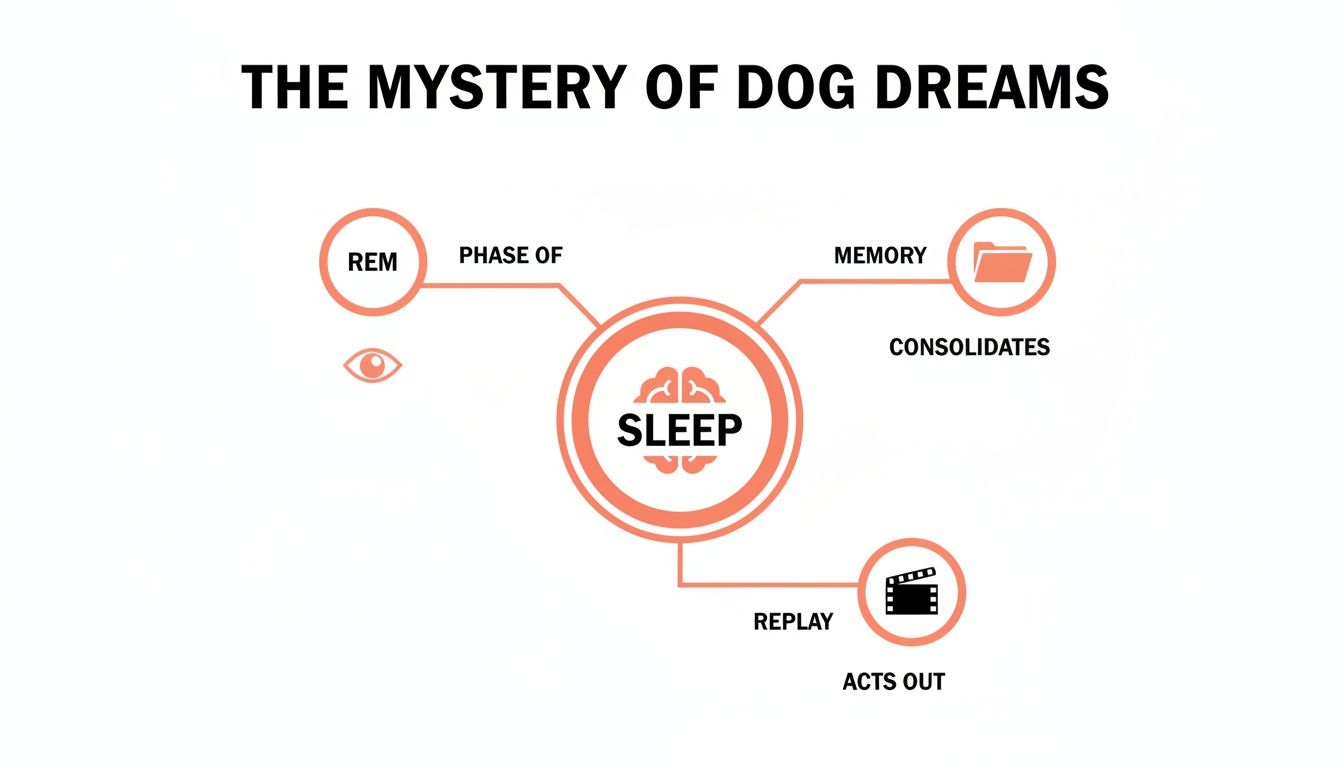
As you can see, there's a straight line from their daily memories to REM sleep, which is where the brain replays and solidifies these moments into what we call dreams.
Dreams in Blue and Yellow
So, when we come back to our big question—"do dogs dream in color?"—the answer is a gentle yes. They almost certainly do, but their dreamscapes are painted with their waking palette.
That squirrel they chased is likely a blur of gray against a soft blue sky. And honestly, the exciting smells of the trail are probably the most vivid part of the whole dream experience for them.
Understanding how they see the world helps us connect on a much deeper level. We can appreciate that their world is designed for a different purpose, one that values motion, shadow, and scent above all else. When we give them enriching activities, we're not just giving them exercise; we're giving them beautiful, sensory-rich material to paint their dreams with. We’re nurturing their inner wild, one blue and yellow memory at a time.
What Do Dogs Dream About Anyway?
So, if a dog’s brain really does hit the "replay" button on their day during sleep, what incredible stories must be unfolding in their minds? It’s a beautiful thought—their dreams are likely a tapestry woven from their most primal, memorable moments.
Think about what truly makes your dog come alive. Is it the blur of a favorite yellow ball zipping across the yard? The familiar ritual of greeting their pack on a neighborhood walk? Maybe it’s the complex scent story they spent ten minutes deciphering in the park.
These are the very scenes science suggests are playing out behind their sleeping eyes. Their dreams are a direct reflection of their waking life, a mental playground where they get to relive their best, most dog-like moments.
The Stories of a Sleeping Dog
You've probably seen it. A Pointer might twitch as they dream of a phantom bird just out of reach, their body instinctively pointing even in their sleep. A playful terrier could be reliving a joyful romp, their little paws kicking as they chase a dream companion across a field.
These dream narratives are deeply plugged into their innate behaviors and daily experiences. This is exactly why providing enriching, nature-based activities is so crucial. It doesn’t just make their waking hours better; it provides the raw material for healthy, happy dreams.
When we honor their natural drives, we’re nourishing their inner wild—both awake and asleep. You can learn more about interpreting these nightly adventures by exploring what your dog's dreams might mean. Every little twitch tells a story.
Fueling Their Dream World
So, how can we help our dogs have the sweetest dreams? By filling their days with sensory adventures that speak directly to their soul.
Scent Exploration: Let them take the lead on walks. Allowing them to follow interesting smells helps them build a rich, complex scent map of their world.
Instinctual Play: Engage them in games that tap into their natural drives—think chasing, retrieving, or a good old-fashioned game of tug.
Social Connection: Safe, positive interactions with other dogs and trusted people build a strong sense of pack and belonging.
Each of these experiences gives their brain vibrant material to work with during that critical REM sleep. When we create a life that allows them to be their most authentic, wild selves, we are also helping them build a rich and restorative dream world.
To help your dog tap into their most powerful natural instinct, download our free nosework guide and start exploring the world of scent together.
👉 https://www.withwildpack.com/dognoseworkguide
Creating a Dream-Nurturing Sanctuary

Knowing our dogs are busy processing their daily adventures while they sleep, how can we help foster sweet, peaceful slumber? It really all starts with intention. A sleep sanctuary for your dog is so much more than a comfy bed; it’s a space that signals safety, calm, and deep relaxation.
By honoring their need for deep, uninterrupted rest, we’re doing more than just making sure they're physically refreshed. We're supporting their emotional and spiritual wellbeing, giving them the space to fully integrate their daily adventures and rewild their spirit overnight. A calm home creates a calm dog, and a calm dog has happy dreams.
Crafting a Calming Bedtime Ritual
Consistency is a language our dogs understand loud and clear. Creating a simple, predictable bedtime ritual is a powerful way to help your dog’s nervous system unwind, signaling that it’s time to rest.
This ritual doesn’t have to be anything complicated. It can be as simple as a few minutes of gentle massage, focusing on their shoulders and ears, or just some quiet cuddle time away from screens and other distractions. The goal is to create a pocket of peace that gently guides them toward sleep.
Designing Their Sacred Space
Where your dog sleeps truly matters. Their den should be a quiet, comfortable space tucked away from the main traffic and noise of the household. Think of it as their personal nest, a place where they can feel completely secure.
Consider adding a few of these elements to their sleeping area:
A bed with supportive cushioning to ease their joints.
A familiar blanket that holds their scent (and yours!).
A quiet corner where they won’t be startled by sudden movements or sounds.
Calming, pet-safe scents can also help set a tranquil mood. A light mist of lavender or chamomile on their bedding can work wonders. You can even explore how sound influences their state of being through practices like a sound bath designed for dogs, which uses gentle frequencies to promote deep relaxation.
Ultimately, your own energy plays the biggest role of all. When you are calm and present, your dog feels it. By mindfully creating a sanctuary for rest, you’re nurturing the energetic balance of your home and strengthening the soulful bond you both share—making sure their dream world is as peaceful as their waking one.
Read more about...
Frequently Asked Questions
Is my dog having a nightmare?
It’s tough to watch your dog whimper or twitch and not worry they’re having a nightmare. Just like us, they can have bad dreams, which often spring from a stressful or scary experience. The best course of action is to let them sleep it out. Waking a dog suddenly can leave them disoriented and scared, which might even cause a fearful snap. Just being calmly present is usually all the reassurance they need.
Why do dogs bark or whimper in their sleep?
Those little yips, muffled barks, and soft whimpers are totally normal. They're called sleep vocalizations, and they’re a classic sign your dog has entered the active, dreaming stage of REM sleep. Think of it as them talking in their sleep! These sounds are almost always tied to what's happening in their dream—they might be "chatting" with a dog park buddy or telling off a dream squirrel.
Should I wake my dog up from a dream?
As tempting as it is to "rescue" them from a seemingly bad dream, it's almost always better to let sleeping dogs lie. Their sleep cycles are crucial for both their physical and mental health. Interrupting that deep, restorative REM sleep can throw off the whole process. If you feel you must wake them, never shake them. Instead, stand at a distance and gently say their name a few times to slowly pull them back to the waking world.
Do puppies dream more than adult dogs?
They sure do! You’ll notice that puppies and senior dogs tend to dream much more often than healthy adult dogs. For puppies, it’s all about processing the massive amount of new information they absorb every single day. Their brains are working overtime during sleep to sort, categorize, and store it all. This extra dream time is a critical part of their cognitive development.