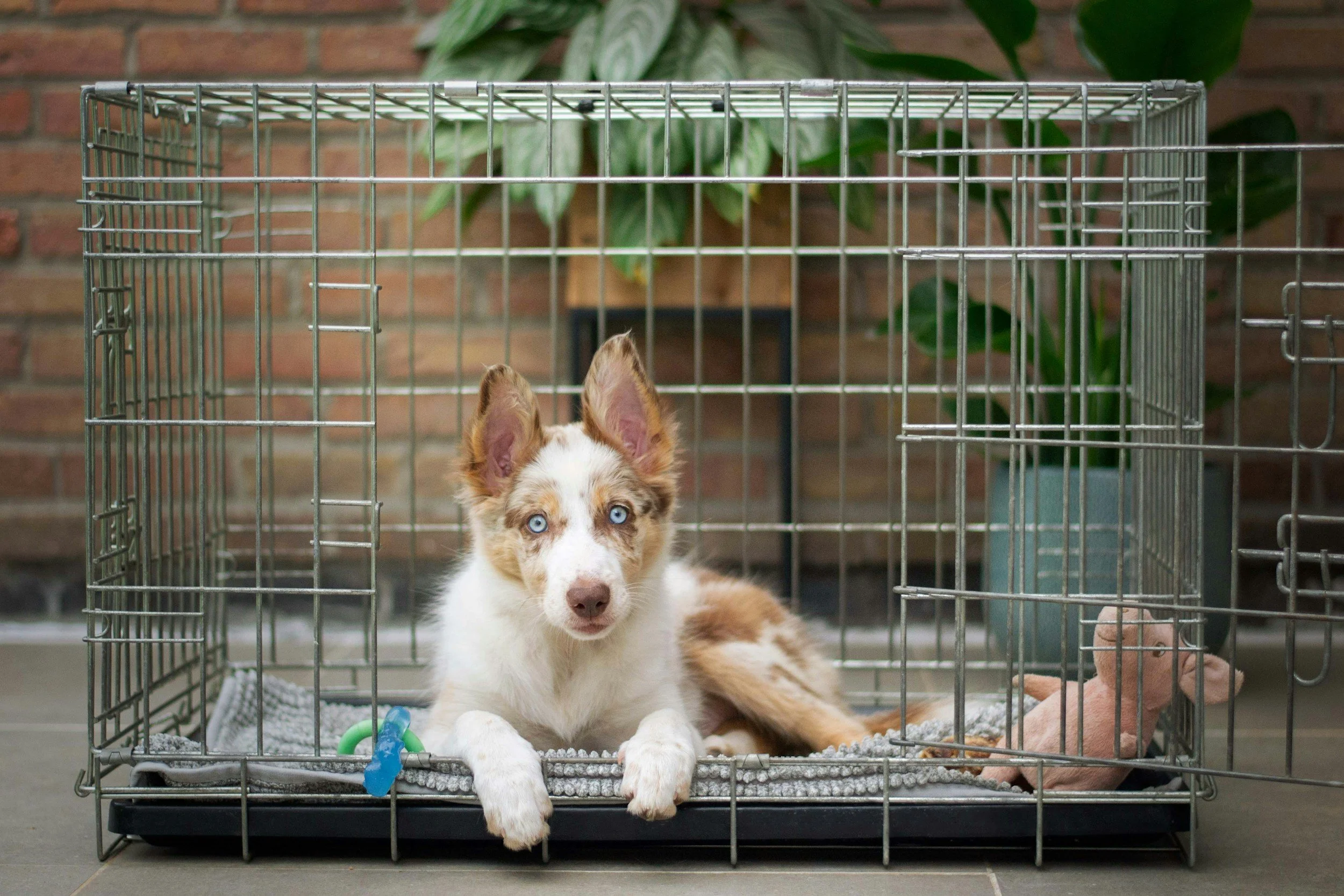
Editor's Note: This article was written by a Certified Fear Free trainer. At Wild Pack, every approach we share is instinct-led, nervous-system-first, and rooted in fear-free training.
Border Collie crate training can feel like a contradiction. You have a dog bred to work for hours across open hills, and you're asking them to settle in a small space and do nothing.
Done well, though, a crate isn't confinement. It becomes a safe haven: a predictable, quiet place where a busy collie brain can finally switch off. For a breed that often struggles to rest on its own, that can be one of the most valuable things you teach.
The key is how you introduce it. A rushed or forced approach can turn the crate into a source of stress. A calm, fear-free approach turns it into your dog's favorite place to recharge.
The short answer: To crate train a Border Collie, introduce the crate slowly with positive reinforcement, decompress your dog with a few minutes of sniffing before each session, and build time in small steps. Keep early sessions to just a few minutes, and never use the crate as punishment.
Table of Contents
Key Takeaways
Why Crate Training Helps Border Collies
Setting Up the Crate
Step-by-Step Fear-Free Crate Training
Decompress First, Then Crate
Common Mistakes and Troubleshooting
Frequently Asked Questions (FAQs)
Key Takeaways
A crate can give a busy Border Collie a predictable place to decompress and rest.
Introduce the crate gradually with positive reinforcement, and never use it as punishment.
Decompress your collie with sniffing or nosework before crate time, so they go in calm rather than wired.
Crate time should never replace exercise, mental work, or time with you.
If your collie shows signs of real distress in the crate, slow down and consider professional support.
Why Crate Training Helps Border Collies
Border Collies are wired to stay alert, scan for movement, and react quickly. Those traits made them exceptional working dogs, but in a home they can make it hard to truly rest. Many dog owners notice their collies patrol windows, track every sound, and follow you from room to room long after their body needs a break.
A well-introduced crate can help by giving your dog:
A clear signal that it's time to rest. Predictable routines help a busy nervous system wind down.
Fewer triggers. A covered crate in a quiet spot reduces the visual input that keeps collies on alert.
A safe space of their own. Many dogs choose to retreat to their crate once it feels secure.
Safe management. It prevents chewing, counter-surfing, and other habits while your puppy or adolescent collie is learning. The same skills also carry over to car crates for safer travel.
That said, Border Collies can find crate training harder than many breeds. Their sensitivity means a rushed introduction can create lasting worry, and a collie with pent-up energy may bark, dig, or fixate in the crate. That's why the approach matters as much as the crate itself. For more on the bigger picture, see our guide to Border Collie dog training.
Setting Up the Crate
A few setup choices make a big difference for a sensitive collie.
Size: Your dog should be able to stand, turn around, and lie stretched out comfortably. For puppies, a crate with a divider lets you adjust the space as they grow. Some owners pair dog crates with a puppy pen to give young collies a little more room.
Location: Choose a quiet spot that's still part of family life, like a corner of the living room, rather than an isolated laundry room. Avoid placing it facing a busy window.
Coverage: Many collies settle better with a breathable cover over the top and sides, which reduces visual stimulation. Leave the front open at first so your dog can see you.
Comfort: Add soft bedding your dog can't easily shred, and a familiar-smelling item like a worn t-shirt.
Enrichment: Keep a frozen lick mat or a safe, long-lasting chew ready for crate time. Licking and chewing both help dogs settle, and calm enrichment activities like these count toward your dog's daily mental stimulation.
Step-by-Step Fear-Free Crate Training
Move at your dog's pace. Some collies progress in days, others need a few weeks. In our training sessions, we keep early crate practice to 2 to 5 minutes, a few times a day. Only move to the next step when your dog is relaxed at the current one.
Step 1: Build a positive association
Leave the crate door open and scatter a few treats inside and around it. Let your collie explore on their own terms, with no luring or pushing. Feed meals near the crate, then just inside, then at the back.
Step 2: Add a cue
Once your dog is happily stepping inside, add a cue like "crate" or "bed" as they enter, and mark and reward when all four paws are in. Toss the next treat back out to reset, so going in becomes a fun, repeatable game. It works much like bed training, using the same positive reinforcement skills as basic obedience training.
Step 3: Build duration with the door open
Reward your dog for lying down in the crate. Gradually stretch the time between rewards, then offer a lick mat or chew so settling becomes the natural next step.
Step 4: Close the door briefly
While your dog is calmly working on a chew, close the door for a few seconds, then open it before they become unsettled. Slowly increase the time, keeping it well within your dog's comfort zone.
Step 5: Step away

Start by moving a few steps away, then leaving the room for short periods. Return before your dog gets worried, and keep your comings and goings calm and low-key.
Step 6: Make it part of the routine
Use the crate for naps, quiet time after walks, and overnight, so it becomes a predictable part of your collie's day rather than a sign that you're leaving.
Decompress First, Then Crate
The most common reason Border Collies struggle in the crate isn't the crate itself. It's that they go in wired. A collie with an activated nervous system will bark, paw, or spin no matter how good your setup is.
That's why calming the nervous system always comes first. Before crate time, give your dog a few minutes of slow, sniff-based activity. Sniffing is one of the most natural ways for a dog to calm down: it slows them down, provides mental stimulation, and gives that herding drive a purposeful job. A short scent search before crate time can be the difference between a dog who protests and a dog who sighs and settles.
Over time, this becomes a grounding ritual: sniff, settle, rest.
Want to build that ritual? Our Nosework 101 Guide walks you through simple scent games to help your collie decompress before crate time and beyond.
Common Mistakes and Troubleshooting
Using the crate as punishment. Sending your dog to the crate when they've done something wrong teaches them the crate is a bad place. Keep every crate experience positive. The American Veterinary Society of Animal Behavior recommends reward-based methods only, noting there's no evidence that aversive methods work better.
Moving too fast. Closing the door and leaving before your collie is comfortable is the fastest way to create crate anxiety. If your dog is struggling, go back a step.
Crating instead of meeting needs. A crate can't replace exercise, mental work, or connection. A collie who spends long stretches crated without enough exercise and mental stimulation will find it much harder to settle.
Letting them out for barking. If your dog barks and you open the door, they learn that barking works. Wait for a brief pause, or better yet, go back a step so they don't reach that point.
When to get help: If your collie drools heavily, pants, tries to escape, or injures themselves trying to get out, stop crate training and talk to your vet or a qualified trainer. These can be signs of distress or separation anxiety that need a different plan.
Read more about Border Collie dog training, dog nosework, and calming your Border Collie.
Frequently Asked Questions (FAQs)
How long does Border Collie crate training take?
It varies. Some collies are comfortable within a few days, while sensitive dogs or rescues may need several weeks. Progress at your dog's pace, and only move forward when they're relaxed at each step.
How long can a Border Collie stay in a crate?
It depends on age and individual needs. Young puppies need frequent potty breaks, and even adult collies shouldn't spend long stretches crated during the day. A crate works best for naps, quiet time, and overnight sleep, alongside plenty of exercise, mental stimulation, and time with you. Part of responsible dog ownership is making sure the crate never replaces those needs.
Should I cover my Border Collie's crate?
Many collies settle better with a breathable cover, since it reduces visual stimulation. Introduce it gradually, leave the front open at first, and make sure there's good airflow.
What should I put in my collie's crate?
Soft bedding your dog can't easily destroy, a familiar-smelling item, and something to lick or chew, like a frozen lick mat or a safe, long-lasting chew. Remove anything your dog could swallow or shred.
My Border Collie barks in the crate. What should I do?
First, make sure they've had enough exercise, mental work, and a chance to decompress before crate time. Then go back a step in your training. Barking usually means your dog isn't ready for the current level yet. If barking comes with signs of panic, talk to your vet or a qualified trainer.
Can crate training help with separation anxiety?
A crate can help some dogs feel secure, but it isn't a fix for true separation anxiety, and confinement can make panic worse for some dogs. If your Border collie panics when left alone, talk to your vet or a qualified trainer about a tailored plan.
About the Author
Lindsay is a Certified Fear Free Trainer and the founder of Wild Pack, with 15+ years of experience in wellness. Her instinct-led, nervous-system-first approach helps dogs and their people find calm, confidence, and deeper connection. Based in Seattle, she works with dogs locally and virtually.
Sources
Humane Dog Training Position Statement, American Veterinary Society of Animal Behavior