Doodle Training That Works With Their Instincts, Not Against Them
A fear-free training guide to turning your Doodle’s big brain, big heart and big energy into calm confidence
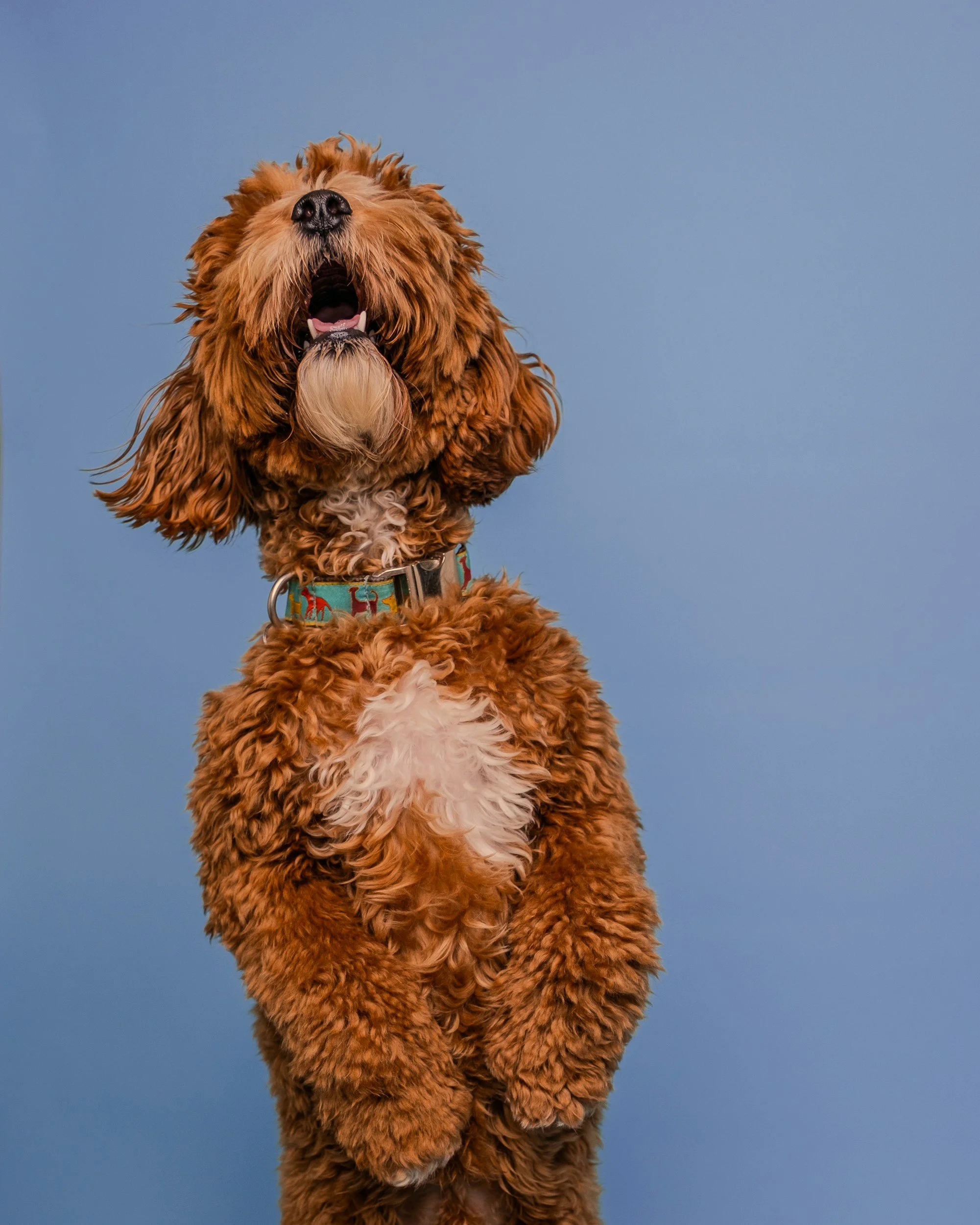

Editor's Note: This article was written by a Certified Fear Free trainer. At Wild Pack, every approach we share is instinct-led, nervous-system-first, and rooted in fear-free training.
Dear Doodle Parent,
Does your Doodle…
❌ Jump on everyone, every time?
❌ Mouth, grab or nip at hands, clothes and leashes?
❌ Get the zoomies and struggle to settle down?
❌ Pull on leash toward every person, dog and smell?
❌ Struggle when left alone, even for a short time?
❌ Wriggle, nip or panic during brushing and grooming?
If any of that sounds familiar, you're not alone and your Doodle isn't being difficult. Most Doodles are a mix of two smart, people-loving working breeds, which means a busy brain, a big social drive and a lot of energy. When those needs aren't met, or your dog doesn't yet know how to handle all that excitement, it spills out as jumping, mouthing and zoomies.
Good Doodle training doesn't dampen their spirit. It gives it direction.
“The habits you build today become the dog you live with tomorrow.”

Doodle Personality Traits
Doodles are Poodle crosses, most often with a Golden Retriever or Labrador. The Labradoodle was first bred in Australia in 1989 by Wally Conron of the Royal Guide Dog Association of Australia, as a low-shedding guide dog. Because Doodles are crossbreeds, not a standardized breed, personalities vary from dog to dog, and they aren't automatically easier to train: a 2026 Royal Veterinary College study of more than 9,400 dogs found popular Poodle crosses often show more excitability and fear than at least one parent breed. Still, most Doodles share a few traits:
Smart. Poodles, Golden Retrievers and Labradors all rank among the most trainable breeds. Doodles learn fast, which means they pick up unwanted habits fast too.
People-obsessed. Most Doodles want to be with you, greet everyone and be part of everything. It's one of their best qualities, and it's also why jumping and separation struggles are so common.
High-energy. Many Doodles, especially standards and young dogs, have far more energy than their teddy-bear looks suggest.
Mouthy and playful. Retrievers were bred to carry things gently in their mouths, so grabbing, chewing and carrying come naturally.
Sensitive. Many Doodles are sensitive to noise, change and handling. Harsh corrections or rushed grooming can make them anxious.
Varied by mix and size. A mini Goldendoodle, a standard Labradoodle and a Bernedoodle can behave very differently. Look at your dog's parent breeds, size and individual temperament, not just the label.
Understand these traits, and most "problem" behaviors start to make sense. Work with them, and those same traits become your Doodle's greatest strengths.

Principles for Training a Doodle
To truly support a Doodle, we recommend a three-part approach, the same foundation behind our Calm Canine OS™:
Use reward-based, fear-free methods. Doodles are sensitive and deeply people-focused, so the training methods you choose matter. Harsh corrections can make them anxious or confused, while positive reinforcement builds trust and a willing partnership. Reward the behavior you want with training treats, praise or play, and your Doodle will offer more of it.
Channel instinct instead of suppressing it. Telling a Doodle to stop jumping, mouthing or carrying things rarely works, because the drive to connect, retrieve and play doesn't go away. Instead, give it an appropriate outlet. Calm greeting routines, retrieving games and scent work satisfy the same needs.
Regulate before you train. An overexcited dog can't learn. If your Doodle is zooming, jumping or can't settle, start by helping them decompress with sniffing, calm routines and rest. Learning comes easier when your Doodle is in a calm state.

Jumping, mouthing, zoomies and not being able to settle can look like separate problems. But they often share the same roots: a busy, social brain, a nervous system that tips into overexcitement easily, or both. That's why supporting regulation is often the best place to start. Here is a list of common Doodle challenges and how to start addressing them.
✅ Jumping and overexcited greetings. Doodles love people, and they want to say hello up close. What helps: teaching a calm alternative like a sit or four paws on the floor, rewarding calm with training treats before giving attention, and keeping greetings low-key until your Doodle can handle more.
Common Doodle Training Challenges and Tips
✅ Mouthing and grabbing. Retriever instincts make for busy mouths. What helps: redirecting to toys, giving them appropriate things to carry, and calmly pausing play when teeth touch skin.
✅ Zoomies and trouble settling. Many Doodles go from zero to wild in seconds. What helps: predictable routines, a settle cue on a mat, balancing exercise with mental stimulation, and protecting rest, especially for puppies.
✅ Separation anxiety and velcro behavior. Their people-focus can make time alone hard. What helps: building alone time gradually, rewarding calm on a mat, and keeping departures and returns low-key.
✅ Leash pulling. To a Doodle, every person, dog and smell is exciting. What helps: rewarding a loose leash (small, soft training treats work best on the move), using sniff breaks as a reward, and practicing in quieter places first.
✅ Grooming and handling stress. Doodle coats need frequent brushing and regular professional grooming, which can be overwhelming for a sensitive dog. What helps: cooperative care, with short, positive handling sessions, brushing paired with treats, and letting your dog take breaks.


“The wild isn't something to train out — it's something to honor”
Training Through Every Life Stage
Puppy. Start positive reinforcement training early with short, fun sessions, and focus on gentle socialization, handling and grooming practice from day one, along with redirecting mouthing and crate training that feels safe, never like punishment. Early experiences shape how your Doodle sees the world, so quality matters more than quantity.
Adolescent. From roughly six months to two years, many Doodles hit a "teenage" phase: more jumping, more zoomies and selective hearing. It's when many Doodle parents feel like training has gone backwards. Stay consistent and keep regulation front and center.
Adult. Keep recall skills sharp with regular practice, and give your Doodle jobs like scent work, retrieving games and short training sessions, alongside plenty of rest.
Senior. Their parent breeds are prone to joint issues like hip and elbow dysplasia, so shift to low-impact enrichment like nosework and keep grooming gentle. New behavior problems can be a sign of pain, so check with your vet.
Instant access · No special tools required

Where to Start with your Doodle
If your Doodle's challenges trace back to a nervous system in overdrive, the first step isn't more dog training or more exercise. It's helping them come back to calm.
That's where nosework, or scent discovery, comes in. Sniffing is one of the most natural ways for a dog to decompress, and it's especially powerful for Doodles. Searching for a scent gives their smart, busy brain a real problem to solve, satisfies the same drive that fuels retrieving and play, and slows them down instead of winding them up. Your dog sets the pace, makes their own choices, and finishes calmer and more focused than they started.
Best of all, it doesn't take long. A few minutes of scent work a day can become a grounding ritual, a reliable way to help your Doodle shift out of zoomie mode before walks, after busy days, or anytime they can't settle.
Ready to make it a daily ritual? Download our Nosework 101 Guide to help your Doodle decompress, focus, and find calm.
Instant access · No special tools required

Doodle FAQs
Are Doodles easy to train? Doodles are smart and eager to please, so they learn quickly. But they aren't automatically easier than other dogs. Their energy, excitement and sensitivity mean they do best with consistent positive reinforcement training and plenty of support to stay calm.
When should I start training a Doodle puppy? Start the day your Doodle puppy comes home, usually around eight weeks old. Keep early sessions short and gentle, and include handling and grooming practice from the start.
How do I stop my Doodle from jumping? Teach a calm alternative, like a sit or four paws on the floor, and reward it every time. Make sure everyone in the household responds the same way, and hold attention until your Doodle is calm, since jumping usually gets rewarded with attention.
When do Doodles calm down? Many Doodles start to mellow around two to three years old, though it varies with size, mix and individual temperament. Calm doesn't just arrive with age. It's a skill you can teach.
How do I get my Doodle used to grooming? Start early with short, positive sessions: touch paws and ears, introduce the brush, and pair each step with training treats. Let your dog take breaks, and look for a groomer who uses fear-free handling.
What's the difference between Goldendoodle and Labradoodle temperament? Both tend to be friendly and people-oriented. Goldendoodles are often described as softer and more sensitive, while Labradoodles can be more energetic and food-motivated. These are generalizations, and individual dogs vary widely.
Should I hire a dog trainer for my Doodle? Many Doodle parents start on their own, but a dog trainer can help you build a training plan that fits your dog's mix, age and challenges. Not every dog trainer uses the same training methods, so look for one who uses positive reinforcement methods, ideally a Fear Free Certified Professional, and avoid anyone who relies on harsh corrections.
About the Author

Lindsay is a Certified Fear Free Trainer and the founder of Wild Pack, with 15+ years of experience in wellness. Her instinct-led, nervous-system-first approach helps dogs and their people find calm, confidence, and deeper connection. Based in Seattle, she works with dogs locally and virtually. Learn more about booking a training session here.
Sources
Bryson, G. et al. (2026). Owner-reported undesirable behaviours in Cockapoos, Labradoodles and Cavapoos compared with their progenitor breeds. PLOS One. Royal Veterinary College summary
Coren, S. (1994). The Intelligence of Dogs. Free Press.
Duranton, C. and Horowitz, A. (2019). "Let me sniff! Nosework induces positive judgment bias in pet dogs." Applied Animal Behaviour Science.