Why Do Dogs Dream? Uncovering Your Dog's Sleep Secrets
Table of Contents
Your Dog's Secret Nightly Adventures
A Look Inside Your Dog's Dreaming Brain
How Dreams Help Your Dog Process Their Day
Rehearsing Wild Instincts in Their Sleep
What Dogs Dream About Most
A Guardian's Guide to Honoring Dog Dreams
Frequently Asked Questions
Key Takeaways
Yes, dogs dream, primarily during the REM (Rapid Eye Movement) stage of sleep, just like humans.
Dreaming helps dogs process daily experiences, consolidate memories, and regulate emotions.
Dreams are a safe space for dogs to rehearse their innate, wild instincts like chasing and tracking.
Research suggests dogs often dream about their most significant attachment: you, their human.
It's best not to wake a dreaming dog, as it can be disorienting for them. Providing a safe, calm environment supports healthy dream cycles.
Your Dog's Secret Nightly Adventures
Have you ever watched your dog’s paws twitch while they’re fast asleep? Or heard a soft, muffled whimper escape their lips? When you see this, you’re getting a rare glimpse into one of the most mysterious and soulful parts of their inner world.
The short answer is yes, dogs absolutely dream. Far from being just a cute quirk, it’s a deeply vital process rooted in their very nature.
Just like us, our canine companions experience REM (Rapid Eye Movement) sleep. This is the deep, restorative stage where the brain gets busy, replaying the day's events, sorting through memories, and even rehearsing ancient instincts.
Think of these dreams as a window into their world, reflecting everything from their daily explorations and thrilling squirrel chases to the profound bond they share with you. Their sleep cycles connect them to a wild, ancient rhythm—a nightly ritual of processing, resetting, and making sense of their lives.
Understanding this helps us appreciate the rich, unseen life our dogs lead when their eyes are closed. This journey into canine dreaming will help you connect with your companion on a much deeper, more intuitive level. We'll explore the science and the spirit behind it all, from those quiet whimpers to the frantic paw twitches that tell a story.
While dreaming is a perfectly healthy part of sleep, excessive noise or distress at night can sometimes point to other issues. That’s why it’s also helpful to understand why a dog might be barking all night. For now, let’s honor their secret nightly adventures and learn what they mean.
A Look Inside Your Dog's Dreaming Brain
To really get why our dogs dream, we need to peek inside their sleeping brain. This isn't a stuffy biology lesson—it’s about tuning into the beautiful, natural rhythms that guide your best friend. Just like us, a dog's sleep cycle isn't one flat line; it moves through distinct stages.
The real magic unfolds during REM (Rapid Eye Movement) sleep. This is where their brain lights up with activity, looking remarkably similar to our own brains when we're deep in a dream. During this stage, a part of the brainstem called the pons acts like a safety switch, creating a temporary paralysis that keeps them from physically sprinting after that dream squirrel.
Those little twitches, muffled barks, and running paws you see? Those are just charming little 'leaks' from their vivid inner world, escaping the brain's safety measures.
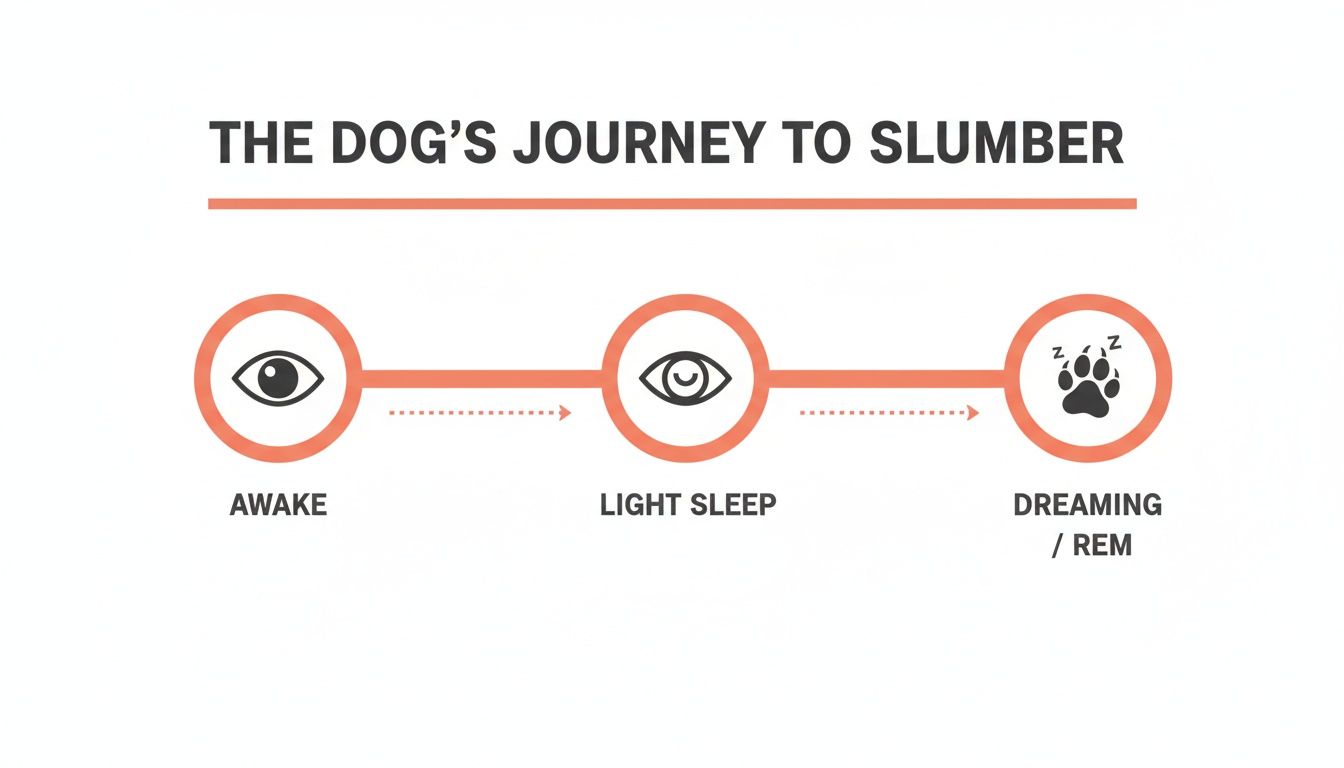
Watching them go through these stages helps you appreciate the profound reset their brain and body go through every single night. This is essential work, and creating a safe, calm space for them to sleep makes all the difference. For more ways to support their well-being, check out our other articles on dog health.
How Dreams Help Your Dog Process Their Day
Ever wonder what’s going on in that furry head when your dog’s paws start twitching in their sleep? It’s not just a nightly movie marathon; dreams are your dog's way of mentally filing away and making sense of their world.
One of the most vital functions of dreaming is memory consolidation. Think of it as their brain’s quiet, after-hours work of sorting through all the sensory information from the day. That new scent they obsessed over on your walk, the training command they finally nailed, even the squirrel they almost caught—all of these moments get replayed. This repetition is what strengthens the neural pathways essential for learning and remembering things long-term. In fact, studies on canine sleep show that a dog’s brain activity during REM sleep is incredibly similar to our own when we dream, suggesting they’re reliving their waking hours, too.
This mental processing isn't just for skills and memories; it’s also crucial for emotional regulation. Dreaming helps them process interactions with other dogs, new people, and even you. When we fill their days with positive experiences, like playing some fun dog mental stimulation games, we're directly fueling the content of their dreams. This gives their brain meaningful, positive data to integrate overnight, helping them wake up feeling more balanced, confident, and ready for another day of adventure with you.
Rehearsing Wild Instincts in Their Sleep
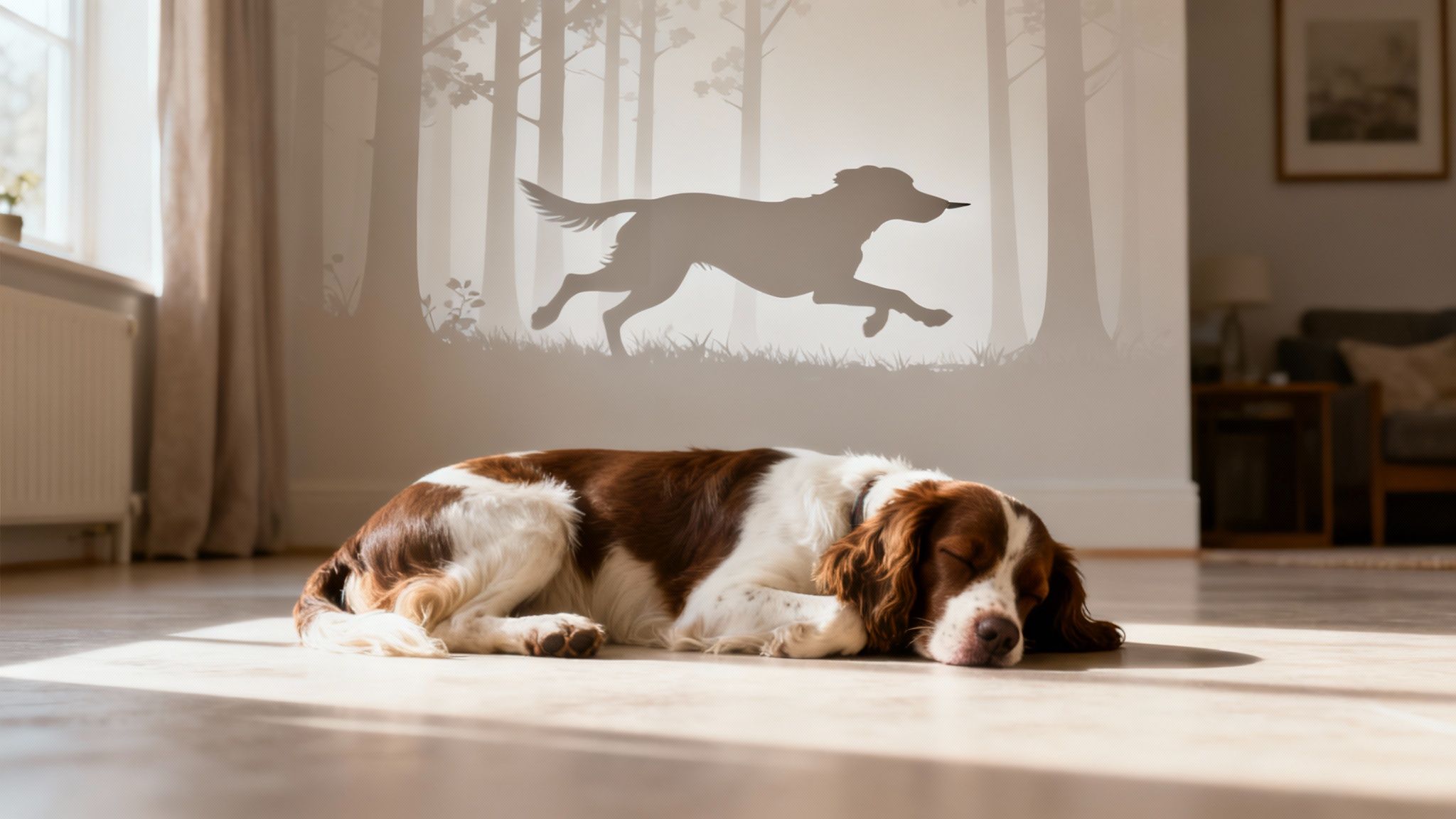
Long before they were our couch companions, dogs were wild animals with a deep well of survival instincts. Dreaming offers a safe, internal landscape where they can rehearse these ancient behaviors, keeping their innate spirit alive and well. It’s their own private training ground.
This isn’t just a nice thought; it’s backed by some fascinating science. In sleep studies, researchers found a way to temporarily bypass the part of the brain that keeps muscles still during REM sleep. And what happened? The dogs physically acted out their dreams. Pointers pointed at nothing and spaniels flushed invisible birds, showing just how deeply dreaming is tied to hardwired actions like chasing and tracking.
When we engage our dogs in activities that honor these natural drives, we’re essentially giving them vibrant material for these nightly rehearsals. Our guide to nosework training for dogs shows you exactly how to enrich their waking hours, which in turn fuels their instinctual dream world and strengthens that beautiful connection to their wild heart.
What Dogs Dream About Most
So, after diving into the neuroscience behind their dreaming brains and all that instinctual rehearsal, what is the number one thing your dog is replaying in their nightly adventures?
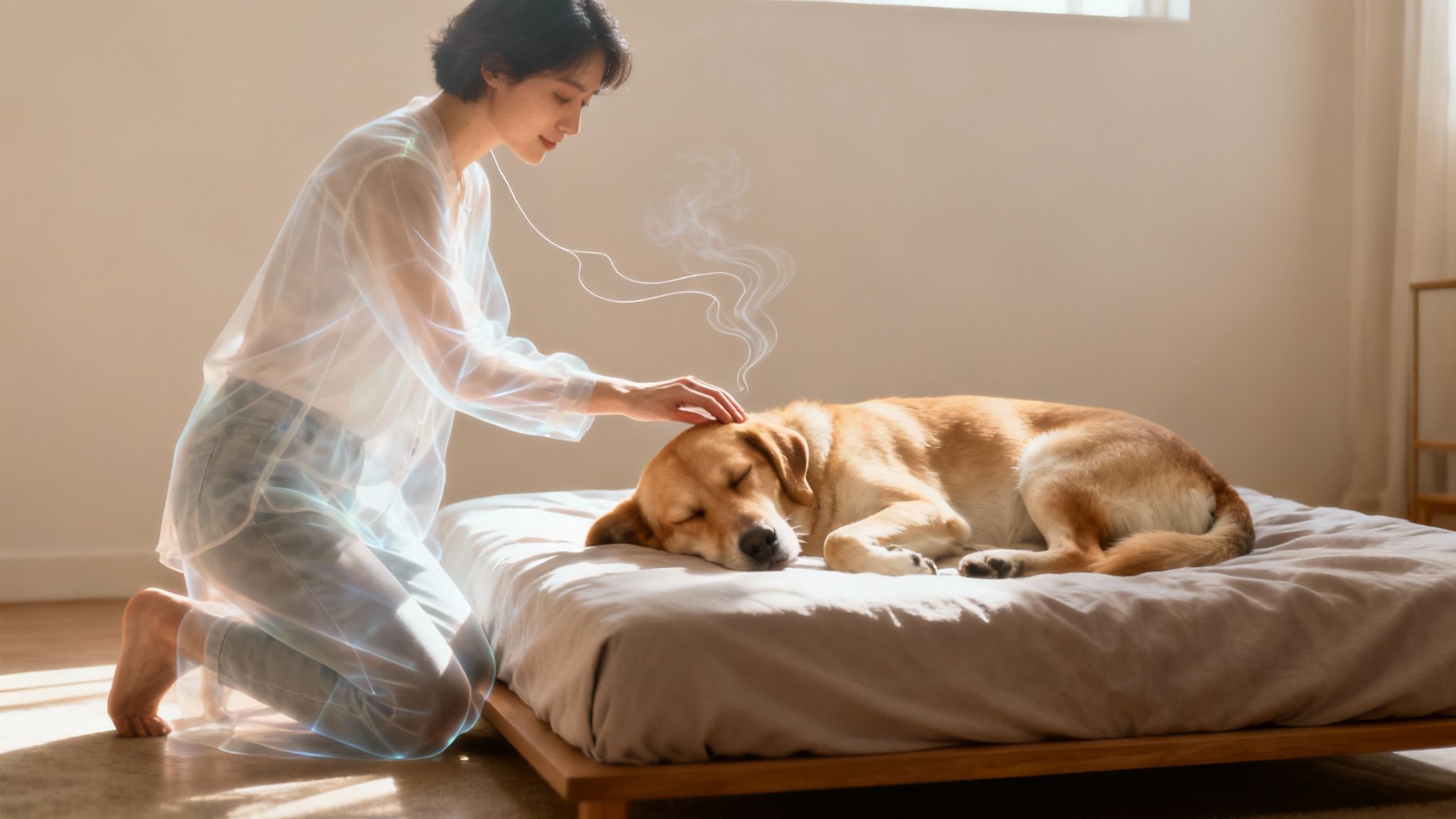
The answer is actually beautifully simple: you. This is the soulful heart of why dogs dream.
Experts believe that, much like us, dogs dream about what matters most in their lives. And for our devoted companions, that usually means our face, our unique scent, and the familiar sound of our voice. As one Harvard psychologist explains, dogs are so attached to their humans that it’s highly likely their dreams are filled with pleasant moments spent with us.
Every walk, every cuddle on the couch, every training session—these moments become treasured memories re-lived in their subconscious. These dreams reinforce their feelings of safety, connection, and belonging. It’s a beautiful thought, isn't it? Our bond doesn't just exist in our waking hours; it’s woven into the very fabric of their sleep.
One of the best ways to encourage sweet dreams for your companion is to strengthen that connection through shared, instinct-driven memories. Ready to make some dream-worthy adventures together?
Download our free nosework guide to get started. 👉 https://www.withwildpack.com/dognoseworkguide
A Guardian's Guide to Honoring Dog Dreams
Once you understand why your dog dreams, the natural next question is how we, as their guardians, can support this vital process. Honestly, creating a home that honors their dream time is one of the deepest ways you can show your love.
You've probably heard the old wisdom to "let sleeping dogs lie," and there’s so much truth to it. Waking a dog from a deep or particularly active dream can be incredibly jarring and confusing for them. It’s always best to let their dream cycles run their natural course.
So, how do you create the perfect sleep sanctuary? It starts with a comfortable and secure space they can call their own. A cozy nook with a specialized calming dog bed can work wonders. A consistent, quiet evening routine also helps signal to their body and mind that it's time to rest, repair, and dream.
While a bit of twitching, whimpering, or even little "woofs" are totally normal, it’s good to know the difference between a dream and a seizure. Seizures often look quite different—think stiff limbs, a potential loss of consciousness, and disorientation afterward. Simply honoring your dog's rest and giving them a safe space to process their day is a beautiful way to nurture their total well-being.
Read more about...
Frequently Asked Questions
Do dogs have nightmares?
Yes, it’s very likely they do. Just as dogs can dream about joyful, everyday things like chasing squirrels or getting belly rubs, their brains can also process stressful or frightening events through dreams. If you notice your dog crying out, whimpering, or making agitated movements in their sleep, they may be having a nightmare. It’s simply their mind’s natural way of working through a negative experience. The best thing you can do is just be a calm, reassuring presence nearby.
Should I wake my dog from a bad dream?
As tempting as it is to scoop them up for a comforting cuddle, it's generally best not to wake a dreaming dog, even if it looks like a nightmare. A dog startled awake from a deep or intense dream can become disoriented and might react defensively out of sheer confusion. Think of being shaken awake from a scary dream yourself—it takes a moment to remember where you are. If you feel you absolutely must intervene, avoid touching them. Instead, try softly calling their name from a distance. Often, the gentle sound of your voice is enough to soothe them without jolting them out of their essential sleep cycle. For those with dogs who have consistently restless nights, exploring solutions like natural supplements for dog anxiety can also be helpful for fostering more peaceful sleep.
Do puppies and senior dogs dream differently?
They certainly do, and it beautifully reflects what’s happening in their lives at that moment. Puppies have a massive amount of new information to process every single day—new sights, sounds, smells, and lessons. Because of this, they spend much more time in REM sleep than adult dogs, dreaming more frequently and vividly as their brains build crucial connections. Senior dogs, on the other hand, might dream less often as their sleep patterns naturally shift with age. That said, their dreams remain a vital part of maintaining their cognitive health and processing their day-to-day experiences.
Can I influence my dog's dreams?
Absolutely. In many ways, you are the primary architect of your dog's dream world. When you fill their days with positive experiences, loving interactions, and enriching activities that tap into their natural instincts, you provide their brain with wonderful material to work with at night. A calm, secure home and a predictable, loving routine are the best ingredients for sweet dreams. Your scent, your voice, and your presence are likely the most comforting and common features in their dreamscapes, reinforcing your incredible bond even while they sleep.