How to Train Your Chow Chow in 30 Days: A Complete Guide
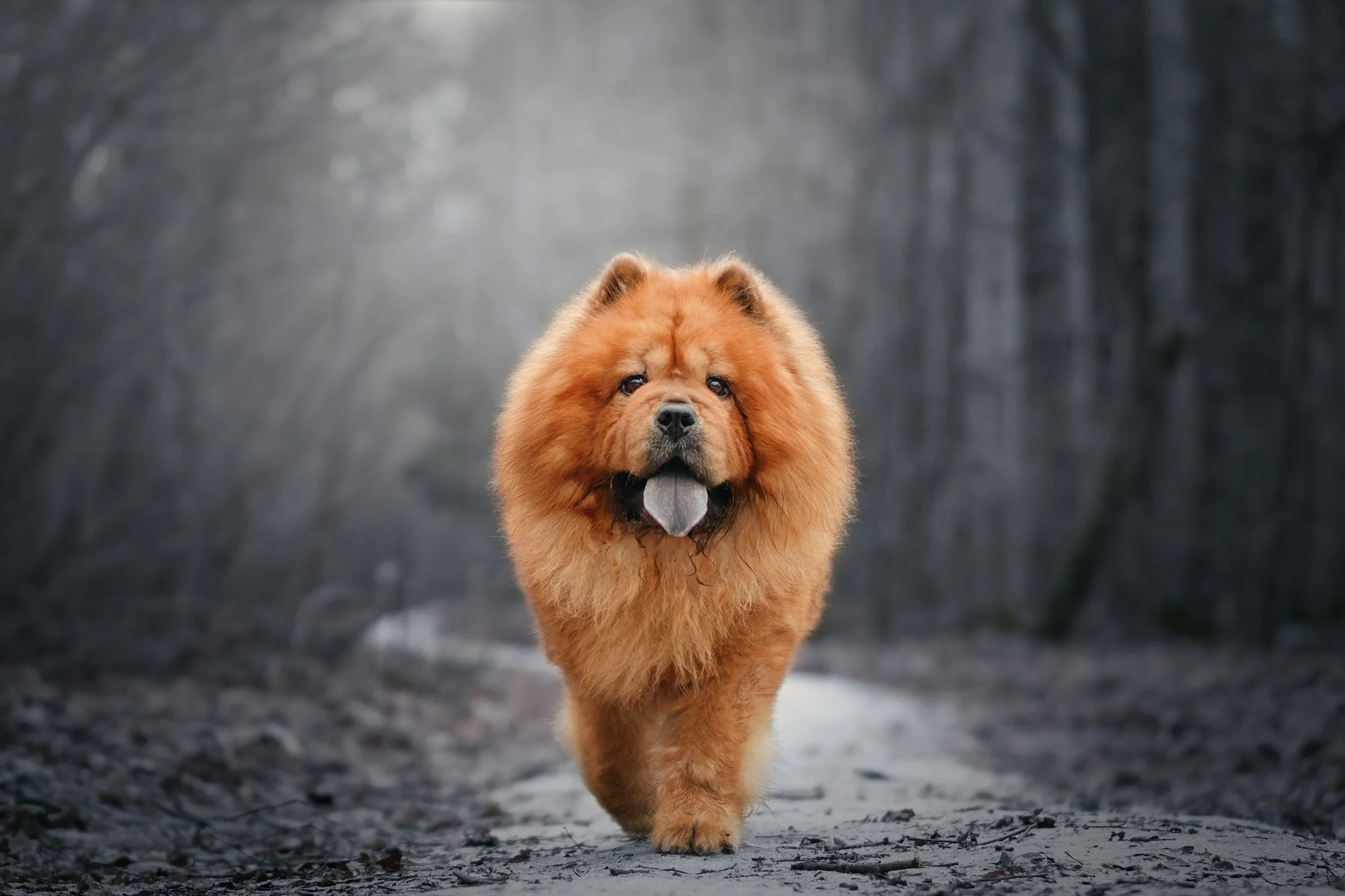
Editor's note: This guide is written by a certified fear-free dog trainer and built on Wild Pack's nervous-system-first, reward-based training philosophy, adapted specifically for the Chow Chow's independent temperament.
Table of Contents
- Understand the Dog You're Training First
- Why Positive Reinforcement Is Non-Negotiable With This Breed
- Start With Regulation, Not Commands
- Keep Sessions Short, Clear, and Consistent
- Prioritize Early Socialization
- Handle With Consent, Not Just Compliance
- Breed-Specific Things to Train Around
- Key Takeaways
Key Takeaways
- Chow Chows are independent, discerning dogs — not disobedient ones. Training should work with that nature, not against it.
- Positive reinforcement is the most effective approach for this breed; force and correction tend to backfire by triggering shutdown or defensiveness.
- Regulate first, train second — a stressed Chow cannot learn well, no matter the technique.
- Keep sessions short (5–15 minutes) and end on a win to match their attention span and motivation style.
- Early, gradual socialization and consent-based handling prevent many of the breed's most common challenges — reactivity, guarding, and handling sensitivity.
- Plan specifically for prey drive, same-sex dog tension, and heat sensitivity — these are breed traits to train around, not obstacles to eliminate.
If you've ever tried to train a Chow Chow using the same playbook that works for a Golden Retriever or a Border Collie, you already know: it doesn't land the same way. Chow Chows are independent, dignified, and a little cat-like in temperament. They're not blowing you off — they're just not wired to be eager-to-please the way some breeds are. And that's exactly why a nervous-system-first, reward-based approach isn't just "nice to have" with this breed. It's the approach that actually works.
Here's how to train a Chow Chow in a way that respects who they are — instead of fighting against it.
Understand the Dog You're Training First
Before any cue or command, it helps to understand what you're working with. The Chow Chow is one of the oldest known dog breeds, with roots tracing back roughly 8,300 years in central China, where they were bred as all-purpose working dogs — guarding, hunting, and even pulling sleds. That history shows up in their personality today. They tend to be:
- Independent thinkers. A Chow will often ask "what's in it for me?" before offering a behavior. This isn't defiance — it's just a different motivational wiring than a food-obsessed Lab.
- Reserved with strangers. Chows bond deeply with their people but don't typically extend that warmth to everyone they meet. Suspicion of new people and situations is default, not a flaw to correct.
- Sensitive to handling. Many Chows have a lower tolerance for being grabbed, restrained, or manipulated physically, which makes gentle, consent-based handling important from day one.
- Prone to overheating. Their thick double coat means short, frequent bursts of activity beat long training marathons — which, conveniently, is also how their attention span works best.
For context, the American Temperament Test Society — which evaluates dogs for shyness, aggression, and reaction to threatening versus non-threatening situations — has clocked Chow Chows at a 71.7% passing rate, on par with breeds not typically thought of as difficult. What sets Chows apart isn't instability — it's discernment. They're selective about who and what earns their trust, which is exactly why training and socialization matter so much.
None of this makes a Chow Chow harder to train. It just means training has to start with regulation and trust before it asks for compliance.
Why Positive Reinforcement Is Non-Negotiable With This Breed
Chow Chows do not respond well to force, intimidation, or corrections — and unlike some breeds that might tolerate a harsher approach without much fallout, Chows tend to shut down or become defensive when pushed. A dog who feels cornered doesn't learn better. They just learn to protect themselves.
Positive reinforcement flips that dynamic. Instead of asking "how do I make my dog comply," it asks "how do I make the behavior I want the most rewarding option on the table." For an independent breed like the Chow, that reframe is everything. You're not competing with your dog for control — you're building a relationship where cooperation is simply the best deal available.
Marking and rewarding the behavior you want, every time, teaches a Chow that engaging with you pays off. Over time, that engagement becomes the default — not because the dog is obedient by nature, but because trust has been built.
Start With Regulation, Not Commands
A stressed, overstimulated, or overwhelmed dog cannot learn well — no matter how good your technique is. This is especially true for a breed as watchful and easily triggered by new stimuli as the Chow Chow. Before you ask for a sit, a stay, or a loose-leash walk, ask a simpler question: is my dog in a state where learning is even possible right now?
A few ways to check and support that state:
- Watch for stress signals — lip licking, yawning, stiffening, a lowered tail, whale eye — before pushing forward with a training ask.
- Keep the environment low-stimulation for early sessions. A quiet room beats a busy park.
- Give your Chow time to settle after any exciting or startling event before expecting them to engage. Arousal doesn't reset instantly — it can take longer than you'd think for a dog to fully come back down.
A calm dog is a trainable dog. This is true for every breed, but it's the make-or-break factor with a Chow.
Keep Sessions Short, Clear, and Consistent
Chow Chows don't need — or want — long, repetitive drills. Their attention and motivation both hold up best in short bursts:
- 5–15 minutes per session, once or twice a day, works better than one long session.
- End on a win. Stop while your dog is still engaged, not after they've mentally checked out.
- Use a consistent marker — a clicker or a specific word like "yes" — paired immediately with a reward, so your Chow knows exactly which behavior earned it.
- Be patient, not pushy. If your Chow disengages, that's information, not defiance. Shorten the session or lower the difficulty next time.
Consistency matters more than intensity here. A Chow Chow trained in short, predictable, reward-based sessions over weeks will get further than one pushed through long sessions built on frustration — for both of you.
Prioritize Early Socialization
Because Chows are naturally reserved and can be wary of unfamiliar people, animals, and environments, early and ongoing socialization is one of the highest-leverage things you can do. The goal isn't to force interaction — it's to build positive, low-pressure exposure over time so new experiences register as safe rather than threatening.
- Introduce new people, dogs, sounds, and environments gradually and at your dog's pace — never by flooding them.
- Pair new experiences with something good — treats, calm praise, distance from the trigger if needed.
- Let your Chow observe from a comfortable distance before expecting direct interaction.
- Respect their boundaries. A Chow who wants space is communicating, not misbehaving.
A well-socialized Chow Chow isn't one who tolerates everything — it's one who feels secure enough to make good choices when the world throws something new at them.
Handle With Consent, Not Just Compliance
Because many Chows are sensitive to physical handling, it's worth training cooperative care as its own skill — not assuming it'll come naturally. Practice gentle handling of paws, ears, and coat in short, reward-paired sessions long before a vet visit or grooming appointment requires it. This builds tolerance without ever needing to override your dog's discomfort by force.
Breed-Specific Things to Train Around
Beyond general temperament, there are a handful of Chow Chow-specific traits worth planning your training around directly:
Territorial and protective instincts. Chow Chows were bred in part as guard dogs, and that instinct is still active. Left unaddressed, it can show up as over-the-top barking or defensiveness at the door or on walks. The fix isn't suppression — it's giving your Chow a reliable, well-rewarded "settle" or "place" behavior to redirect to, practiced calmly before it's needed in a real triggering moment, plus controlled, positive exposure to visitors and passersby so novelty stops reading as threat.
Same-sex dog tension. Chow Chows have a well-documented tendency toward friction with dogs of the same sex, often emerging around 18–24 months of age as the dog reaches social maturity. This is less something to "train out" and more something to manage with the same tools you'd use for any reactivity: controlled, reward-based exposure at a distance the dog can handle, and realistic expectations about which dogs make good playmates.
Prey drive and recall. With hunting in their working history, many Chows will chase before they think. This makes recall and loose-leash skills worth extra investment — practiced first in low-distraction settings, built up gradually, and always rewarded generously, since a Chow's motivation to come back has to compete with a strong instinct to keep going.
Exercise as a training tool, not just an outlet. Chow Chows generally do well with around 45–65 minutes of activity a day, split into shorter, low-heat sessions rather than one long outing — their coat and short muzzle make them prone to overheating. A well-exercised, mentally engaged Chow is easier to train simply because they're not carrying around excess arousal into the session.
Grooming and handling as trained behaviors. That famous double coat means regular brushing is non-negotiable, and a Chow who hasn't been taught to tolerate handling will make grooming (and vet visits) a fight. Treat cooperative care as its own curriculum: short, reward-paired sessions touching paws, ears, and coat, well before you need your dog to hold still for real.
Training a Chow Chow isn't about breaking down independence — it's about working with it. Regulate before you train. Keep sessions short and reward-based. Respect that this is a breed that bonds deeply but on its own terms. Do that consistently, and the "stubborn" reputation Chow Chows carry starts to look a lot more like what it actually is: a smart, self-possessed dog who simply needed to be asked the right way.
Looking for dog training designed for Chow Chows? Get access to our five-star virtual dog training here.
Read more on dogs barking at birds, Golden Retriever enrichment, and how to teach a dog the quiet cue.

About the Author
Lindsay is the founder of Wild Pack and a Certified Fear-free Dog Trainer and Coach dedicated to helping dogs and their guardians thrive through reward-based training, nervous system regulation and instinct-led enrichment. After thousands of hours working hands-on with dogs of every breed, age, and temperament, she specializes in helping dogs build confidence, resilience, and lasting behavior change without fear or punishment. Wild Pack is a 5-star rated Seattle pet wellness brand trusted by dog parents globally and featured by KOMO News, Seattle Refined, and Dogington Post for its unique approach to canine wellbeing. Through boutique services, practical education, and innovative products, Wild Pack’s mission is to rewild pets—and the people who love them.