10 Mind-Blowing Dog Mental Stimulation Games for 2026
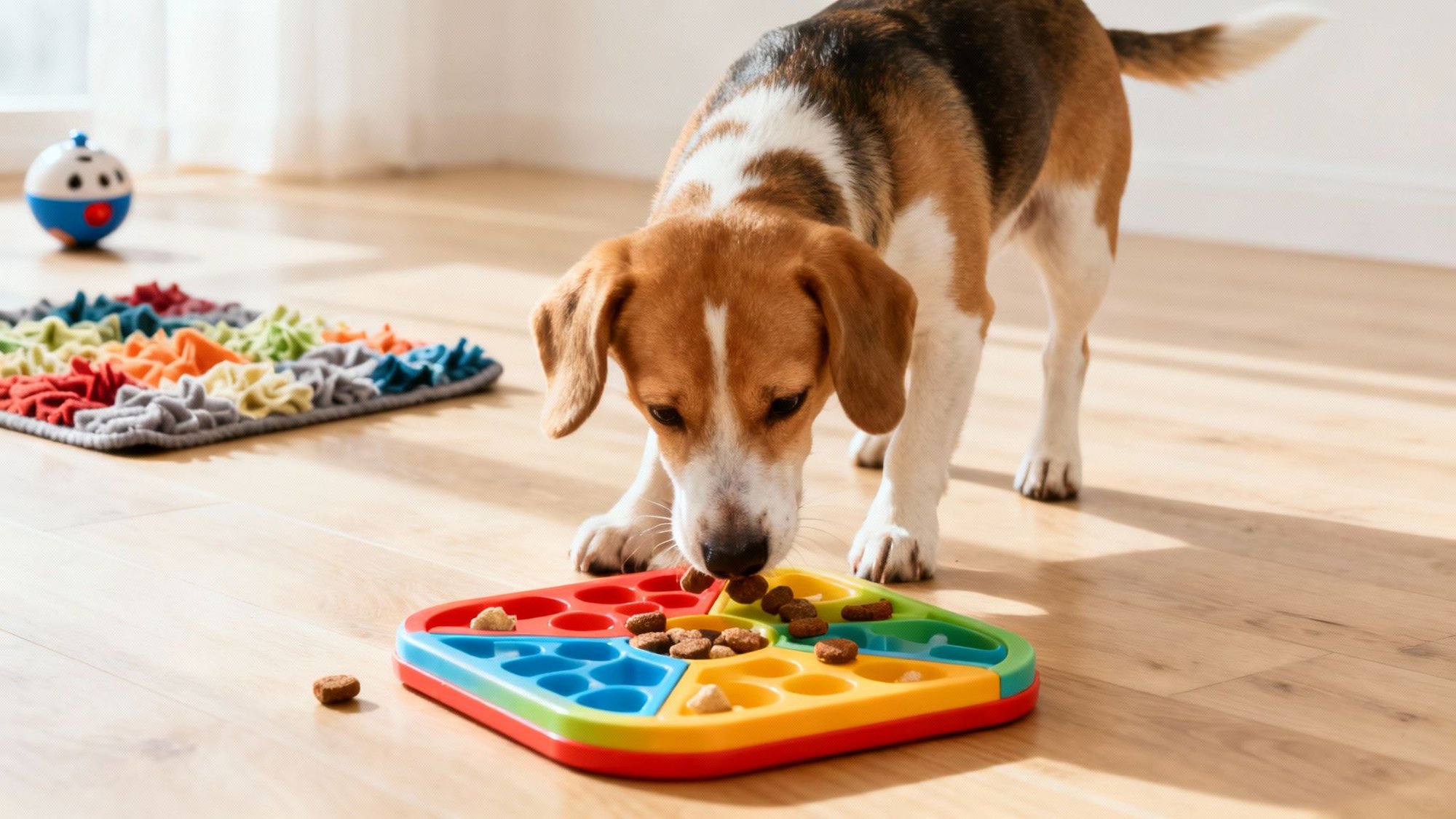
Table of Contents
Why Mental Stimulation is Crucial for Your Dog's Health
Top 10 Dog Mental Stimulation Games
10-Game Comparison Table
Conclusion
Frequently Asked Questions (FAQ)
Key Takeaways
Mental Exercise is Essential: Cognitive enrichment is as vital as physical activity for preventing boredom, anxiety, and destructive behaviors in dogs.
Tap into Natural Instincts: The best games engage a dog's innate drives like sniffing, foraging, and problem-solving, leading to greater fulfillment.
Strengthen Your Bond: Interactive play and training games build communication, trust, and a deeper connection between you and your dog.
Start Simple and Adapt: Begin with easy games and gradually increase the difficulty as your dog learns. Games can be adapted for any space, schedule, or budget.
Just like us, dogs need more than just physical exercise to be happy—they need to challenge their brains too! A bored dog can easily turn into a naughty one, but by adding some fun activities to their routine, you can keep them entertained and build a stronger bond with them. This guide will help you make your furry friend calmer, happier, and more content.
We've put together a list of ten amazing dog mental stimulation games that go beyond just playing fetch. We’ll dive into everything from cool scent games and homemade puzzles to fun training sessions and interactive feeding ideas. Each game comes with easy-to-follow steps, difficulty levels, and handy tips for fitting them into your daily life, whether you live in a small apartment or have a packed schedule.
You'll find out how to turn regular playtime into a great way to boost your dog’s brainpower and emotional health. Get ready to explore new ways to challenge your dog’s mind, build their confidence, and strengthen the wonderful bond you share.
1. Puzzle Feeders and Treat Dispensers
Ever thought about turning mealtime into a little adventure for your dog? Puzzle feeders and treat dispensers do just that. Rather than simply diving into a bowl, your pooch gets to paw, nudge, and flip to get their meal. This neat twist taps into their natural foraging instincts, keeping their minds sharp and slowing down those speedy eaters.
Inspired by folks like Nina Ottosson, these tools are now a favorite in canine enrichment circles. From beginner-friendly toys like the Kong Wobbler to complex puzzles that require a multi-step process, these games offer a wonderful outlet for your dog's mental energy.
How to Implement Puzzle Feeders
Start Simple: Begin with a Level 1 puzzle to build confidence. Let your dog watch you place yummy treats inside to pique their interest.
Gradual Progression: Once they’ve got the hang of it, move on to more challenging puzzles. Switch between a couple of different puzzles each week to keep things fresh.
Supervise and Guide: Keep an eye on the first few sessions to prevent frustration or chewing. If they get stuck, gently guide them without solving it yourself.
Routine Integration: Use a puzzle feeder for a meal. It’s perfect for busy folks, offering a contained, 20-minute activity while you get ready for the day.
This approach turns eating into a rewarding brain game, helping ease boredom and resulting in a more contented pup.
2. Sniff Games and Scent Work
Sniff games and scent work are all about letting dogs do what they do best: sniff. By hiding treats or scents, you engage their natural hunting and foraging instincts. It's a rewarding and exhausting mental workout.
Scent work, championed by groups like the American Kennel Club, has become a favorite for trainers and dog owners alike. Simple games like "Find It" or using a snuffle mat can boost focus, build confidence, and provide low-impact fun for dogs of all ages and sizes.
How to Implement Sniff Games
Start Simple: Try a game like "Find It." Show your dog a treat, say "Find It," and toss it nearby. Repeat until they link the cue with searching.
Gradual Progression: Once they get it, start hiding treats in trickier spots, like under a rug. As they succeed, expand the search area.
Supervise and Encourage: Keep sessions short and exciting, about 5–15 minutes. Praise them cheerfully when they find the prize to keep motivation high.
Routine Integration: Scent work can be a warm-up before a walk or a calming rainy-day activity. A quick 10-minute session can provide significant mental exercise. For more insights, check out our dog scentwork training guide for beginners.
This game satisfies a deep biological need, fostering a calmer, more focused dog.
3. Interactive Rope Toys and Tug Games
Rope toys and tug games aren’t just physical fun; they’re a mental workout, too. The tug of war requires focus, impulse control, and strategy as your dog learns to grip, pull, and predict your moves. This structured play strengthens your bond, turning a simple toy into a tool for connection.
Brands like Kong and West Paw have popularized safe, engaging rope toys. Unlike a solitary chew toy, a tug game is a lively interaction, teaching important skills like bite inhibition and the "drop it" command. It’s a great way to channel energy and build a well-mannered companion.
How to Implement Tug Games
Establish Rules First: Ensure your dog knows a solid "drop it" or "release" cue for safe play.
You Initiate the Game: Be the one to start and end the game, reinforcing leadership and keeping the interaction structured.
Use Controlled Movements: Engage in gentle, side-to-side tugging. Avoid aggressive shaking to protect your dog’s neck and spine.
Supervise and Inspect: Don’t leave rope toys out for unsupervised chewing. Regularly check for frayed ends and discard if unsafe.
This game channels energy into a focused challenge, reinforcing training and enhancing your connection in a few minutes of play.
4. DIY Sniff Mats and Scatter Games
DIY sniff mats and scatter games are all about engaging your dog’s nose. Hide treats in layers of fabric or scatter them across a textured surface to encourage your dog to hunt. This taps into their natural foraging instincts, offering a fulfilling mental workout.
From homemade fleece mats to rolling treats in a towel, these activities are accessible and effective. A muffin tin with tennis balls over treats or scattered kibble in grass works just as well, calming anxious dogs and burning mental energy.
How to Implement Sniff Mats and Scatter Games
Start Easy: Begin with scatter feeding by tossing treats onto a carpet or lawn. For a DIY mat, place treats loosely on top before hiding them deeper.
DIY Creativity: Make your own sniff mat using an old towel or fleece strips. Roll kibble in a towel and tie it for a simple puzzle.
Supervise and Maintain: Watch your dog to ensure they’re sniffing, not chewing materials. Wash fabric-based games regularly and store them dry to prevent mold.
Mealtime Enrichment: Swap a boring bowl feed for a 15-minute scatter session. It’s a great warm-up before a walk or a calming ritual on a rainy day.
Ready to explore scent work further? Download our free nosework guide and start your journey: https://www.withwildpack.com/dognoseworkguide
5. Flirt Poles and Chase Toys
A flirt pole is a chase toy with a pole, rope, and lure. It channels your dog’s prey drive, encouraging them to chase and "catch" a fast-moving target. This activity combines physical exercise with mental engagement, requiring focus and timing.
Think of it like a fishing rod for dogs, creating unpredictable movements to keep them guessing. While commercial versions are available, many folks make DIY versions with PVC pipe and durable rope. These games help burn energy while reinforcing commands like "drop it" and "wait."
How to Implement Flirt Poles
Keep Sessions Short: Start with 5-10 minute sessions. Short bursts prevent exhaustion and keep the game exciting.
Vary the Movement: Drag the lure, zig-zag, or lift it for short hops. Change speed and pattern to keep your dog’s mind engaged.
Let Them Win: Allow your dog to "catch" the lure occasionally, especially at the end. This provides satisfaction and prevents frustration.
Supervise and Manage Arousal: Play in a secure area and monitor excitement. If over-aroused, pause and use a simple command like "sit" to reset focus.
6. Automatic Ball Launchers and Fetch Games
Automatic ball launchers bring a new twist to fetch, turning it into an independent activity. These devices launch balls at different distances, challenging dogs to learn the cause-and-effect of returning the ball. It’s an engaging way to combine physical exercise with mental stimulation.
Brands like iFetch and GoDogGo have made these tools popular, especially for high-energy breeds. Dogs learn to operate the machine themselves, building confidence and problem-solving skills. By teaching your dog how it works, you offer a rewarding game they can initiate.
How to Implement Automatic Ball Launchers
Gradual Introduction: Introduce the launcher while off. Use positive reinforcement as your dog gets comfortable with it.
Teach the Process: Drop the ball in yourself and praise when it launches. Guide your dog to do the same, rewarding success.
Supervise and Set Limits: Always supervise play to ensure safety. Limit sessions to 10-15 minutes to prevent over-exertion.
Combine with Obedience: Use commands like "drop it" and "wait" during play, reinforcing training and teaching impulse control.
This approach offers a physical release while engaging their cognitive abilities, perfect for intelligent, high-drive dogs.
7. Frozen Treats and Ice Games
Frozen treats and ice games turn snacks into sensory experiences. Freeze dog-safe foods in water, broth, or yogurt, requiring your dog to lick and chew patiently for the reward. It’s a great way to combine hydration, taste, and problem-solving.
This cool enrichment is fantastic for warm days or energetic dogs needing a calming activity. From simple ice cubes with a blueberry to complex frozen Kong toys, these games offer versatile challenges. Licking and chewing are soothing, reducing anxiety and promoting relaxation.
How to Implement Frozen Treats
Start with Simple Rewards: Use an ice cube tray filled with water or broth, adding a kibble or fruit piece to each cube.
Layer for a Challenge: Create a layered frozen toy with yogurt and banana, freezing in stages to extend the activity.
Supervise and Contain: Supervise, especially for power chewers. Offer treats in easy-to-clean areas to manage melting.
Perfect for Hot Days: Offer a frozen treat after a walk or play, engaging their mind and helping them cool down.
Incorporating frozen games provides a mentally stimulating and soothing activity, satisfying their instincts to lick and forage.
8. Training Games and Clicker Training Sessions
Training games and clicker sessions turn obedience into an engaging mental workout. Using positive reinforcement and clear communication, often with a clicker, you teach new behaviors and tricks. This method encourages creative thinking and problem-solving, strengthening your bond.
Pioneered by experts like Karen Pryor, clicker training offers precise feedback, marking the exact moment of success. This clarity accelerates learning, from basic commands to complex tricks. These structured games build focus, impulse control, and a strong cooperative relationship.
How to Implement Training Games
Keep it Short and Sweet: Limit sessions to 5-10 minutes daily to maintain enthusiasm. End on a positive note with a successful action.
Start with the Basics: Use a clicker to mark and reward simple behaviors like "sit," "touch," or eye contact.
Use High-Value Rewards: Reserve special treats like chicken or cheese for training sessions, boosting motivation.
Progress Gradually: Once mastered, increase difficulty. For more advice, explore our dog training tips.
This approach turns learning into a rewarding game, providing a powerful outlet for cognitive energy and reinforcing good behavior.
9. Hide and Seek Games with Toys and Family Members
Hide and seek turns a simple game into a sensory workout, tapping into your dog’s prey and tracking instincts. Have them search for a hidden person, toy, or treat, using their smell and sight to solve the puzzle. It's a great way to strengthen bonds and provide mental exercise.
This game is foundational for advanced scent work and perfect for practicing recall and stay commands. Whether hiding behind a door or concealing a toy, you create engaging challenges that satisfy their natural desire to hunt. Celebrating their success builds confidence and joy in problem-solving.
How to Implement Hide and Seek Games
Start Simple: Begin with easy hiding spots where they can partially see you. Use a stay command, hide, and call them excitedly.
Gradual Progression: Increase difficulty by hiding in different rooms or outdoors. Do the same with toys, starting with obvious spots.
Use High-Value Rewards: Reward enthusiastically when they find the target, making the game motivating and fun.
Involve the Whole Pack: Take turns hiding to practice tracking different scents and build positive associations.
This game turns your home into an interactive playground, providing a rewarding challenge that combats boredom and deepens your connection.
10. Interactive Feeding Stations and Foraging Opportunities
Interactive feeding stations create a meal-hunting environment, turning feeding time into a mental workout by engaging your dog's instincts to forage. Instead of passively eating, they use their nose, brain, and body to find food.
This shift from bowl to environment offers cognitive and sensory enrichment. Simple setups like scatter feeding or hiding food in a "dig box" encourage problem-solving and focus. These activities satisfy dogs, build confidence, and reduce mealtime anxiety.
How to Implement Foraging Opportunities
Start with Scatter Feeding: Toss kibble onto a carpet or grass patch, introducing the concept in an easy, rewarding way.
Create a "Snuffle Zone": Use a towel or blanket, sprinkle kibble, then scrunch it. Your dog will sniff through to find rewards.
Use Your Space: Hide meal portions in different rooms or behind furniture, turning it into a collaborative hunt.
Supervise and Contain: Always supervise to ensure they’re eating food, not non-food items. Use a designated mat for easy cleanup.
By turning mealtime into a foraging game, you offer a mentally draining activity that promotes calmness. For more enrichment ideas, explore dog enrichment activities.
Unleash a Happier, More Fulfilled Companion
Transitioning from a passive routine to one rich with cognitive engagement is one of the most transformative gifts you can give your canine companion. As we've explored, the world of dog mental stimulation games is vast and varied, offering powerful tools that go far beyond simply alleviating boredom. From the focused precision of scent work and clicker training to the joyful chaos of a flirt pole or a DIY snuffle mat, each activity taps into your dog's innate problem-solving abilities and natural instincts.
The true value of these games lies not just in the ten or fifteen minutes of play but in the cumulative effect they have on your dog's well-being. A dog whose mind is regularly challenged is less likely to develop destructive behaviors rooted in frustration or anxiety. They become more confident, more resilient, and better equipped to handle new situations. Think of it as building mental muscle; each puzzle solved and each scent trail followed strengthens their cognitive fitness and deepens their trust in you as their guide and partner.
Integrating Play into Your Pack's Rhythm
Remember, the goal isn't to master every game overnight. The key is consistency over intensity. Start by integrating one or two new activities into your weekly schedule.
Morning Ritual: Swap the food bowl for a puzzle feeder to start their day with a satisfying challenge.
Midday Break: A five-minute session of "Hide and Seek" with their favorite toy can break up a long, quiet afternoon.
Evening Wind-Down: A frozen Kong or a gentle scent game can provide a calming, enriching activity before bedtime.
By weaving these moments of focused engagement into your daily life, you're not just adding tasks to your to-do list; you're fundamentally enhancing your relationship. You'll learn to read your dog’s subtle cues of excitement, concentration, and satisfaction, strengthening the unspoken language that forms the foundation of your bond. The journey of incorporating dog mental stimulation games is a shared adventure, one that rewards both of you with a more harmonious, joyful, and deeply connected life together. Your dog isn’t just a pet; they are a thinking, feeling being deserving of a life that nourishes their brilliant mind.
Ready to take your dog's enrichment to the next level? At Wild Pack, we specialize in engaging experiences that build canine confidence and provide essential mental stimulation. Explore our pack walks and digital products to see how we integrate these principles into everything we do for our Seattle and PNW community.
Frequently Asked Questions (FAQ)
How much mental stimulation does a dog need a day?
Most dogs really enjoy having at least 15-30 minutes of mental exercise each day. You can split it into a few short bursts. If you've got a high-energy or smart pup like a Border Collie or German Shepherd, they might need even more to stay happy!
What are the signs of a bored dog?
Common signs include destructive chewing, excessive barking or whining, digging, restlessness, and attention-seeking behaviors like nudging or pawing. A lack of mental stimulation is a primary cause of these unwanted behaviors.
Can mental stimulation tire a dog out more than physical exercise?
Yes, for many dogs, mental exercise can be more tiring than physical exercise. Activities that require focus and problem-solving, like scent work or training games, are incredibly taxing. A 15-minute scent work session can be as exhausting as a 30-minute run.
Are dog mental stimulation games suitable for senior dogs?
Absolutely. Low-impact games like puzzle feeders, sniff mats, and gentle hide-and-seek are perfect for senior dogs. They provide cognitive enrichment without putting stress on aging joints, helping to keep their minds sharp.
How do I get started with dog mental stimulation if I'm on a budget?
You don't need expensive toys to provide enrichment. DIY options like hiding treats in a rolled-up towel, playing hide-and-seek, or scattering kibble in the grass are free and highly effective ways to engage your dog's brain.
Article created using Outrank